A Jay Turser bass guitar often attracts beginners with its low price, familiar shapes, and surprisingly broad model range. You may find a PJ-style body, a Jazz-inspired neck, or an active five-string design. Some instruments feel better than their price suggests. Others reveal compromises quickly.
Bass educator and author Ed Friedland has said, “Playability comes first.” That principle matters here. A bass can look polished under shop lights, yet still suffer from sharp fret ends, uneven action, noisy electronics, or a neck that refuses to stay stable. These details become obvious after an hour of practice. Your fingertips notice them before your eyes do.
This guide examines what a Jay Turser bass guitar is, where the brand fits within the affordable instrument market, and whether buying one makes practical sense today. It will consider construction, pickups, hardware, comfort, resale value, and typical second-hand risks. The answer is not simply yes or no. It depends on the individual instrument.
That uncertainty matters.
I have seen inexpensive basses become dependable rehearsal tools after a setup. I have also encountered models needing more repair money than their original value. A careful inspection can change the decision. Check the truss rod, fret condition, bridge screws, output jack, and battery compartment. Test every control through an amplifier.
Jay Turser bass guitar models may suit learners, casual players, and modification enthusiasts. They may disappoint professionals needing consistent touring reliability. The honest verdict requires patience, realistic expectations, and a hands-on test.
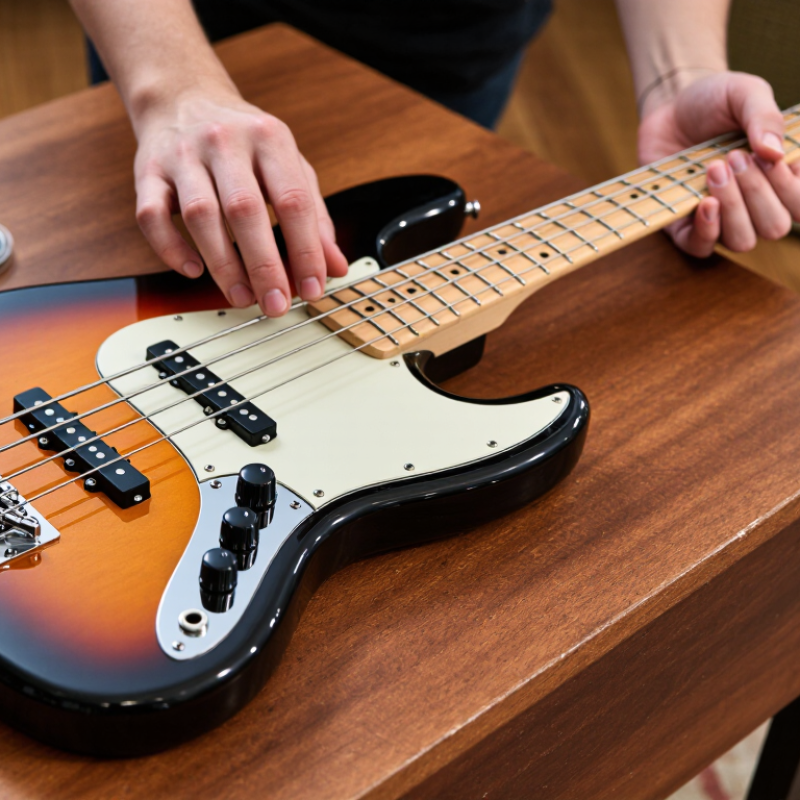
Jay Turser Bass Guitar: Brand Origins and Product Overview
Jay Turser bass guitars are commonly associated with affordable instruments for beginners, practice players, and budget-conscious musicians. The brand emerged through the value-focused guitar market, where accessible pricing mattered more than exclusive materials or complex decoration. Exact production details vary across years and models, so buyers should avoid treating every instrument as identical.
Most models use familiar bass designs, passive electronics, bolt-on necks, and straightforward control layouts. This makes them easy to understand and maintain. A typical instrument may offer a comfortable scale length, modest hardware, and a clear enough tone for rehearsals, home recording, or small performances. The sound can feel slightly plain, but that simplicity helps new players learn tone shaping.
Condition matters more than the logo. Check the neck for excessive bowing, inspect the frets for deep wear, and test every control through an amplifier. I have found that setup quality often changes the playing experience dramatically. Still, some older examples may need fret work or replacement hardware. That cost can weaken the original bargain. A careful inspection remains essential.
What Is a Jay Turser Bass Guitar and Is It Worth Buying? - Jay Turser Bass Guitar: Brand Origins and Product Overview
| Data Dimension | Typical Specification or Finding | Buying Relevance |
|---|---|---|
| Instrument category | Affordable solid-body electric bass guitar | Suitable for beginners, practice, rehearsal, and budget-conscious players. |
| Common scale length | Usually 34 inches on full-size versions; some short-scale versions may be approximately 30 inches. | A 34-inch scale provides familiar spacing and standard low-E string tension. Confirm the exact model before purchase. |
| String count | Most commonly four strings; five-string versions also exist in the wider budget market. | Four strings are simpler for beginners, while five strings add a lower range for modern styles. |
| Pickup configuration | Common layouts include split-coil, single-coil, dual single-coil, or a combination of pickup types. | Pickup layout affects tone, noise level, and control flexibility. Inspect the exact instrument rather than relying only on photos. |
| Electronics | Both passive and active configurations may be found, depending on the model and production period. | Passive circuits are generally simpler to maintain; active circuits may provide greater tonal adjustment but require a working battery compartment. |
| Controls | Typical controls include volume, pickup blend or balance, and tone; some versions add an active bass and treble section. | Turn every knob while connected to an amplifier and listen for crackling, signal loss, or uneven output. |
| Neck construction | Bolt-on neck construction is common in affordable electric basses. | A bolt-on neck can be adjusted or replaced more easily than many set-neck designs. |
| Fretboard and fret count | Rosewood, engineered wood, or maple fingerboards may appear; 20 or 24 frets are common on electric basses. | Check for excessive fret wear, sharp fret ends, dead notes, and buzzing across the entire neck. |
| Body materials | Budget instruments often use basswood, poplar, agathis, maple, or other commercially available tonewoods. | Wood species is less important than structural condition, neck stability, hardware quality, and overall setup. |
| Bridge and tuners | Basic adjustable bridges and sealed or open-gear tuning machines are typical in this price segment. | Check tuning stability, loose screws, bent saddles, rust, and whether intonation can be adjusted correctly. |
| Weight and ergonomics | Weight varies significantly by body wood, hardware, and construction; many full-size basses are heavier than electric guitars. | Play while standing with a strap for several minutes to identify neck dive, shoulder strain, or uncomfortable body contours. |
| Typical sound profile | Generally capable of warm, rounded, punchy, or moderately bright tones depending on pickups, strings, amplifier, and setup. | A professional setup and fresh strings can improve clarity more than cosmetic upgrades. |
| Best use cases | Home practice, lessons, casual recording, rehearsal, school music programs, and backup use. | A good choice when the instrument is mechanically sound and priced below comparable new entry-level models. |
| Main advantages | Usually affordable, easy to find on the used market, familiar in design, and suitable for basic modifications. | Can offer strong value when the neck is straight, the truss rod works, and the electronics are quiet. |
| Common limitations | Quality control, fret finishing, hardware durability, shielding, and factory setup may vary between individual instruments. | Budget for a professional setup or minor repairs if the purchase price is very low. |
| Used-buying inspection | Inspect the neck relief, fret wear, truss rod, bridge, tuning machines, output jack, pickups, controls, and body joints. | These checks are more reliable indicators of value than age, finish color, or seller claims. |
| Overall value judgment | Worth considering as a budget or used instrument when it plays comfortably, stays in tune, produces a clean signal, and needs no major structural repair. | Compare the total cost after setup and repairs with the price of a newer instrument carrying a warranty. |
FAQS
It suits beginners, practice players, and musicians with limited budgets. It offers a simple learning platform. Experienced players may want stronger hardware or richer electronics.
Most models use passive electronics, bolt-on necks, and familiar bass shapes. Their controls are usually easy to understand. The hardware is modest but practical.
The tone is generally clear and straightforward. It can work for rehearsals, home recording, and small performances. The sound may feel plain. That simplicity can help beginners learn tone control.
Check the neck under direct light. A slight curve is normal, but a sharp twist is a serious warning. Inspect frets, bridge screws, tuning posts, and strap buttons. Look closely.
Connect the bass to an amplifier and rotate every control slowly. Listen for crackling, weak output, or sudden volume loss. Test each control separately. Intermittent noise may indicate repair needs.
It can be worthwhile when the neck is stable and the price is sensible. A basic setup may be acceptable. Rewiring and fret repairs can remove the savings quickly. I might judge some bargains too cautiously, but repair costs deserve attention.
Around 50–60% of comparable new pricing can be a starting ceiling. It is not a fixed rule. Condition, local demand, and included repairs can change the value. Do not trust popularity alone.
Comfort depends on the neck shape, scale length, and fret condition. Some players may find the neck wider than expected. Uneven fretwork can cause frustration during practice. Try it while seated and standing.
Conclusion
A Jay Turser bass guitar is designed as an accessible instrument for beginners, hobbyists, and players seeking a practical backup bass. This overview explores the brand’s general origins, product range, and common body styles, including models influenced by classic bass designs. It also considers useful features such as pickup configuration, neck comfort, control layout, scale length, and overall playability. These factors can affect how well the instrument suits different musical styles and experience levels.
The article also examines performance, construction, price range, and long-term reliability. While Jay Turser bass guitar models may not offer the refinement or consistency of higher-priced instruments, many can provide solid value when properly adjusted and maintained. They may be especially suitable for practice, learning, home recording, and casual performances. Buyers should carefully inspect the neck, frets, electronics, hardware, and setup condition before purchasing. Ultimately, the best choice depends on the instrument’s condition, asking price, intended use, and the player’s expectations.
