Engineered Guitar Lineup Ready for Custom Procurement
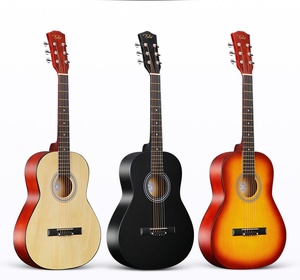
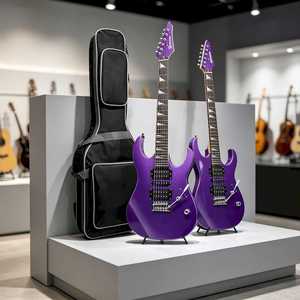
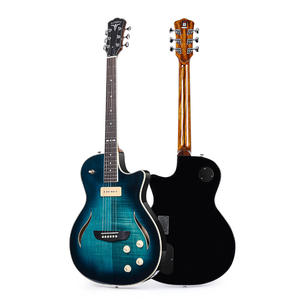
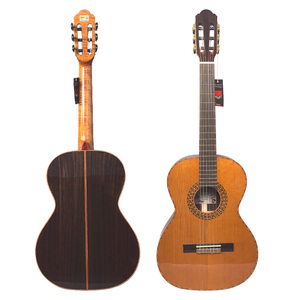
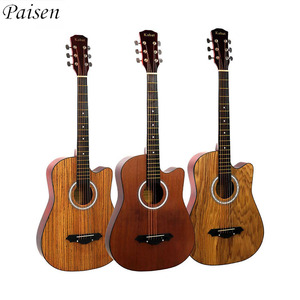
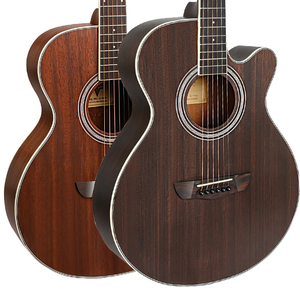
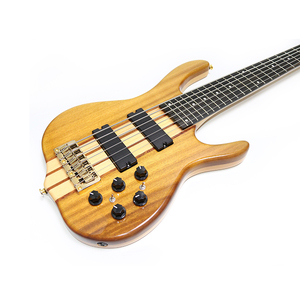
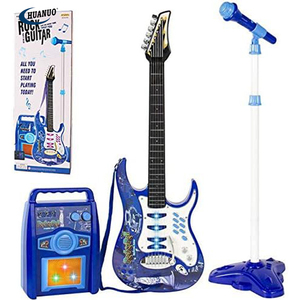
Explore our baseline configurations spanning vintage-correct bolt-on designs, neck-thru active basses, archtop acoustics, and complete beginner turnkey programs.
CE Conformity, Tonewood Science, & Global Compliance Frameworks
A rigorous examination of electrical testing thresholds, dimensional wood stability, and cross-border trade governance for guitar importers.
In the contemporary musical instrument supply chain, the designation of a CE Certified Custom Electric Guitar Factory extends substantially beyond passive aesthetic craftsmanship. International brand holders, regional retail chains, and musical education institutions face rigorous border controls and supply chain liabilities. European CE marking (encompassing the Electromagnetic Compatibility Directive 2014/30/EU and the RoHS Directive 2011/65/EU, alongside its amendment (EU) 2015/863) requires active and passive electronic guitar assemblies to completely restrict hazardous heavy metals such as lead, mercury, hexavalent chromium, and polybrominated biphenyls.
From magnetic induction pickup windings to dual-action truss rod metallurgy, every component in an electrified stringed instrument affects regulatory clearance and long-term acoustic resonance. Our industrial manufacturing facilities enforce closed-loop environmental validation systems. Tonewood billets undergo dehumidification and high-frequency vacuum kiln cycles to stabilize equilibrium moisture content (EMC) strictly between 8% and 10%. This thermal stabilization guarantees that guitars exported across disparate climactic vectors—from Northern Europe to the American Midwest—maintain dimensional neck relief, fret seating stability, and joint integrity without fretboard shrinkage or seam separation.
Advanced CNC Milling & Lamination Engineering
Industrial scale electric and acoustic guitar manufacturing necessitates automated geometric consistency. Through our state-of-the-art 5-axis CNC machining bays, critical body routing tolerances are preserved down to ±0.02 mm. This precision guarantees precise neck-pocket integration—a decisive parameter directly governing mechanical acoustic energy transfer from the neck through the resonant body core.
Whether fashioning complex ergonomic multi-scale fingerboards, modern headless architectures, or historically grounded vintage double-cutaway silhouettes like our popular 300 Series, our precision-tooled automated cutters virtually eliminate fret sprout and bridge misalignment. Fingerboards are leveled under simulated string tension, followed by precision automated fret crowning and round-end finishing that reduces manual setup requirements for distribution hubs.
Enterprise OEM/ODM Infrastructure & Quality Assurances
Operating with the logistical rigor of international conglomerates, we deliver predictable container deliveries, brand-tailored customization, and complete traceability.
End-to-End CE Compliance
Full factory audit traceability with certified lead-free soldering, low-noise shielded potentiometers, and non-toxic polyurethane and nitrocellulose lacquer options verified for EU/US customs.
Rapid Prototyping Workflow
Accelerated 2D/3D CAD and CAM prototyping to yield functional sample instruments within 14 business days, complete with bespoke headstock branding, proprietary neck carves, and custom pickup voicings.
CITES & Sustainable Woods
Ethically harvested timber streams including torrefied maple, FSC-certified poplar, okoume, and synthetic composite fretboards engineered to circumvent cross-border plant-quarantine friction without compromising sustain.
Corporate Account Stewardship
Backed by seasoned distribution governance, our program delivers complete marketing asset kits, hi-res studio documentation, unified packing SKUs, and dedicated English-speaking supply account managers.
Emerging Procurement & Structural Design Trends
Actionable forecasting for procurement officers seeking long-term inventory relevance across consumer, studio, and educational segments.
1. Torrefaction & Thermal Wood Modification
Roasted maple necks and heat-treated soundboards are transitioning from boutique luthier benchmarks to required OEM baseline specs. Torrefaction pyrolyzes hemicellulose inside the wood cells, crystallizing resin to deliver imperviousness to atmospheric humidity changes and boosting fundamental resonance velocity.
2. Modular Active Electronics & Onboard DSP
Modern students and home recording players demand native smart capability. We are seeing surging purchase orders for hybrid instruments integrating low-latency onboard preamps, integrated headphone interfaces, and ultra-quiet solderless push-pull wiring looms compliant with CE Class-B RF emission parameters.
3. Lightweight Multi-Scale Ergonomics
Body contours have shifted away from heavy, unchambered traditional slabs. Buyers are prioritizing chambered resonant poplar or basswood cores matched with fanned-fret designs to balance string tension dynamically, providing comfort for younger demographics without sacrificing extended lower registers.
Frequently Asked Questions for Custom Guitar Sourcing
Direct answers regarding MOQ, custom tooling, international compliance documentation, and factory warranty protocols.