±0.05mm
Neck Pocket CNC Tolerance
8% – 10%
Target Kiln Equilibrium EMC
100%
RoHS & REACH Compliance
65+
Global Export Territories
OEM / ODM Instrument Catalog
Verified Export Platforms & Associated Accessories
Tested commercial configurations engineered for international retail distribution, institutional music education, and custom-shop luthier supply chains.
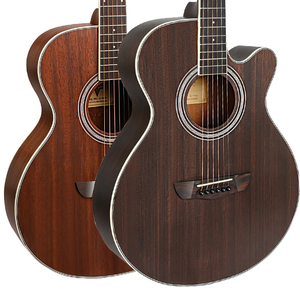

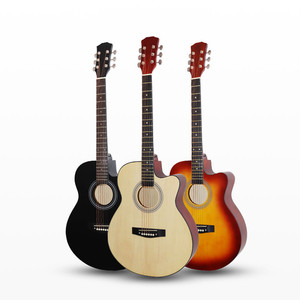
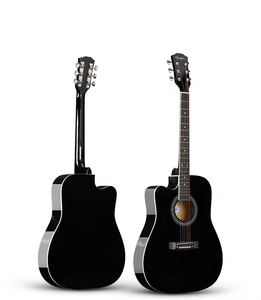
Education Series / Basswood
40 Inch Folk Acoustic Guitar Wholesale Matte Solid Basswood Guitar for Beginner
Executive Whitepaper Chapter 01
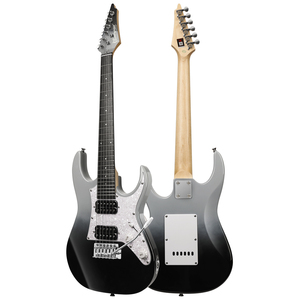
Precision Lutherie Standards for CE Certified Electric Guitar Bodies
Navigating European Market Directives, Kiln Stability Benchmarks, and Structural Resonance
In the competitive landscape of musical instrument manufacturing, sourcing an electric guitar body demands an intricate balance between architectural acoustic physics and stringent chemical regulations. For procurement directors, regional distributors, and boutique lutherie brands exporting into the European Economic Area (EEA), the designation of CE Certification is not merely a marketing token. It constitutes a legally binding verification that every component—from raw tonewood billets to shielding lacquers—complies with EU safety, environmental health, and consumer protection directives.
Historically, solid-body electric guitars were manufactured with primary regard given to structural rigidity and sustain, often employing volatile organic chemical finishes (such as high-solvent nitrocellulose or lead-stabilized colorants) and unverified timber channels. Today, European regulations including RoHS Directive 2011/65/EU (and its amendment 2015/863), REACH Regulation (EC) No 1907/2006, and EU Timber Regulation (EUTR) / EU Deforestation Regulation (EUDR) mandate an uncompromising supply chain transparency. A modern electric guitar body exporter must provide verifiable batch test reports certifying the total absence of restricted hazardous substances such as lead, cadmium, mercury, polybrominated biphenyls (PBB), and restricted phthalates within the conductive cavities, top coatings, and laminated binding adhesives.
Critical Material Science: Equilibrium Moisture Content (EMC) Control
Wood is inherently hygroscopic, perpetually exchanging moisture with its ambient atmospheric envelope. If an electric guitar body is routed and finished before achieving precise internal Equilibrium Moisture Content (EMC), international transit through fluctuating marine container temperatures inevitably induces catastrophic defects: neck pocket warping, center-seam delamination, finish checking, and bridge anchor pulling.
Our manufacturing protocol integrates a multi-stage conditioning regimen:
- Slow Kiln Dehumidification: Raw slabs of North American Alder (Alnus rubra), Northern Ash (Fraxinus excelsior), African Okoume (Aucoumea klaineana), and Selected Basswood (Tilia americana) undergo secondary vacuum-kiln drying, systematically lowering moisture content to an exact 8.0% ± 1.0%.
- Thermo-Stabilization (Torrefaction): For boutique and pro-tier lines, tonewood billets are subjected to oxygen-deprived thermal treatment at 160°C–190°C. This process breaks down hemicellulose polymers, crystallizing lignin and rendering the timber cell walls hydrophobic. The resulting guitar body exhibits superior environmental stability, impervious to seasonal neck-angle shifts, while releasing an articulate acoustic snap reminiscent of vintage, decades-aged instruments.
- Laser-Guided Moisture Profiling: Prior to entering the CNC machining cell, every body blank is scanned across nine distinct geometric coordinates with high-frequency pinless moisture meters. Blanks exceeding variance thresholds are automatically ejected from production.
5-Axis Dual-Spindle CNC Routing
Neck pockets are routed with surgical precision within ±0.05mm tolerances. This ensures an airtight wood-to-wood mechanical coupling between the neck heel and body pocket, maximizing acoustic vibrational transfer and eliminating structural intonation drift under string tension.
Electrostatic Low-VOC UV Curing
Automated electrostatic spraying booths apply ultra-thin (0.08–0.12mm) polyurethane and polyester resin finishes. Instantaneous UV curing eliminates solvent outgassing, satisfying rigorous European VOC emission ceilings while allowing the wood tone to resonate uninhibited.
EN 71-3 Non-Toxic Compliance
Every finish formulation is laboratory tested against migration of heavy metals (antimony, arsenic, barium, cadmium, chromium, lead, mercury, and selenium), making our body builds certified safe for student musicians, junior instruments, and worldwide retail distribution.
Executive Whitepaper Chapter 02
Engineering Specifications Matrix: ST, TL, and Modern Offset Bodies
Standard Industrial Tooling Profiles & Custom Luthier Cavity Options
Standardization across mounting dimensions ensures that our exported guitar bodies seamlessly accommodate global aftermarket hardware, including genuine Fender®, Gotoh®, Floyd Rose®, and Hipshot® bridge systems, alongside standard pickup footprints.
| Body Architecture | Standard Tonewoods | Neck Pocket Spec (W × L × D) | Pickup Routing Configuration | CE & Environmental Compliance |
|---|---|---|---|---|
| Traditional ST-Style | Alder, American Basswood, Swamp Ash | 56.0mm × 76.2mm × 16.0mm | SSS, HSS, or Universal Swimming Pool | RoHS 2.0, REACH SVHC <0.1% |
| Vintage TL-Style | Selected Pine, Ash, Okoume | 55.6mm × 76.0mm × 16.0mm | SS Traditional, SH, or Dual Humbucker | EN 71-3 Non-Toxic, EUTR Audited |
| Single Cut / LP Carved Top | Mahogany with Flamed Maple Cap | Mortise & Tenon Set-Neck or Deep Bolt-On | HH Standard, P-90 Soapbar Recessed | Low-VOC Waterborne / Thin Poly |
| Modern Ergonomic Bass | Roasted Ash, Burl Maple / Resin Hybrid | 63.5mm × 98.0mm × 18.5mm (4/5 String) | JJ, PJ, or Soapbar Dual Bass Enclosures | RoHS Shielded Conductive Cavity |
Conductive EMI Cavity Shielding: Achieving CE Electromagnetic Compatibility
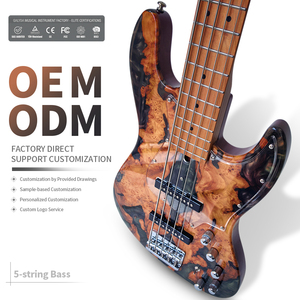
While passive electric guitar pickups operate as inductors, poor grounding and unshielded interior control cavities transform the guitar body into an antenna for electromagnetic interference (EMI) and radio frequency interference (RFI). For fully assembled OEM pre-wired bodies or bodies supplied with active electronics (such as our 5-string boutique bass series), compliance with the EMC Directive 2014/30/EU is mandatory.
Our manufacturing lines employ high-density conductive graphite compound shielding applied in a dual-pass spray method across all pickup and potentiometer chambers. Resistance values are verified below ≤ 5.0 Ohms/cm² across any two cavity points, creating an unbroken Faraday cage once connected to the ground bus. This eliminates 50/60Hz mains hum and ensures our export shipments sail through regional customs without regulatory inspection delays.
Market Intelligence & Forecasting
Future Procurement Trends in Electric Guitar Bodies (2025–2030)
Anticipating Regulatory Shifts, Weight-Relief Demands, and Sustainable Tonewood Sourcing
Global supply chains for fretted musical instruments are navigating rapid transitions driven by regulatory pressures, digital inventory strategies, and evolving player demographics. OEM buyers and private-label brand owners must strategically position their production orders around four defining industrial movements:
1. Transition to CITES-Exempt and Fast-Renewable Tonewoods
Stricter international monitoring under CITES Appendix II has rendered traditional Dalbergia (Rosewood) species and dense Central American hardwoods logistically cumbersome for large-scale export due to intricate re-export permitting timelines. Enterprise buyers are shifting specifications toward acoustically optimized, fast-growing alternative species:
- Engineered Roasted Paulownia: Yielding ultralight guitar bodies averaging 1.1–1.4 kg (2.4–3.1 lbs), thermal roasting densifies Paulownia’s open grain, providing an ultra-resonant body that addresses the surging market demand for featherweight guitars that mitigate shoulder fatigue during extended performances.
- Certified African Okoume: Acting as an environmentally responsible substitute for genuine Honduran Mahogany, Okoume delivers identical warm midrange harmonics and predictable CNC cutting behavior with zero CITES permit encumbrance.
- Composite and Stabilized Burl Resin Hybrids: Combining spalted maple scrap with low-VOC epoxy resins creates one-of-a-kind boutique aesthetics at mass-manufacturing price points, turning timber yield byproducts into high-margin catalog flagships.
2. Acoustic Chambering and Finite Element Stress Topologies
Modern electric guitarists reject overly heavy instruments. However, uncalculated hollow routing produces uncontrolled acoustic feedback under high-gain stage amplification. The procurement vanguard is turning to Acoustically Tuned Chambering. Utilizing 3D Finite Element Analysis (FEA), internal sound-wells are routed to balance weight reduction while leaving rigid tone bridges directly beneath the bridge saddles and pickup anchor points. This preserves mechanical string attack while shaving up to 25% of total body mass.
3. Near-Zero Inventory Through Modular OEM Platforms
To protect liquidity against macro-economic volatility, enterprise distributors are moving away from monolithic 1,000-piece single-SKU orders. Our factory provides Modular Platform Procurement, allowing clients to combine universal body routings (such as HSH or Swimming Pool routings) across multiple finish options (Gloss, Satin Open-Pore, Distressed Relic, and Metal Flake) within consolidated container loads. This enables swift inventory turnover and responsiveness to viral social media gear trends.
Institutional Manufacturing Heritage
Why Leading Global Brands Partner with Our Manufacturing Facilities
Built on Three Decades of Value-Driven Engineering, Scalable Capacity, and Corporate Accountability
Rooted in a proven manufacturing history—powering recognized industry lines including the Jay Turser 300, LT, 30 Jr, Jay J, and CL series under the oversight of JAM USA LLC—our enterprise offers overseas importers an exceptional level of manufacturing reliability and commercial insight:
Listing-Ready Commercial Assets
We supply every wholesale client with full-resolution white-backdrop studio photography, accurate CAD vector blueprints, and standardized technical spec sheets. This streamlines eCommerce upload, catalog design, and dealer training.
Accountable Corporate Governance
Backed by an established global parent organization, our manufacturing agreements provide total contractual security, clear dispute resolution protocols, and audited labor and environmental working conditions across all plant facilities.
Complete Fretted Portfolio Synergy
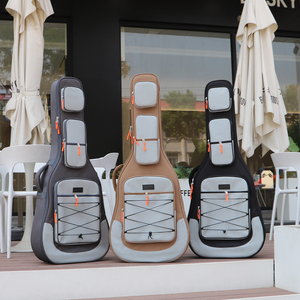
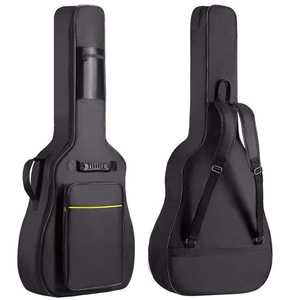
Beyond standalone electric guitar bodies, our production capabilities span full solid-body electrics, acoustics, basses, junior student sizes, and specialized heavy-duty waterproof gig bags, allowing full-catalog container consolidation.
Procurement Knowledge Base
Frequently Asked Questions for Guitar Body Importers & Luthiers
Addressing Quality Assurance, Minimum Order Quantities, Tolerances, and International Shipping
What specific test documentation accompanies your CE certified electric guitar bodies?
Every shipment destined for the European Union or regulated international territories is accompanied by third-party laboratory test reports (SGS, TÜV, or Intertek). These certify RoHS 2.0 (2011/65/EU and 2015/863) compliance confirming non-detectable levels of heavy metals, polybrominated flame retardants, and restricted phthalates. Additionally, REACH SVHC declarations and moisture equilibrium logs recorded at final packing are included with shipping manifests.
Can you manufacture custom body shapes or drop-fill proprietary neck pockets from our CAD files?
Yes. We run dedicated SolidWorks and Mastercam CAD/CAM software integrated directly with multi-axis CNC cells. Clients can transmit proprietary 3D step (.step), IGES (.igs), or DWG files under mutual Non-Disclosure Agreements (NDAs). We produce a pre-production prototype within 10 to 14 working days, ensuring precision tolerances for your proprietary neck joints, pickup cavities, recessed tremolo cavities, and compound body carves.
What are the Minimum Order Quantities (MOQs) for raw sanded vs. fully painted guitar bodies?
For raw, final-sanded guitar bodies ready for customer finishing, our standard MOQ is 50 units per wood species/routing configuration. For fully finished guitar bodies featuring custom electrostatic poly, metallic sparkle, or satin polyurethane finishes, the MOQ is typically 100 units per color run. Mixed container loads accommodating varied instrument series (such as full guitars, gig bags, and finished bodies) can be arranged upon commercial review.
How do you protect guitar bodies from humidity fluctuations during ocean transit?
Each finished or unfinished body is individually wrapped in anti-scratch EPE microfoam, hermetically sealed inside a heavy-gauge PE moisture barrier bag containing medical-grade desiccant packets, and packed into reinforced 5-ply corrugated export cartons. Shipping containers receive industrial desiccant poles to buffer against container rain caused by thermal condensation cycles during ocean voyages.
Are wholesale sample orders available for boutique luthier testing?
Yes, we actively support qualified brand builders, distributors, and custom shops with evaluation sample batches (typically 2 to 5 units). Sample production allows your engineering team to verify neck pocket fit, acoustic resonance, paint adhesion, and finish hardness before authorizing commercial production volume. Sample costs are credited against your initial production purchase order.
Launch Your Next OEM Guitar Program With Certified Excellence
Consult with our engineering and procurement team to request custom CAD quotations, material spec sheets, or CE compliance laboratory documentation.
Contact Us