Export-Grade Junior & Student Acoustic Guitars
Constructed with kiln-stabilized tonewoods, compliant low-formaldehyde bonding agents, and precision fretwork calibrated specifically for young learners and conservatory prep.
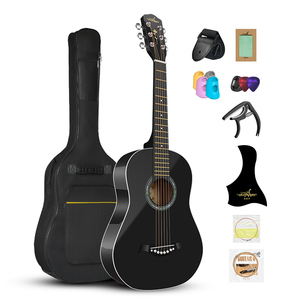
Wholesale Custom High Quality Hot Selling Glossy Travel 30 34 36 Inch Folk Acoustic Guitar for Children
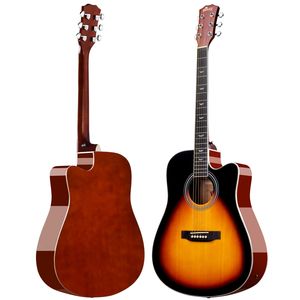
41-Inch Folk Acoustic Cutaway Guitar Package for Beginners Students Kids
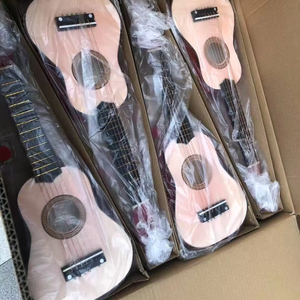
Wholesale 21 Inch Basswood Small Guitar 6 Strings Small Acoustic Guitar Musical Instruments for Children
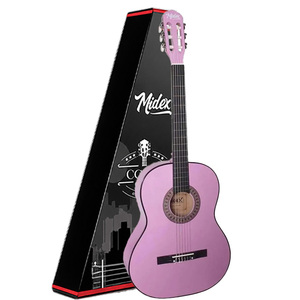
Midex CG-36PU 36 Inch 3/4 Junior Classical Guitar Sapele Neck Mahogany Body
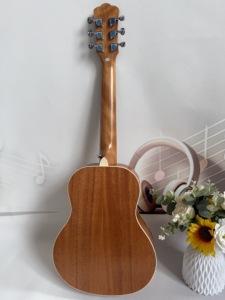
Bullfighter Kids D-30S Professional Top Solid Engelmann Spruce Acoustic Guitar 30 Inch
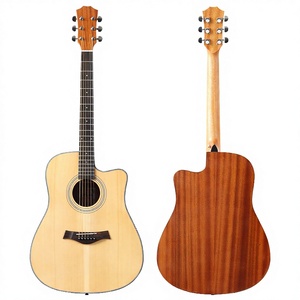
41 Inch 6 String Spruce Plywood Log Matte Acoustic Guitar for Students & Youths
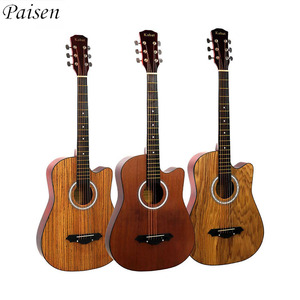
Paisen High Quality 38 Inch Solid Sapele Acoustic Guitar 6 Strings Folk Guitar for Kids
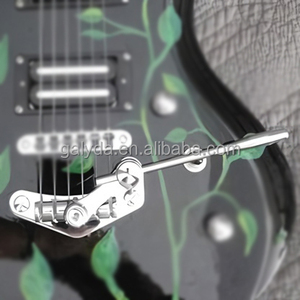
Wholesale Zinc Alloy Polished Precision Guitar Tailpiece & Hardware Assembly
Whitepaper: The Engineering Paradigm of Junior Acoustic Guitars
Manufacturing entry-level and junior fretted instruments requires a fundamentally different metallurgical and acoustic approach than standard 41-inch dreadnought guitars. In junior instruments—encompassing 1/4 (30-inch), 1/2 (34-inch), 3/4 (36-inch), and parlor/7/8 (38-inch) configurations—the reduced scale length significantly alters string physics. Because string tension is proportional to the square of the vibrating frequency and the square of the scale length, downsized acoustics strung with standard light gauge strings suffer from severe slackness, low acoustic displacement, and catastrophic intonation drift if the nut, bridge compensation, and internal top-bracing are not specifically recalculated.
As a premier CE Certified Junior Acoustic Guitar Factory and Exporter, our manufacturing methodology integrates mechanical physics with pediatric ergonomics. We calibrate our custom bracing profiles—shifting from traditional heavy Martin-style X-bracing to scalloped, lightweight radial bracing architectures—allowing smaller spruce and sapele tops to resonate at frequencies between 80Hz and 1200Hz despite low downbearing string pressure. Concurrently, fingerboard nut widths are narrowed to 42mm or 40mm, combined with shallow "Modern C" neck profiles tailored to pediatric skeletal mechanics. This mitigates excessive wrist pronation and repetitive strain during foundational musical education.
Crucially, international trade compliance for junior instruments is governed by stringent children's consumer product legislation. Our manufacturing processes strictly comply with European Standard EN 71 (Parts 1, 2, and 3), ensuring mechanical edge safety, non-flammability of synthetic components, and total chemical neutrality regarding the migration of heavy metals (antimony, arsenic, barium, cadmium, chromium, lead, mercury, and selenium). Furthermore, bonding resins, synthetic fingerboards, and finishes fulfill REACH Regulation (EC) No 1907/2006, US CPSIA, and CARB Phase 2 / TSCA Title VI formaldehyde emission caps, safeguarding classroom air quality and child safety across municipal education systems worldwide.
B2B Selection Matrix: Sizing, Ergonomics & Commercial Target Segments
Optimizing procurement catalogs requires balancing demographic physical development with wholesale SKU diversity. Our factory categorizes junior production runs across four distinct scale brackets, enabling institutional buyers and commercial brands to assemble balanced distributor assortments:
| Scale Format | Overall Length | Scale Length (mm / in) | Target Age & Height | Recommended Tonewood Core | Primary Commercial Role |
|---|---|---|---|---|---|
| 1/4 Size (Travel/Kid) | 30 Inch (762 mm) | 480 mm / 18.9" | Ages 3–6 (<110 cm) | Select Basswood or Spruce Ply | Kindergarten Music Labs & Gift Channels |
| 1/2 Size (Junior) | 34 Inch (864 mm) | 530 mm / 20.8" | Ages 6–8 (110–130 cm) | Engelmann Spruce / Agathis | Primary School Beginner Packages |
| 3/4 Size (Standard Cadet) | 36 Inch (914 mm) | 580 mm / 22.8" | Ages 8–11 (130–150 cm) | Solid Spruce / Mahogany Body | Conservatory Prep & Branded Starter Kits |
| 7/8 Size (Parlor / Folk) | 38 Inch (965 mm) | 610 mm / 24.0" | Ages 11+ & Adult Travel | Solid Sapele or Roasted Sitka | Intermediate Teens & High-End Travel Lines |
| 4/4 Size (Full Student) | 41 Inch (1041 mm) | 648 mm / 25.5" | Young Adults & Teens (>150 cm) | Spruce / Sapele Cutaway | High School Programs & Commercial Volume |
Note for Institutional Tenders: All scale formats can be customized with two-way adjustable steel truss rods, bone or PPS compensated saddles, and branded silk-screened headstocks per client master design files.
Future Procurement Trends in Juvenile Fretted Instruments
Anticipate market movements, statutory regulations, and shifting consumer expectations across European, North American, and Asia-Pacific supply chains.
1. Eco-Compliant Water-Borne UV Finishes
Stringent European VOC directives and US EPA regulations are accelerating the phase-out of traditional solvent nitrocellulose and polyester lacquers. Next-generation junior guitar manufacturing demands automated, robotic water-based ultraviolet (UV) thin-film coatings that emit near-zero VOCs while curing within seconds under UV lamps.
2. CITES-Free Sustainable Tonewood Alternatives
Global supply chain friction regarding Rosewood (Dalbergia spp.) under CITES Appendix II has cemented technical wood alternatives. Commercial buyers are transitioning to high-pressure technical laminates (HPL), thermally modified (torrefied) maple, Blackwood Tek, and engineered laurel for fretboards and bridges, ensuring border customs clearance with zero trade documentation holds.
3. E-Commerce Drop-Test Packaging (ISTA 3A)
The post-pandemic expansion of direct-to-consumer (D2C) online musical instrument retailing has shifted packaging requirements from traditional corrugated master cartons to certified ISTA 1A/3A mail-order crash-proof boxing. Guitars are packed inside multi-layered honeycomb cartons capable of surviving 1-meter freefall drops and 50kg vertical compression.
4. Turnkey Educational "Classroom Bundles"
Institutional procurement tenders across Europe and the Americas increasingly require complete all-in-one SKUs. Tenders mandate custom acoustic units packed with padded 600D water-repellent gig bags, clip-on digital chromatic tuners, non-toxic cotton straps, extra light nickel/nylon string sets, and instructional app QR integration.
Industrial Manufacturing Evolution: CNC Precision & Environmental Stabilization
The manufacturing of competitive export-grade student instruments has transitioned from labor-intensive manual shaping to high-precision robotic lutherie. Historically, lower-tier junior guitars were prone to seasonal fret buzz, fingerboard shrinkage, and neck warpage when shipped across diverse climate zones—such as moving from subtropical manufacturing hubs to dry North American or Northern European heated winter environments.
Dehumidification and EMC Wood Stabilization
To eliminate maritime container shipment moisture absorption and subsequent post-unloading distortion, raw lumber (Sitka spruce, Engelmann spruce, sapele, agathis, and mahogany) undergoes computer-controlled kiln desiccation for 28 consecutive days. Wood equilibrium moisture content (EMC) is systematically regulated between 8.0% and 10.5%. Timber stocks are subsequently acclimated in constant-temperature (22°C–25°C) and constant-humidity (45%–50% RH) cleanroom workshops for at least 14 days before jointing and thickness-sanding operations commence.
5-Axis CNC Milling & Automated Plek Fret Calibrations
Neck profiles, dovetail neck joints, and internal kerfed lining grooves are cut on multi-axis CNC routers with tolerances within ±0.03mm. Furthermore, automated cryogenic fret pressing ensures zero fret-end protrusion along fingerboard edges—a frequent hazard on non-certified student guitars that can abrade young fingers. Precision robotic crowning and leveling guarantee uniform string action across all frets (factory set at 2.2mm bass / 1.8mm treble at the 12th fret), delivering effortless playability right out of the box.
Factory Strengths & Global Supply Chain Infrastructure
Rooted in seasoned industrial lutherie heritage, delivering dependable craftsmanship, accountable corporate management, and full-spectrum trade compliance.
Corporate Lineage & Heritage
Backed by an established guitar manufacturing lineage with decades of design refinement—trusted across international markets from classic solid-body electric platforms to nuanced juvenile acoustics. Our organizational structure ensures financial stability, scalable contract execution, and dependable continuity for large-scale B2B importers.
Rigorous Laboratory Quality Control
Every production batch is tested in internal environmental chambers, undergoing cyclical thermal stress tests (-15°C to +50°C) and hygroscopic aging (20% to 90% RH) over 72 hours. Bridge tensile adhesion is mechanically stressed to withstand continuous 80kg pull-force loads, ensuring absolute acoustic reliability under string tension.
Full OEM/ODM Private Label Integration
We provide full-spectrum turnkey private-label customization: laser-etched internal bracing badges, screen-printed or abalone-inlaid headstock branding, bespoke rosette patterns, custom scale lengths, and branded export retail packaging engineered to maximize container floor and cube loading volume.
Multi-Family Assortment Consolidation
Unlike single-line factories, our production campus simultaneously manufactures acoustic, classical, electric, and bass guitar series. B2B distributors can consolidate full 40ft High Cube (HC) shipping containers with mixed product families (e.g., junior acoustics alongside standard electrics and basses), drastically lowering freight overhead.
Frequently Asked Questions for Trade Buyers
Clear, direct answers regarding production lead times, chemical certifications, container loading, and OEM customization.
What specific certifications do your junior acoustic guitars carry for EU and North American importation?
What are the standard Minimum Order Quantities (MOQ) and production lead times for OEM private labeling?
How does your factory prevent neck bowing and fret-sprout during long-distance ocean freight?
Can distributors mix acoustic, electric, and bass guitar series in a single consolidated shipping container?
What type of warranty coverage, quality audit inspection, and RMA replacement support do you provide?
Accelerate Your Fretted Instrument Supply Chain
Partner with an established, CE certified manufacturing hub. Access institutional wholesale price lists, request bespoke OEM prototype samples, and download our complete fretted instrument line catalog today.