Standard-Setting Acoustic & Electric Factory Implementations
Direct from our state-of-the-art production lines: engineered mahogany acoustics, resonance-optimized hybrid builds, and commercial-scale stringed instruments configured for world-class distributors and private labels.
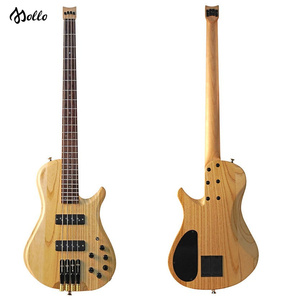
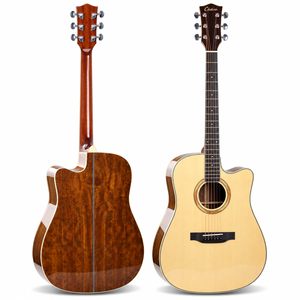
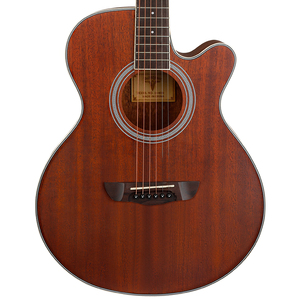
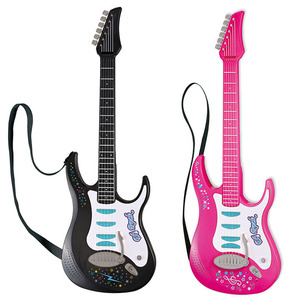
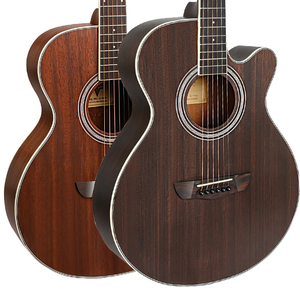
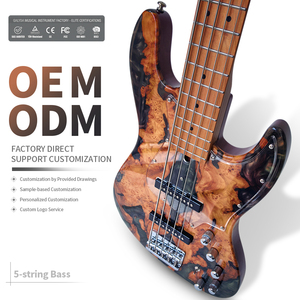
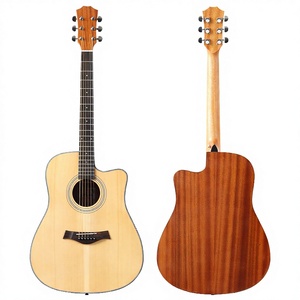
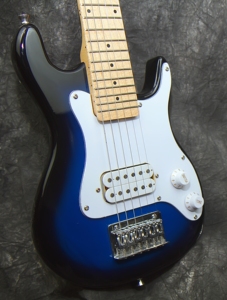
Engineering Superior Resonance: The Physics of CE-Certified Mahogany Acoustics
A comprehensive examination of density gradients, internal damping ratios, and acoustic impedance matching that differentiate professional OEM mahogany instruments from commoditized entry-level guitars.
Acoustic Velocity & Density Optimization
Mahogany (specifically genuine Swietenia macrophylla and certified African Khaya ivorensis) exhibits an exceptional radiation ratio (R = c / ρ), where acoustic velocity (c) balances structural density (ρ ≈ 490 - 560 kg/m³). Unlike brittle softwoods, our precision-graded mahogany soundboards deliver linear velocity transfer across mid-band spectrums (400 Hz to 2.5 kHz).
- Young's Modulus (E): 10,200 to 12,400 MPa
- Internal Damping (tan δ): 0.0075 - 0.0092
- Moisture Content Equilibrium: Calibrated to 8.2% ± 0.5%
Advanced Scalloped X-Bracing Dynamics
Resonance is heavily governed by bracing stiffness. Our engineering team utilizes finite element analysis (FEA) to sculpt forward-shifted parabolic X-bracing. Quarter-sawn Sitka spruce struts are tuned to alleviate tension at the bridge plate while liberating fundamental low-frequency Helmholtz resonance modes without compromising string tension integrity.
- Bridge Plate: Solid maple re-enforced load vectoring
- Bracing Angle: 104° forward shift for deep low-end attack
- Top Deflection Tolerance: Precise 1.8mm at 160 lbs load
Climatic Acclimation & Cell Lignification
Dimensional instability is the foremost cause of bridge lifting, fret sprouting, and body deformation. Our industrial drying procedure implements automated thermo-vacuum cycling over 28 continuous days. This accelerates cellular lignification, stabilizing parenchyma cells to withstand relative humidity (RH) swings between 30% and 75%.
- Kiln Cycling: 4-stage vacuum thermo-dehydration
- Hydration Aging Chamber: 45 days stabilization at 48% RH
- Thermal Creep Defense: Polyurethane thermal-set crosslinking
Acoustical Damping Index (ADI) in Mahogany Soundboards
Compared to Engelmann or Sitka spruce soundboards which excel at high-frequency transient peaks, mahogany possesses inherent high-damping natural filtering. This property curtails harsh overtones above 4.8 kHz while augmenting low-mid sustain around 220 Hz to 650 Hz. For commercial private labels, this creates an inherently balanced sound profile that cuts cleanly through studio mixes and acoustic ensemble tracking.
CE Certification, REACH, & Global Trade Compliance Architecture
Importing stringed instruments into European, North American, and Asia-Pacific territories demands uncompromising adherence to heavy metal limits, volatile organic compounds, and environmental timber treaties.
| Regulatory Standard | Test Parameters & Directives | Technical Thresholds | Our Manufacturing Protocol | Compliance Status |
|---|---|---|---|---|
| CE Safety Directive (2001/95/EC) | Mechanical Stability, Sharp Edge Hazards, Structural Load | Zero structural failure under 125% max string load | Reinforced 2-way truss rods, radiused frets, rounded nut edges | Certified Pass |
| EN 71-3 Chemical Migration | 19 Bio-accumulative heavy metals in lacquers and varnishes | Lead (Pb) < 23 mg/kg, Cadmium (Cd) < 17 mg/kg | Non-toxic UV-curable thin-film polyesters, aqueous sealers | Certified Pass |
| EU REACH (EC 1907/2006) | Phthalates, PAHs, formaldehyde emissions in composite timbers | Formaldehyde release < 0.05 ppm (EN 717-1 standard) | CARB Phase 2 / TSCA Title VI certified resins & structural glues | Certified Pass |
| CITES Appendix II / EUTR | Legality of rosewood, mahogany, and controlled timber species | Unbroken chain-of-custody timber import declarations | Strict plantation-sourced Khaya ivorensis, FSC-certified supply line | Fully Documented |
| US Lacey Act (16 U.S.C. 3371) | Declaration of genus, species, harvest location, import valuation | Complete PPQ Form 505 electronic data integration | Automated barcoded batch tracking on every timber billet | Audit Ready |
Heavy Metal-Free Poly Finishes
Traditional nitrocellulose finishes often contain regulated solvents and plasticizers prone to off-gassing. Our CE-compliant facilities apply electrostatically charged ultra-thin polyurethane and UV-polymerized coats (sub-80 microns thickness). This eliminates toxic emissions while preserving maximum vibrational amplitude of the mahogany soundboard.
Fretboard Metal Toxicology
Every fret wire batch undergoes atomic emission spectrometry to verify 0.00% nickel/cadmium migration risks. We protect international buyers from costly border rejections by certifying our frets and nickel alloys meet European skin contact hygiene safety standards.
Automated CITES Documentation
We supply full legal documentation packages for custom clearances worldwide, eliminating port seizures. With deep experience across JAM USA LLC logistics and global distribution networks, all export paperwork is systematically aligned with international wildlife and botanical customs portals.
Future Technology & Acoustic Engineering Development Trends
The acoustic guitar manufacturing sphere is experiencing a profound paradigm shift driven by acoustic physics, automation, environmental stewardship, and hybrid electro-acoustic convergence.
Torrefaction & Pyrolytic Seasoning
Thermal modification in an oxygen-deprived kiln (torrefaction) breaks down cellular hemicellulose. This artificial aging replicates the vibrational characteristics and structural resilience of 70-year-old vintage mahogany, imparting instant tonal openness.
Robotic Plek Fret Dressing
Computerized Plek analysis scans the neck under true string tension, cutting and profiling frets to within 0.01mm tolerances. This eliminates buzz across high registers and permits exceptionally low action straight out of shipping cartons.
Multi-Transducer Pickup Systems
Modern players demand high-fidelity amplification without brittle piezo 'quack'. Developing models integrate dual-source under-saddle transducers with internal MEMS acoustic microphones and under-bridge contact sensors.
Engineered Composite Tonewoods
To hedge against global timber quotas, high-pressure laminates (HPL) with genuine mahogany micro-veneers and richlite/micarta fingerboards deliver supreme structural stability, unaffected by desert dryness or tropical humidity.
Strategic B2B Sourcing Trends: De-Risking Musical Instrument Procurement
Macroeconomic shifts, freight fluctuations, and consumer demand require modern distributors to adopt agile, data-driven procurement models.
Consolidated Category Sourcing
Rather than managing split vendors across entry acoustic, boutique electrics, and student-line instruments, modern distributors consolidate catalogs under integrated manufacturing partners. By leveraging unified production platforms, importers achieve container-level volumetric density, reducing freight cost per unit by up to 22%.
SKU Rationalization & Modularity
Leading music retail brands are reducing redundant SKUs in favor of standardized core platforms featuring regional cosmetic variations (e.g., matching the Bullfighter D-4015 mahogany chassis across cutaway, natural, and gloss variants). This streamlines spare parts logistics, simplifies retail technician training, and accelerates inventory turnover.
Digital Traceability & QA Telemetry
High-reliability factories now incorporate RFID serial tags within neck heel blocks. This provides importers with complete telemetry data: timber kiln batch records, CNC milling dates, atmospheric chamber logs, and individual acoustic resonance frequency reports, drastically lowering product return rates at retail.
Enterprise Advantages: Why Tier-1 Distributors Partner with Our Facilities
Forged through industry partnerships and heritage engineering shared with brands like Jay Turser and international divisions of JAM USA LLC, our facility couples artisan lutherie with automated scale.
5-Axis CNC Precision Carving
Every neck blank, dovetail joint, and internal brace is shaped using German 5-axis CNC router tooling with repeatability within 0.02mm. Dovetail neck joints achieve seamless wood-to-wood surface contact, guaranteeing lossless transfer of string energy directly into the guitar's longitudinal body axes.
Dual Laser Spectrometry Inspection
Before assembly, each bookmatched mahogany top is scanned via laser interferometry to identify density anomalies or localized grain runout. Tops that fail our rigid harmonic propagation velocity threshold are routed out, ensuring uniform tonal output across full production runs.
Integrated Private Label OEM/ODM
From custom headstock profiling and bespoke abalone/mother-of-pearl inlays to branded carton engineering and barcoded retail logistics, we supply an end-to-end white-label solution. We transform CAD design concepts into certified production samples in as fast as 21 business days.
Turnkey Global Logistics Support
Backed by institutional supply chain infrastructure, we manage direct container drops, mixed-SKU freight consolidations, and bonded warehouse transfers. Our accounts benefit from dedicated international shipping coordinators fluent in export documentation and customs clearing protocols.
Frequently Asked Questions for Commercial Buyers & Importers
Critical procurement, compliance, and engineering answers to inform your next musical instrument supply chain purchase order.
Q1 What specific directives validate your CE certification on mahogany acoustic guitars?
Our acoustic instruments are certified compliant under the European General Product Safety Directive (GPSD 2001/95/EC), RoHS Directive (2011/65/EU and amendment 2015/863), and EN 71-3 toy safety safety standards for heavy metal non-toxicity in surface lacquers. All certificates are issued by internationally accredited testing bodies and accompanied by factory batch test declarations.
Q2 How do you ensure legal compliance with international CITES and EUTR timber regulations?
All mahogany variants (African Khaya or Honduran Swietenia) and rosewood materials are legally harvested from sustainable commercial timber reserves. Every container shipment includes full CITES Appendix II export permits, European Union Timber Regulation (EUTR) due diligence dossiers, and US Lacey Act electronic declaration sheets verifying country of origin and harvest concession numbers.
Q3 What are your minimum order quantities (MOQ) and lead times for OEM private-label branding?
Our standard OEM minimum order quantity starts at 60 units per model variant for custom silk-screen headstocks and 120 units for custom mother-of-pearl or CNC-carved logos. Standard production lead times run between 35 and 45 days following final golden sample approval, with expedited 25-day production slots available for recurring contract clients.
Q4 How do your climate-controlled facilities prevent neck warping and fret sprouting after export?
Raw lumber undergoes 28 days of automated thermo-vacuum drying, reducing moisture content to 8-10%. Following rough milling, components are stored in constant-climate aging chambers maintained at 22°C (71.6°F) and 45-50% RH for an additional 45 days. This molecular-level equilibrium eliminates internal stress, preventing fret sprouting or body bulging during intercontinental sea transit.
Q5 Can we consolidate acoustic, electric, and bass models into a single container order?
Yes. As a comprehensive musical manufacturing conglomerate with shared industrial assets (supporting models similar to Jay Turser 300 Series, Bullfighter D-4015 acoustics, boutique basses, and youth educational lines), we support mixed-SKU container consolidation. You can optimize inventory allocation by combining electrics, acoustics, and accessories within one FOB dispatch.
Q6 What pre-shipment quality assurance protocols are applied to each production run?
Every single guitar passes an exhaustive 24-point pre-shipment checklist: 100% action measurement at the 1st and 12th frets, laser straightness inspection of the neck relief under tension, acoustic spectral response testing, bridge bond ultrasonic shear check, and surface finish inspection under high-intensity ultraviolet cross-lighting to detect any micro-fissures.
Initiate Your Commercial Procurement Consultation
Connect with our B2B OEM/ODM sales engineers to request factory-direct wholesale pricing, order production prototypes, or obtain complete CE and CITES documentation packages tailored to your country of import.