Featured OEM/ODM Production Models & Protection Solutions
Examine our engineered production series engineered for tier-one musical instrument brand catalogs, educational procurement projects, and commercial global distribution.
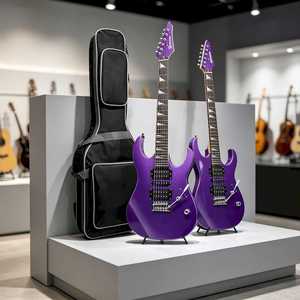
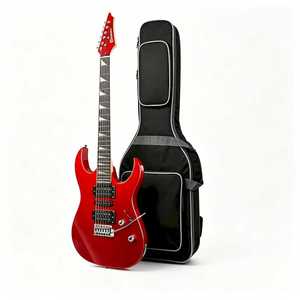
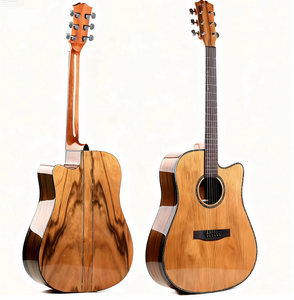
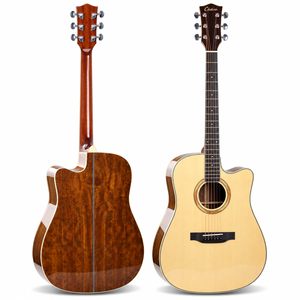
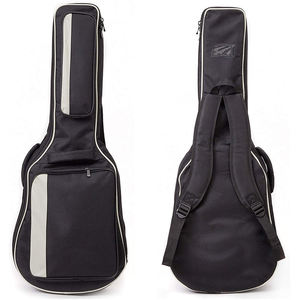
Structural Architecture of China's Best Acoustic Guitar Hardcases
An exhaustive analysis of load-bearing geometry, material delamination prevention, microclimate dampening, and automated manufacturing tolerances for precision stringed instrument protection.
5-Ply Cross-Laminated Hardwood Shells
The definitive benchmark of premium Chinese hardcase manufacturing lies in the cross-lamination of rotary-cut birch and poplar veneers. By alternating wood grain orientation at 90-degree angles under hydraulic thermal compression, our shells achieve extraordinary shear strength and eliminate longitudinal torsional warping under extreme ambient humidity differentials.
Our arched-top press tooling imparts a calibrated radial crown that deflects vertical compressive impacts away from delicate solid spruce guitar soundboards, redirecting crushing forces directly down into the reinforced vertical sidewalls.
Precision Tongue-and-Groove Aluminum Valences
Rigidity along the perimeter seam is guaranteed through continuous 6063-T5 extruded aluminum alloy valences. Formed with high-tolerance interlocking male-female channels, the valences seal securely against moisture ingress and airborne pollutants.
Unlike lower-tier stitched PVC edge borders that loosen over transit cycles, mechanically riveted aluminum valences anchor the upper lid to the lower trough. This configuration resists shear displacement during baggage drops, maintaining critical latches in true axial alignment over years of international touring.
Dual-Density EPS Cushioning & Non-Reactive Linings
Acoustic resonance chambers demand zero-pressure-point support. CNC-milled expanded polystyrene (EPS) foam cores are engineered with varying densities: high-durometer foam supports the heavy neck heel and headstock angle, while progressive-rate low-density foam cradles the lower bout and rib curves.
Interiors are wrapped in electrostatic plush velvet bonded with water-based, VOC-free crosslinking adhesives. This zero-off-gassing adhesive chemistry eliminates the catastrophic hazing, chemical softening, and bubbling that volatile solvents cause on nitrocellulose lacquer finishes.
| Structural Parameter | Commercial Grade (Standard OEM) | Professional Touring Specification | Custom Boutique & Flight Grade |
|---|---|---|---|
| Shell Construction | 3-Ply 5mm Mixed Wood / Flat Top | 5-Ply 7.5mm Birch/Poplar / Archtop | 7-Ply 9mm Aviation Hardwood or Carbon Composite |
| Compressive Resistance | Up to 45 kg (Vertical) | Up to 110 kg (Distributed Arch Load) | Exceeds 200 kg (Crush Resistant) |
| RH Buffer Capacity | ±18% RH Fluctuation in 24h | ±6% RH Fluctuation in 48h | Hermetic O-Ring Seal (±2% RH in 72h) |
| Hardware Spec | Gold/Chrome Plated Sheet Steel | Heavy-Duty Steel Latches + TSA Center Lock | Stainless Steel Recessed Twist Latches / Flight Hardware |
| Finish Safety | Polyurethane/Poly Modern Compatible | 100% Certified Nitrocellulose Safe (ISO 105) | Zero-VOC Non-Reactive Deep-Plush Microfiber |
Global Procurement & Sourcing Megatrends (2025–2030)
How international fretted instrument brands, big-box musical retailers, and distributor networks are re-engineering their China supply chain strategies to secure margin, compliance, and product differentiation.
1. Consolidated SKU Logistics & "Instrument-in-Case" Shipping
Global ocean freight economics have made shipping empty acoustic hardcases financially untenable. Air void costs inside an empty 41-inch dreadnought case inflate landed costs per unit. The leading procurement trend among Western distributors is consolidating instrument manufacturing with case production in China.
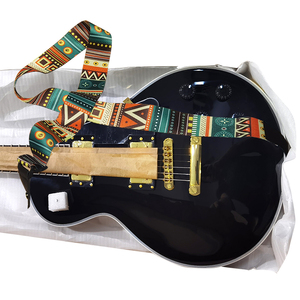
By nesting OEM electric guitars, acoustic guitars, and basses directly inside their corresponding hardcases at our manufacturing facility, brands reduce container cubic meter (CBM) waste by up to 58%, eliminate redundant master cartons, and virtually eradicate transit finish damage prior to container destuffing in destination ports.
2. Strict ESG, EUDR, and Formaldehyde Outgassing Compliance
With the enforcement of the European Union Deforestation Regulation (EUDR) and stringent US Lacey Act compliance, timber traceability for case manufacturing has shifted from an afterthought to an absolute legal prerequisite. Leading manufacturers in China now supply verified digital Chain-of-Custody (CoC) documentation for all plywood plies, poplar veneers, and interior timber struts.
Simultaneously, EPA TSCA Title VI and CARB Phase 2 standards govern resin adhesives. Enterprise purchasers now require certified zero-phenol and low-aldehyde test reports to avoid container seizures and showroom product recalls in regulated territories.
3. Transition to Modular Tooling & Rapid Scalability
Traditional hardcase tooling demanded lengthy lead times for custom body profiles like grand auditoriums, parlor guitars, and multi-scale archtops. Forward-thinking Chinese manufacturers utilize 5-axis CNC router tooling for interior mold fabrication. This reduces new SKU prototyping lead times from 12 weeks to under 14 business days.
Tier-one OEM buyers leverage our configurable outer shell blanks combined with rapid-swappable inner mold inserts to maintain diverse regional catalogs across 40-inch cutaways, jumbo acoustics, and classical sizes without amortizing new structural die costs.
4. Composite Hybrids Overpowering Traditional Heavy Tolex
While vintage-spec pebble-grain Tolex wrapped over plywood remains an indispensable classic for premium retail sales, urban commuting and modern touring musicians demand weight reduction. Procurement managers are shifting up to 35% of their case inventory toward thermoformed ABS shells, poly-carbonate composites, and aerospace carbon-fiber skins.
These advanced composite cases match or surpass the 100kg crush-rating of 5-ply cross-grained wood cases while slicing gross weight from 5.4 kg down to 2.8 kg, radically reducing end-consumer courier shipping costs for e-commerce music platforms.
Next-Generation Engineering Innovations in Acoustic Protection
Discover the smart protective technologies and ergonomic breakthroughs reshaping case manufacturing lines across China's premium instrument corridors.
Integrated IoT Climate Telemetry
Modern acoustic guitar protection extends beyond impact resistance into environmental stabilization. China's cutting-edge manufacturers are integrating flush-mounted Bluetooth hygrometer and temperature beacons into the accessory pocket compartment wall.
This allows guitarists and climate-controlled warehouse managers to monitor relative humidity (RH) and ambient thermal spikes directly on smartphone apps without breaking the case's airtight gasket perimeter, safeguarding solid spruce tops against humidity cracks during winter sea transits.
Ergonomic Kinetic Balance Handles
Traditional case handles suffer from static off-center balance that causes severe wrist fatigue and accidental gate impacts. Our modern designs feature steel-reinforced, memory-gel padded handles positioned along the specific center-of-gravity (CoG) vector of a fully cased acoustic instrument.
Through finite-element load modeling, handle anchors are through-bolted with interior steel backing plates to ensure zero tear-out failure under dynamic 50kg cyclical drop-weight load tests.
Flush TSA Latches & Valance Recessing
Baggage handling systems cause catastrophic latch damage when external clasps catch on conveyor guide rails. Our next-generation hardcases incorporate flush-recessed, zinc-alloy die-cast TSA-approved key locks and spring-loaded trigger release mechanisms.
By recessing latch housings below the extruded valence profile, lateral impacts glance off harmlessly, ensuring that accidental unlatching during air freight handling is completely prevented.
Why Global Brands Partner with Our China Manufacturing Facilities
Rooted in precision engineering, backed by international enterprise stewardship through JAM USA LLC, and driven by comprehensive fretted instrument domain expertise.
Backed by JAM USA LLC: Institutional Accountability
Unlike transient white-label suppliers in the region, our operational governance is fortified by the stewardship of JAM USA LLC. This tier-one corporate umbrella guarantees North American commercial standards, strict contract enforceability, transparent banking protocols, and dependable multi-year warranty obligations.
We serve as a seamless bridge between Western executive expectations for intellectual property (IP) protection and high-efficiency China manufacturing infrastructure, eliminating cross-border trading risks.
Holistic Musical Instrument Ecosystem Knowledge
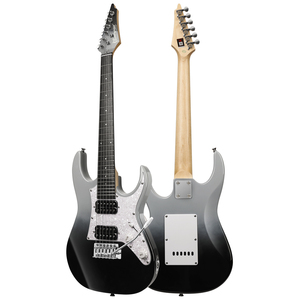
A hardcase manufacturer cannot engineer superior protection without living and breathing guitar luthiery. Because our facilities engineer full product lines spanning electric guitars (300, LT, 30 Jr series), steel-string acoustics (Jay J, Jay Jr, JTA series), and basses (400, CL series), we understand the critical dimensional nuances of stringed instruments.
From bridge height clearance and bridge pin tension relief to headstock break-angles and nitrocellulose finish sensitivities, our case engineering team shares the exact CAD files used by guitar production lines, achieving micron-perfect cradle fitment.
Total OEM/ODM Customization Freedom
We provide global brand directors with absolute freedom across aesthetic, functional, and branding touchpoints. Custom options include exterior covering materials (classic vintage tweed, cross-grain Tolex, carbon fiber weaves, ballistic 1680D nylon wrappers), interior fabric selections (deep-pile crushed velvet, non-pilling velour, silk ribbons), and customized metallic hardware finishes (aged brass, gloss black nickel, high-polish chrome, titanium powder coat).
Branding treatments encompass precision die-cast metal valence badges, direct hot-foil leather stamping, laser-engraved lock plates, and silk-embroidered plush interior lid silk ribbons.
Rigorous In-House Laboratory Testing Standards
Prior to container release, random sampling from each production batch undergoes strict stress-testing protocols. Our QA facility conducts 1.2-meter multi-angle drop tests onto solid concrete, 10,000-cycle handle jerk tests, latch tension pull-apart tests exceeding 400N, and thermal shock chamber cycling between -20°C and +65°C.
Every case must verify complete seal integrity and zero structural glue joint separation before receiving international dispatch approval.
Frequently Asked Sourcing & Engineering Questions
Clear, authoritative technical answers to assist OEM product managers, procurement executives, and international distributors during factory selection and contract drafting.
What is the minimum order quantity (MOQ) for custom-branded acoustic guitar hardcases? +
For standard catalogue shell shapes (e.g., standard 41-inch Dreadnought, 40-inch OM/Folk, and 42-inch Jumbo profiles) utilizing in-stock Tolex patterns and hardware, our baseline OEM MOQ begins at 100 to 200 units per specification. For fully custom tooling requiring bespoke exterior aluminum valence dies, specialized injection-molded ABS shells, or unique body contours (such as 12-string acoustic headstocks, parlor acoustic bodies, or proprietary cutaway silhouettes), our standard tooling MOQ is typically 500 units per mold batch to optimize raw material amortization.
How do your factory adhesives prevent chemical damage to nitrocellulose finishes? +
Nitrocellulose lacquer remains porous and chemically active long after curing, making it acutely susceptible to "case burn" (the blistering, discoloration, or hazing caused by aromatic hydrocarbon vapors released by solvent-based glues). Our facility utilizes water-dispersed, certified zero-VOC polyurethane hot-melt adhesives applied through controlled automated roller lines.
Furthermore, finished case batches undergo a mandatory 72-hour open-air thermal de-gassing tunnel run before final bagging and packing. This guarantees that residual moisture and trace volatiles fall below 0.02 ppm, satisfying stringent ISO 105 textile and finish compatibility requirements.
Can we consolidate our guitar manufacturing and hardcase manufacturing under your facility? +
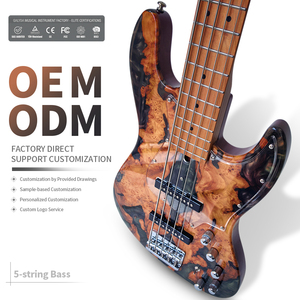
Yes. This represents one of our primary competitive advantages. Through our broad fretted instrument production capabilities (including student electric kits, beginner solid-body basswoods, solid spruce acoustic lines, cutaway models, and boutique 5-string basses), we provide end-to-end "guitar-in-case" consolidation. Your instruments are inspected, setup-checked, tuned down for transit, and nested directly into their matching hardcase at our facility. This substantially reduces shipping volume, saves tens of thousands in master carton procurement, and protects your instruments during trans-Pacific or trans-Eurasian transport.
What are the lead times for OEM prototyping versus full container production runs? +
Rapid CAD/CAM prototyping from your provided 3D guitar surface files (.STP, .IGS, or .DWG) requires roughly 10 to 14 business days. This delivers a physical foam-fit prototype for clearance sign-off. Upon sample confirmation and deposit, full commercial production for a standard 40-foot high-cube (HQ) container (containing approximately 550 to 750 acoustic hardcases depending on stacking profile) requires 35 to 45 calendar days. Repeat container re-orders operate on an expedited 28-day scheduling window.
How does your quality control department manage environmental compliance (EUDR & Lacey Act)? +
Every shipment is accompanied by complete timber species documentation and geolocation verification records. Our plywood cores utilize certified birch (Betula pendula) and sustainably farmed poplar (Populus deltoides) sourced exclusively from audited forestry operations. We provide our global purchasing partners with formal Declaration of Conformity dossiers satisfying EUDR Article 9 requirements and US Lacey Act electronic PPQ 505 reporting requirements, ensuring zero port demurrage or customs impoundment.
What are the key structural distinctions between plywood, ABS, and fiberglass acoustic hardcases? +
Plywood hardcases offer superior thermal insulation and time-tested vintage aesthetic appeal. Their high mass provides natural shock absorption, making them the preferred retail choice for high-value solid wood acoustics. Vacuum-formed ABS cases feature aluminum valences that resist rain, moisture, and rough airline luggage handling, offering high impact resistance at a lower weight. Fiberglass and carbon composite cases deliver maximum tensile crush-strength with hermetic O-ring rubber seals, creating an impenetrable barrier against airport downpours and thermal extremes for elite touring instruments.
Initiate Your OEM/ODM Production Sourcing Today
Consult directly with our engineering and procurement team for technical drawings, material swatch kits, custom mold development, and container-volume price matrices.