Engineered Classical & Nylon String Instruments
Explore our benchmark OEM/ODM product lineup engineered for educational academies, commercial retail lines, silent travel solutions, and concert performance masterclasses.
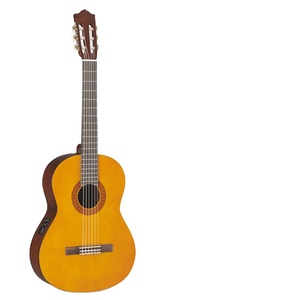
Popular Classical Nylon Guitar Student Guitar Nylon Strings Original Yamahas C40 Guitar With Bag
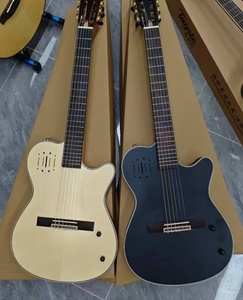
Silent Guitar Classical CG100 39 Inches Matte Finishing 6-String Nylon String Rosewood Fretboard
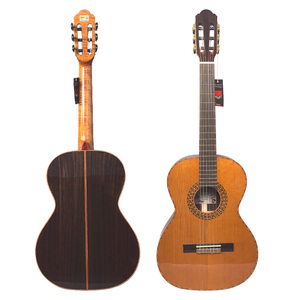
High quality 36 Inch Full Solid Red Pine rosewood back Classical Guitar 6 String Acoustic Nylon Guitar for Professionals

Terence G20 Classical Guitar for Music School with Nylon Strings Professional Grade 40 Inch Wood Guitar Home
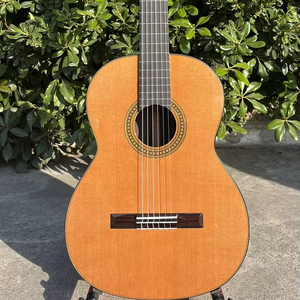
Replica Hauser Classical Guitar Aiersi All Solid High Grade Musical Instrument
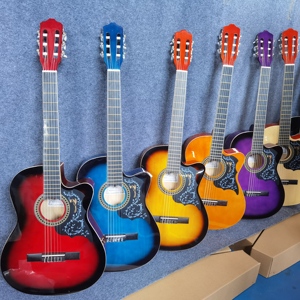
Full Size 39inch China Wholesale Natural Wood Color Classical Guitar Great Wood Practice Nylon Strings Guitar Classic
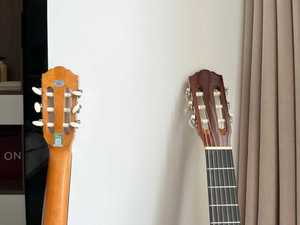
Bullfighter MS-3612 Professional Laminate Classical Acoustic Guitar with 36 Inch Body Rosewood Fingerboard Nylon Strings
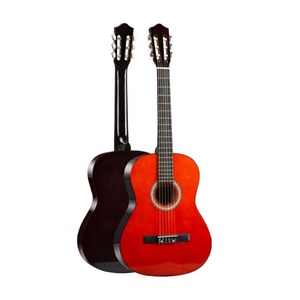
High Quality 38-Inch Classical Guitar with Nylon Strings Handmade and OEM Service Direct From China Factory Wholesale
The Architecture of Modern Classical Guitar Manufacturing
How China's premier lutherie clusters have merged 19th-century Spanish structural principles with German 5-axis CNC machining, micro-climate conditioning, and non-destructive modal testing.
Traditional Spanish Heel Integration
Unlike standard acoustic guitars that assemble necks with dovetail or bolt-on joints, high-grade classical guitars require the neck block to be carved directly into the body frame. Our manufacturing facilities utilize automated multi-spindle mortising to construct authentic integrated Spanish heels. This establishes seamless acoustic energy transfer from the fingerboard through the top soundboard, maximizing low-frequency modal resonance and eliminating longitudinal heel joint separation under tropical or arid seasonal shifts.
Torres, Hauser & Lattice Bracing
A soundboard's mechanical impedance dictates tonal balance, dynamic response, and sustain. We manufacture soundboards with precision-tuned traditional 7-fan Torres patterns for warm, romantic Spanish timbre; 1937 Hauser symmetrical struts for balanced clarity across upper partial registers; and advanced ultra-thin Nomex double-top lattice bracing. Every top plate is micro-thicknessed using laser micrometer sensors to achieve optimal stiffness-to-weight ratios down to a 2.0mm baseline profile.
RF Vacuum Kiln & EMC Conditioning
Wood instability is the single largest driver of overseas warranty returns. Our factories implement an automated five-stage wood conditioning cycle: open-air seasoning, radio-frequency vacuum drying, and continuous acclimation within a constant Relative Humidity (RH 48% ± 3%) chamber for 90 days prior to assembly. This ensures Equilibrium Moisture Content (EMC) is locked between 8% and 10%, effectively preventing soundboard sinking, bridge lift, or fret sprout in export destinations.
Procurement Trends Shaping Nylon String Guitars (2026–2030)
B2B sourcing directors and institutional buyers must navigate shifting consumer preferences, supply chain sustainability mandates, and technological disruptions in fretted instrument retail.
Crossover Hybrid Ergonomics
The traditional 52mm classical nut width and flat fretboard present steep physical barriers for electric and acoustic steel-string players. Global procurement demand is surging for "Nylon Crossover" models: 48mm nut profiles, gentle 16-inch fingerboard radii, Venetian cutaways, and integrated dual-source undersaddle/mic preamps. Modern music education platforms and singer-songwriters increasingly specify crossovers as their core studio tool, making this category the fastest-growing segment in commercial fretted sales.
CITES-Free Sustainable Tonewoods
Strict international enforcement of CITES Annex II on Dalbergia (Rosewood) species has triggered a permanent transformation in procurement specifications. High-volume importers are replacing traditional East Indian Rosewood with technologically modified tonewoods such as thermally modified European Walnut, FSC-certified Jatoba, and phenolic composite Richlite fretboards. These materials deliver uniform density, zero import documentation friction, and superior physical resistance to environmental humidity shock.
Computerized Plek Nut & Fret Dressing
Manual fret leveling introduces human variation that undermines high-volume consumer satisfaction. Top-tier Chinese OEM facilities are integrating German Plek computerized fret-dressing robots into production lines. Under real string-tension simulation, each guitar's neck relief is measured to 0.001mm precision, cut to ideal action height, and dressed with crown polish. For OEM brands, this yields flawless out-of-the-box playability, virtually ending dealer set-up expenses and pre-sale returns.
Commercial Procurement Specification Matrix
A reference architecture for institutional tenders, brand distributors, and retail category managers evaluating bill-of-materials (BOM) configurations.
| Target Tier | Soundboard Construction | Back & Side Tonewood | Neck Joint Type | Scale / Nut Width | Primary Commercial Use |
|---|---|---|---|---|---|
| Entry / School | Laminated Engelmann Spruce / Linden | Agathis / Meranti / Sapele | Reinforced Dovetail | 650mm / 52mm (or 580mm 3/4) | School music programs, beginner starter kits |
| Conservatory | Solid A+ Sitka Spruce or Western Red Cedar | Laminated Mahogany / Walnut | Spanish Heel / Traditional V-Joint | 650mm / 52mm | Music college prep, intermediate private-label retail |
| Stage Hybrid | Solid Engelmann Spruce / Flame Maple | Rosewood / Ovangkol with Cutaway | Modern Spanish Heel with 2-Way Truss | 648mm / 48mm (Radius Fingerboard) | Live acoustic performance, worship bands, studio tracking |
| Concert Master | Solid AAA European Alpine Spruce / Cedar | Solid Indian Rosewood / Cocobolo | Authentic Master Spanish Integrated Heel | 650mm / 52mm (Bone Nut/Saddle) | Solo classical artists, luthier collection lines |
Why World-Class Guitar Brands Entrust Production to Our Facilities
With an engineering infrastructure backed by global manufacturing rigor, our facilities have transformed classical guitar fabrication from inconsistent handcrafting into reliable, acoustically verified, high-volume production.
- Acoustically Tuned Top Voicing: Laser hologram deflection tests ensure every soundboard matches targeted resonant frequency tolerances (±3 Hz).
- Micro-Thin Electrostatic UV Finishing: Ultra-thin 38-micron finish thickness allows unrestricted top plate oscillation without sacrificing impact resistance.
- Full Regulatory Audit Readiness: Direct supply chain traceability for Lacey Act, EU Timber Regulation (EUTR), REACH chemical standards, and FSC chain-of-custody.
• Action Height Tolerance: 12th Fret Bass String set at 3.5mm ± 0.2mm; Treble String set at 2.8mm ± 0.2mm.
• Thermal Drop Testing: Cyclic environmental testing from -15°C to +50°C over 48 hours to guarantee structural adhesive integrity.
• Barcode Production Tracking: Individual serial RFID tag monitoring every step from wood slicing to packaging.
Frequently Asked Questions on Sourcing Classical Guitars from China
Essential operational, regulatory, and engineering questions answered for professional supply chain managers, brand directors, and musical instrument importers.
What is the typical Minimum Order Quantity (MOQ) for OEM/ODM classical guitars?
For standard laminate models utilizing catalog specifications, our baseline factory MOQ starts at 50 to 100 units per model. For bespoke private-label projects requiring custom headstock laser routing, non-standard scale lengths, proprietary bracing alterations, or custom branded gig bags, standard MOQs range between 200 and 300 units per production run to optimize CNC setup and automated finishing yields.
How do Chinese factories prevent bridge lifting and top belly bulge in dry export climates?
Bridge delamination is mitigated through a dual-step lutherie standard: First, the bridge gluing area on the soundboard is laser-stripped to bare wood with zero finish contamination, ensuring deep wood-to-wood adhesive penetration. Second, we utilize aerospace-grade aliphatic resin under hydraulic pneumatic clamps calibrated to 80 PSI. Soundboards are braced with a slight pre-stressed 25-foot spherical arch to counterbalance long-term nylon string tension.
What is the difference between European Alpine Spruce and Western Red Cedar tops?
Western Red Cedar tops yield an immediate, warm, overtone-rich sound with rapid acoustic bloom, requiring zero break-in time—making it favored for Spanish, flamenco, and romantic repertoires. In contrast, Solid Spruce (Engelmann or European Alpine) delivers a stiffer, brighter voice with higher headroom and greater projection that matures tonally over years of active play. We stock both seasoned tonewoods in climate-controlled aging vaults.
Can you provide comprehensive CITES documentation and legal origin verification?
Yes. All lumber imports and finished exports are fully registered with China's Endangered Species Import and Export Management Office. For shipments containing restricted Dalbergia or Swietenia species, our logistics department generates complete re-export CITES permits and phytosanitary certificates, guaranteeing seamless customs clearance in the United States, European Union, United Kingdom, and Australia with zero border confiscation risk.
How does China's guitar manufacturing compare between Huizhou and Zheng'an clusters?
Huizhou (Guangdong) represents China's mature coastal acoustic ecosystem, boasting superior proximity to Shenzhen port logistics, specialized electronics suppliers, and decades of OEM contracts for tier-one Japanese and American brands. Zheng'an (Guizhou) is the world's largest centralized guitar manufacturing hub, delivering massive automated scale, state-of-the-art automated equipment subsidies, and aggressive pricing for high-volume entry and mid-market tenders.
Do nylon string classical guitars manufactured in China include adjustable truss rods?
While traditional historical classical guitars strictly feature non-adjustable mahogany necks or passive ebony neck reinforcement splines, modern global buyers typically request two-way adjustable truss rods. Our engineering teams integrate lightweight dual-action titanium or aluminum truss rods accessible via the soundhole, enabling players to fine-tune neck relief according to local seasonal humidity variations without adding unnecessary neck heel mass.