Standard Benchmark
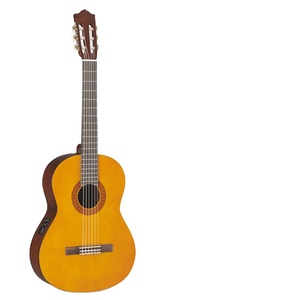
Explore our flagship production models, ready-to-assemble DIY kits, and custom OEM platforms crafted with automated luthier-grade tolerances.
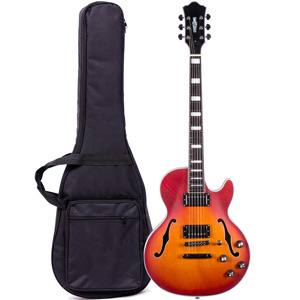
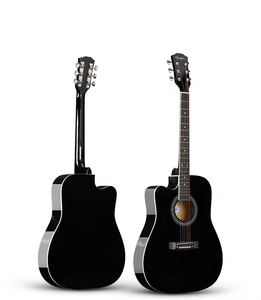
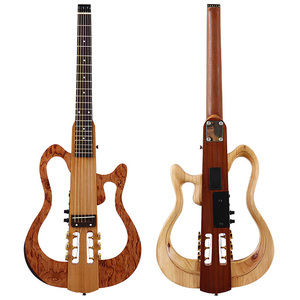
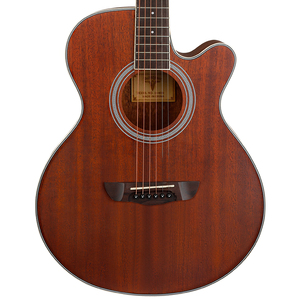

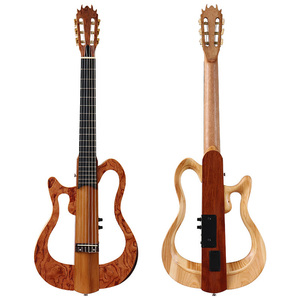
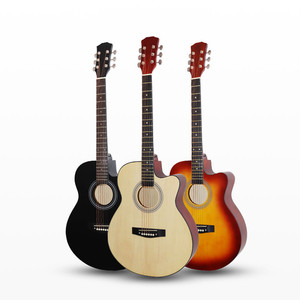
The global musical instrument industry is experiencing an unprecedented structural shift. No longer limited to entry-grade consumer toys, the modern DIY electric guitar kit market has transformed into a sophisticated, high-precision engineering field. As international guitar brands, boutique custom shops, and global distributors seek resilient manufacturing partners, China’s industrial guitar clusters have evolved from labor-intensive assembly lines into advanced CNC-driven acoustic laboratories.
Backed by the manufacturing standards and industrial expertise synonymous with global musical distribution—including deep alignment with large-scale American brand distribution platforms like JAM USA LLC—our manufacturing facilities represent the vanguard of export-grade stringed instrument fabrication. Integrating precision multi-axis CNC routing, acoustic spectroscopy tonewood analysis, and automated moisture equilibrium chambers, our facility delivers unbuilt guitar kits and OEM instruments that eliminate common luthier bottlenecks.
Key Strategic Differentiator: Our factory produces guitar kits designed for zero-gap mechanical alignment. By stabilizing wood equilibrium down to 6-8% Relative Humidity (RH) tolerances before machining, our kits do not bow, shrink, or exhibit fret sprout during sea-freight transport across international climate zones.
Whether servicing independent builders who require custom neck-heel profiling and flame-maple drop-top bookmatching, or fulfilling mass retail programs requiring tens of thousands of ST, TE, or LP format kits, our plant provides end-to-end quality assurance backed by verifiable testing protocols.
A DIY guitar kit is fundamentally more demanding to manufacture than a fully finished instrument. In a factory assembly line, skilled luthiers can manually chisel, shim, sand, and compensate for micro-deviations during final setup. In a build-it-yourself guitar kit, every tenon joint, neck cavity, pickup cavity, and pre-drilled bridge hole must fit seamlessly straight out of the protective carton.
High-speed synchronized parametric spindles rout pickup chambers, control routes, and neck pockets with repeatable tolerances below ±0.02 mm.
Timber stock undergoes computer-monitored dehumidification kilns, stabilizing core wood cells against warping under extreme thermal transitions.
Fretboards undergo pneumatic fret pressing, automated end-beveling, and mechanical crowing to avoid fret buzz and uneven action for end-users.
Our raw material inventory adheres strictly to international forestry mandates, Lacey Act requirements, and CITES appendix regulations. Importers no longer have to compromise between resonance and regulatory compliance. We maintain extensive inventories of ethically sourced timber:
For brand purchasing directors and trade buyers, understanding component-level specifications is vital to protecting brand reputation and minimizing returns. The table below illustrates the critical manufacturing disparities between standard market kits and our industrial OEM guitar kits.
| Component / Metric | Standard Entry-Level Kits | Our Factory OEM/ODM Grade | Operational Impact |
|---|---|---|---|
| Neck Pocket Tolerance | ±0.45 mm (Frequent lateral play) | ±0.02 mm to ±0.05 mm | Optimal acoustic coupling; zero lateral tilt during string tensioning. |
| Moisture Content (MC) | 12% - 16% (Air-dried inconsistently) | 6.0% - 8.5% (RF Vacuum Kiln) | Prevents neck twisting, back-bowing, and winter fret sprout in overseas hubs. |
| Fret Finishing | Rough wire ends, unpolished crowns | Hemispherical Ball Ends / Plek leveled | Eliminates sharp frets; ready for immediate consumer assembly without luthier files. |
| Wiring Harness | Loose switches, unshielded wires | Solderless Quick-Connect Modules | Zero-soldering assembly for end users; drops assembly failure rate to under 0.1%. |
| Surface Prep Status | Rough 120-grit sanded, visible tooling | 320-Grit Micro Sanded & Sealed | Accepts nitrocellulose, polyurethane, or oil stain instantly without primer filler. |
The fretted instrument industry is experiencing profound structural evolution driven by changing player demographics, e-commerce direct-to-consumer expansion, and stringent international supply chain oversight. To maintain competitive advantage, procurement officers must align their sourcing with these macro shifts:
Historically, building a guitar kit required complex electronics soldering and advanced woodworking tools. The market has decisively pivoted toward modular "Plug & Play" systems. Modern hobbyists and music students demand pre-wired pickguards, color-coded quick-connect terminals, and threaded brass neck inserts that allow bolt-on necks to be fastened without stripping wood threads. Factory-level pre-assembly of the electronic loom directly boosts sell-through rates and minimizes customer support inquiries.
Global warming, climate variability, and modern central heating cause extreme indoor humidity drops in major consumer markets across North America and Europe. Raw maple necks frequently expand and contract, triggering high return rates due to sharp fret edges and neck twists. In response, wholesale buyers are migrating to torrefied (roasted) maple necks. By baking wood in an oxygen-depleted thermal chamber at 180°C–220°C, the wood's organic sugars caramelize and moisture absorption capacity drops by over 60%, creating an almost impervious neck structure.
With shipping container rates and domestic final-mile courier costs climbing, overseas brands increasingly require guitar kits packaged in ISTA-certified drop-test cartons. Our factory utilizes high-density custom-molded Expanded Polyethylene (EPE) foam trays that suspend the delicate neck, pre-sanded body, and all hardware packages securely, avoiding finish scratching and structural damage during cross-border transit.
Clear, direct answers regarding custom tooling, minimum order quantities, compliance, and international shipping.
For standard in-stock production models (such as classic ST, TE, or LP single-cut architectures), our trial order MOQ starts at 50 to 100 units. For fully customized proprietary body contours, custom headstock carves, 7-string/8-string extended range configurations, or unique pickup routing, our engineering MOQ is typically 200 units per spec run to offset initial CAD/CAM toolpath programming and tooling calibrations.
All timber undergoes high-frequency vacuum kiln drying followed by a mandatory 4-to-6-week environmental acclimatization stage in our relative humidity-controlled staging rooms. We calibrate all guitar neck blanks to between 6% and 8.5% equilibrium moisture content (EMC). Before shipping, each kit is sealed in moisture-barrier polymer sleeves accompanied by desiccant packs to insulate the wood against ocean container humidity swings.
Yes. We offer fully configured solderless quick-disconnect terminal harnesses featuring alpha-grade 250k/500k potentiometers, heavy-duty 3-way or 5-way pickup selectors, and pre-wired grounding bridges. Hardware sets are available in uniform electroplated finishes including Chrome, Deep Cosmic Black, Satin Nickel, and 24K Gold plating, backed by 48-hour salt-spray corrosion resistance tests.
Every shipment is accompanied by complete chain-of-custody documentation, botanical genus/species declarations, and legal timber harvesting certifications. We actively work with alternative sustainable tonewoods such as torrefied maple, technical woods, laurel, and plantation sapele to guarantee smooth, seizure-free customs clearance in the United States, the European Union, the UK, and Australasia.
We provide full white-label and private-label customization services. We can CNC-carve or laser-engrave your registered logo onto the headstock face, neck-plate, pickup covers, or bridge blocks. Furthermore, we design custom 5-ply corrugated gift boxes featuring your full-color corporate branding, individualized SKU barcodes, multilingual assembly manual booklets, and retail hangtags.
Elevate your brand with consistent neck fits, resonant kiln-seasoned tonewoods, and a responsive manufacturing partner capable of scaling with your distribution demands.
This site uses cookies to improve your browsing experience. To learn how cookies are used, please review our Privacy Policy. By clicking “I Agree” or continuing to use this site, you consent to this use.