Export-Ready Commercial Guitars & Bass Assortments
Engineered for international musical instrument distributors, private label curators, and high-volume school program tenders. Each instrument reflects rigorous acoustic benchmarking, stable moisture treatment, and high-spec hardware integration.
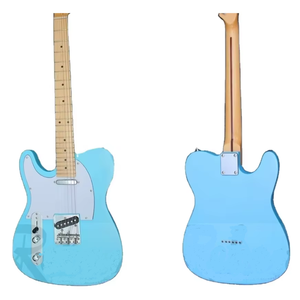
Weifang Rebon 6 String Left Hand Surf Blue TL Electric Guitar
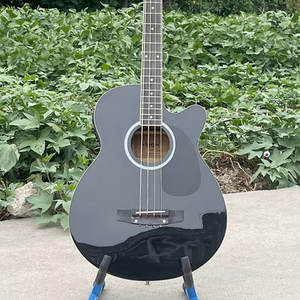
Gloss Aiersi Factory Price Black Colour Cutaway 4 String Electric Acoustic Bass Guitar for Sale
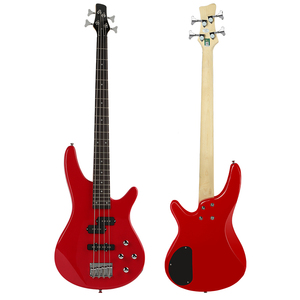
OEM/ODM Cheap 4-String Electric Bass Guitar 3 Single Coil Pickups Maple Neck Rosewood Fingerboard Basswood Body Model IB Minsine
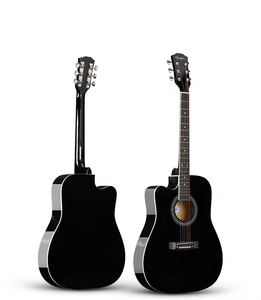
Wholesale 41 Inch Basswood Gloss Classical Acoustic Left Handed Guitar Musical Instrument for Adult
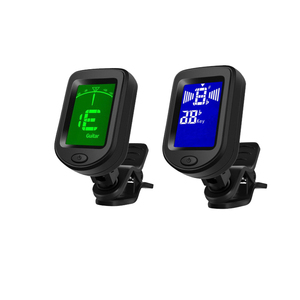
T75 Wholesale Clip-On Chromatic Guitar Tuner Electric Charging Plastic Stringed Instruments Parts Guitar & Bass Accessories
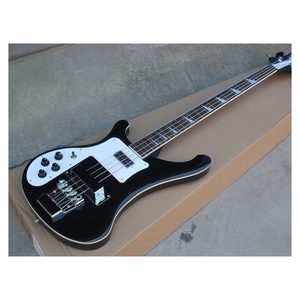
JELO 4-String Left Hand Electric Bass Guitar 39-Inch Performance Model Champagne Gold Gloss Finish Bright Maple S-Pickup Ogu
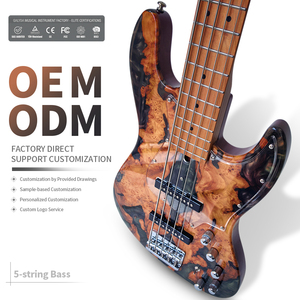
Boutique 5 String Bass Guitar Resin Burl Veneer Active Passive Switch Professional Electric Bass for Wholesale
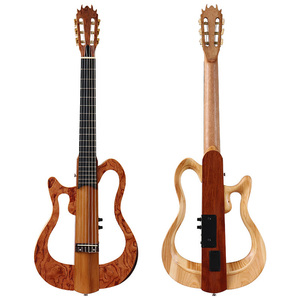
Wholesale 39-inch 6-string left-handed silent guitar OEM with rosewood fingerboard. Foldable and detachable for easy travel use.
Global Electric Guitar Procurement Trends (2025–2030)
Strategic analysis for enterprise importers, chain store operators, and private brand managers navigating supply chain resilience, material shifts, and evolving consumer demographics.
The global fretted-instrument market has entered a transformative era. Where supply chain managers previously optimized strictly for landed factory-gate unit cost, contemporary procurement mandates require a balanced convergence of dimensional lumber stability, rigorous regulatory tracing (CITES Appendix II / Lacey Act compliance), and automated finishing consistency. China remains the undisputed epicenter of global guitar manufacturing, generating over 70% of the world's student, intermediate, and commercial-grade fretted instruments. However, the operational matrix has evolved from fragmented manual workshops into hyper-integrated industrial clusters centered in Shandong (Weifang/Changle) and Guangdong (Huizhou/Zheng'an).
For procurement officers planning quarterly inventory runs, the strategic focus has transitioned toward mitigating seasonal climate warping. Electric guitars manufactured for North American, European, or Nordic destinations must endure extreme relative humidity swings—from sub-zero dry winter heating to humid summers. Bulk buyers who fail to specify vacuum dielectric kiln drying and automated thermal treatment (torrefaction) face post-import defect claims upwards of 8.5% due to fret sprout, neck relief twisting, and body seam cracks. Our factory infrastructure addresses this through computerized environmental chambers ensuring equilibrium moisture content (EMC) is locked between 6% and 8% prior to multi-axis CNC shaping.
Key Procurement Directives for Enterprise Sourcing
International chain stores and distributor networks are reducing overall SKU counts while demanding deeper multi-tier platform flexibility. Specifying shared body blanks across entry and mid-tier models with drop-in pickup modularity yields an average 18% savings in factory tooling amortization.
Landed Cost Rationalization
Global ocean freight rate fluctuations demand maximum container cube efficiency. Advanced OEM suppliers now utilize ultra-compact, high-density drop-test-certified master cartons, increasing 40-foot HQ container guitar capacities from 1,200 to over 1,550 boxed units without compromising corner crush resistance.
Lacey Act & ESG Traceability
Scrutiny on tonewood species origin has eliminated illicit logging routes. We provide comprehensive chain-of-custody documentation, FSC-certified North American maple, plantation-grown okoume, and synthetic composite fretboards engineered to circumvent customs phytosanitary bottlenecks.
Drop-Shipping & D2C Pack Compliance
With traditional brick-and-mortar retailers aggressively expanding omnichannel platforms, guitars must be packaged to survive parcel sorting chutes (ISTA 3A standard). Factory-sealed double-wall five-layer corrugated packaging eliminates secondary repack costs for regional distribution hubs.
Technological Modernization in Modern Electric Guitar OEM
Examining the transition from artisanal variance to robotic reproducibility. How high-speed 5-axis CNC machining, electrostatic finish lines, and computerized fret dressing define 21st-century production reliability.
The electric guitar industry has shed the romantic myth that quality requires inconsistent hand carving. In high-volume commercial manufacturing, human variance is the primary catalyst for warranty claims, intonation inaccuracies, and fret buzz. As a top-tier Chinese guitar manufacturing enterprise, our assembly framework synthesizes artisanal hand-buffing with computerized German and Japanese tooling centers. The outcome is absolute component interchangeability across 10,000-unit production batches.
Our engineering pipeline initiates with CAD/CAM neck profile modeling. Necks are shaped via synchronized 5-axis multi-spindle CNC machining centers maintaining a cut variance below ±0.02 mm. Truss rod channels are routed with micro-stepper motors, guaranteeing identical forward-and-backward tension response regardless of whether the neck is spec'd with a classic modern-C profile or an ultra-flat shredder contour. Following machining, fretboards receive computerized fret slotting where fret slots are indexed to scale lengths with laser triangulation, eliminating the cumulative pitch drift notorious in sub-standard OEM instruments.
Robotic Electrostatic Coating
Our automated spray paint lines utilize negative-pressure electrostatic chambers. Body blanks receive atomized polyurethane (PU) or ultra-thin polyester coatings that dry uniformly without edge bead run-offs, offering maximum acoustic resonance and zero finish sink over time.
PLEK-Standard Automated Fret Dressing
Fret seating is executed with hydraulic press fixtures ensuring each nickel-silver or stainless steel crown sits flush. Computer-controlled leveling beams mill each fret apex under simulated string tension, achieving 1.2 mm action heights with guaranteed zero dead spots.
EMI-Shielded Custom Pickups
From Alnico II/V vintage humbuckers to high-gain ceramic single coils, our winding facilities utilize computer-monitored tension meters. Cavities are coated with conductive graphite shielding paint, cutting operational RF interference to studio-grade noise floors.
Resin & Stabilized Exotic Tops
Capitalizing on boutique market aesthetics, our vacuum resin infusion vessels blend figured poplar burls, flame maple veneers, and colored casting epoxies, allowing bulk buyers to offer custom-shop visuals at commercial consumer price tiers.
Why International Tier-1 Brands Partner With Our Facility
Decades of contract manufacturing experience backing world-class brands like Jay Turser (a division of JAM USA LLC), Aiersi, and global retail chains. Discover the operational disciplines that protect your brand equity.
Managing an international fretted-instrument brand requires more than good samples; it requires uncompromising consistency across multiple container shipments spanning calendar years. Our enterprise ecosystem is built around institutional manufacturing principles formulated through years of Tier-1 American and European contract manufacturing. As demonstrated by our industry partners and private label programs, an accessible instrument must perform flawlessly straight out of the box to prevent retail return cascades.
| Manufacturing Tier | Target Demographic | Primary Tonewoods | Pickup Configuration | QC Tolerance Benchmark |
|---|---|---|---|---|
| Commercial Base Tier | Beginner Programs, School Ensembles, Starter Kits | Dried Basswood, Poplar, Hard Maple Neck | Ceramic Magnet Standard Singles / Humbuckers | ±0.05 mm Neck Pocket Gap |
| Stage Performance Tier | Intermediate Retail, Touring Backup, Studio Semi-Pro | Selected Alder, Roasted Maple, Laurel / Rosewood | Alnico V Custom Voiced, Shielded Cavities | ±0.03 mm Action Leveling |
| Boutique Master Tier | High-End Private Label, Collectors, Flagship Series | Figured Burls, Mahogany, Multi-Ply Wenge Lam | Active Preamps, Coil-Splitting Push/Pull | ±0.01 mm Hand-Dressed Frets |
Vertical Raw Material Control
We maintain an inventory of over 450,000 board-feet of raw tonewood air-seasoning in dedicated humidity-stabilized hangars for a minimum of 18 months before processing. This eliminates seasonal supply halts and mitigates timber market price spikes for our contract partners.
Full OEM/ODM Customization
From custom headstock silhouettes and branded neck-plate laser engraving to bespoke pickup resistance curves and packaging artwork, our in-house industrial design team delivers turnkey prototypes ready for trade display within 25 working days.
Strict Quality Assurance Protocol
Every single instrument passes a four-stage QC checkpoint: (1) Raw timber moisture testing, (2) White-wood balance verification, (3) Post-buffing finish inspection under raking UV light, and (4) Bench luthier setup (intonation, truss rod tension, electronic sweep test).
Frequently Asked Questions for Bulk Guitar Sourcing
Everything procurement heads, logistics coordinators, and brand entrepreneurs need to know regarding minimum orders, international customs certifications, and factory tooling capabilities.
What are the standard Minimum Order Quantities (MOQ) for custom OEM and stock catalog models? ▼
For standard catalog configurations (such as our 300 Series TL styles, IB bass models, and Dreadnought acoustics), our standard production MOQ begins at 60 to 100 units per color/specification. For full bespoke OEM models requiring custom CNC tooling, exclusive headstock shapes, and private circuit architecture, the initial run requirement is typically 300 units. Mixed container shipments (consolidating electric guitars, acoustics, basses, and accessories like our T75 clip-on tuners) are fully supported to maximize container cubic space utilization and decrease inventory risk for regional distributors.
How does your factory prevent fret sprout and neck warping in cold or dry destination climates? ▼
Fret sprout and back-bowing are directly caused by timber losing moisture after export. Our manufacturing protocol applies a proprietary dual-phase moisture regulation system: tonewood billets undergo computerized vacuum kiln drying followed by a minimum 30-day acclimatization in humidity-controlled balancing workshops. We stabilize neck wood to an exact 6%–8% equilibrium moisture content (EMC). Furthermore, fret slots are sealed with specialized hydrophobic primers, and fret tangs are nipped 1.5 mm short of the edge before technical binding or edge-filling, guaranteeing completely smooth fingerboard edges even in extreme desert or winter indoor environments.
What international environmental and wood trade certifications do you provide? ▼
We provide full chain-of-custody documentation compliant with the U.S. Lacey Act, the European Union Timber Regulation (EUTR), and CITES Appendix II conventions. None of our commercial export models utilize restricted rosewood (Dalbergia) species without explicit pre-obtained export permits. We regularly supply technical rosewood, engineered composite blackwood, roasted maple, and FSC-certified Indian laurel as fully compliant, hassle-free alternatives for high-velocity global retail trade.
Can we request bespoke pickup voicing, custom pots, and custom hardware plating? ▼
Yes. Our electronics workshop handles precision winding to exact B2B specifications, including customized wire gauge (AWG 42/43), magnet formulation (Alnico II, III, V, or high-coercivity Ceramic), and bobbin potting in paraffin/beeswax mixtures to eradicate microphonic feedback. We partner with leading hardware foundries to offer chrome, matte black, Cosmo black, gold, and antique nickel plating with salt-spray corrosion resistance tested up to 48 continuous hours.
What are the lead times from contract signing to port dispatch? ▼
Standard OEM/ODM volume production runs typically require 45 to 60 days from deposit confirmation and sample sign-off to FOB port delivery (Qingdao, Tianjin, or Shenzhen). Rapid-replenishment stock items with generic branding can be palletized and dispatched within 15 to 20 days. Air-freight sample evaluation units are normally produced within 14 business days.
How do you handle defective instruments or transit damage claims? ▼
We maintain an industry-leading factory defect rate below 0.6%. In our standard international distribution contracts, we provide a 1% complimentary spare parts allocation (including pots, pickups, switches, tuning machines, and truss rod covers) packed directly with each container. In the rare event of verifiable structural wood or finish failure, credit notes or replacement instruments are applied directly to the buyer's next production cycle upon digital image submission and verification.
Initiate Your Electric Guitar Production Pipeline
Whether you require 10,000 units of standard TL double-cutaways for nationwide retail placement, left-handed specialty builds, or a flagship boutique bass run with resin burl veneers, our engineering division is ready to quote your technical specifications.