Precision-Engineered Instruments & Protective Enclosures
Explore our export-certified musical instruments, high-density gig enclosures, and calibrated guitar components tailored for tier-one brands, educational procurement programs, and global distributors.
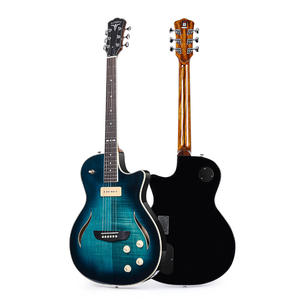
K11 Exquisite 5-String Semi-Hollow Jazz Guitar Poplar Body Indian Rosewood Neck
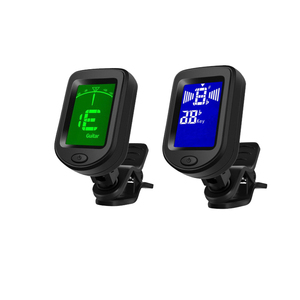
T75 Wholesale Clip-On Chromatic Guitar Tuner Electric Charging Stringed Instrument Parts
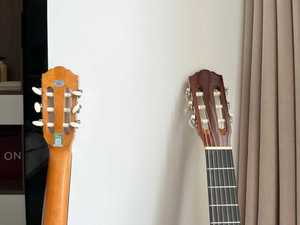
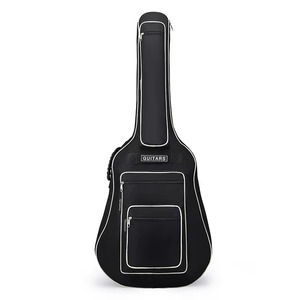
Wholesale 40"/ 41" 8M Pad Acoustic Guitar Gig Bag Waterproof Dual Shoulder Strap
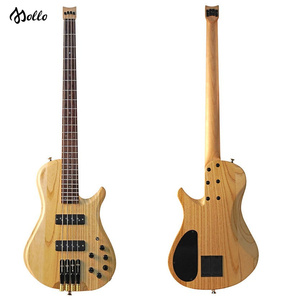
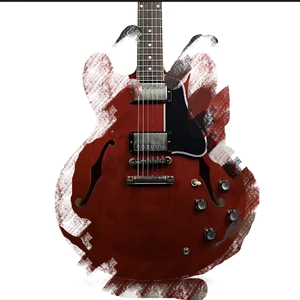
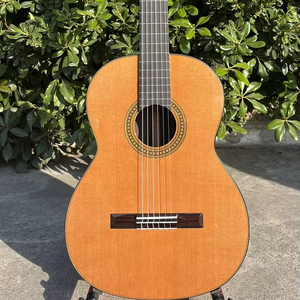
Replica Hauser Classical Guitar Aiersi All Solid Master Grade Tonewood Instrument
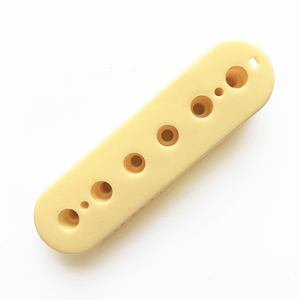
Wholesale 49.2mm 50mm 52mm Humbucker Guitar Pickup Bobbin Replacement Parts
The Global Strategic Shift in Guitar Hard Case Manufacturing
How Tier-1 Chinese manufacturing centers have transitioned from low-cost manual assembly to high-precision thermoforming, composite lamination, and automated climate control systems.
The international supply chain for stringed instrument cases has undergone a profound structural transformation. Historically viewed as secondary accessories, protective guitar cases are now acknowledged as mission-critical hardware that directly influences warranty reserves, retail return rates, and customer lifetime value (LTV). Major musical instrument conglomerates—such as those operating under the umbrella of JAM USA LLC and iconic labels like Jay Turser Guitars—require manufacturing partners capable of holding microscopic dimensional tolerances, adhering to stringent environmental non-toxicity standards, and executing rapid OEM tooling turnarounds.
As fretted instruments have evolved—from high-volume beginner models like the double-cutaway 300 Series and junior-scale 30 Jr configurations to intricate semi-hollow archtops and master-luthier Hauser acoustic replicas—the structural integrity of their enclosures has had to advance proportionally. Today’s premier Chinese case factories no longer rely on manual jigsaw cutting and toxic contact cements. Instead, top-tier exporters operate automated 5-axis CNC router lines, vacuum thermoforming machines for advanced polycarbonates, and robotic plush lining stations that ensure total repeatability across multi-thousand-unit production runs.
Automated CNC Multi-Ply Shells
Cross-grain Baltic birch and selected North American poplar laminates, hydro-pressed under 250 metric tons for maximum torsional shear resistance across climatic variations.
Mil-Spec Impact Dissipation
Reinforced valence profiles made of extruded 6063-T5 aluminum alloys coupled with high-impact ABS and carbon composite outer shells engineered for rigorous touring life.
Hygroscopic Buffer Zones
Interior EPS core molds lined with deep-pile velvet and micro-porous moisture reservoirs designed to stabilize internal relative humidity (RH) between 45% and 55% during ocean freight.
Advanced Tooling Capabilities: Bridging Traditional Luthiery and Modern Enclosure Engineering
The manufacturing synergy between musical instruments and protective casing cannot be overstated. A standard flat-top dreadnought acoustic, a thin-line archtop electric (such as the Cherry Red Semi-Hollow), and an asymmetrical multi-scale 6-string electric bass present wildly divergent center-of-gravity profiles and pressure vulnerability points. In traditional procurement models, buyers frequently faced ill-fitting universal cases where the headstock rested directly against the bottom floor—a major vulnerability that causes fatal neck breaks during postal drops.
Leading Chinese exporters have unified the instrument CAD geometry with the interior mold layout. By importing original solid-model files directly into CNC thermoforming machinery, the resultant plush-lined EPS bed supports the instrument’s heel, waist, and end-block uniformly. The peghead is suspended in zero-gravity isolation with double-chamber neck cradles, virtually eliminating freight damage claims for volume distributors.
Guitar Case Architecture: Material Performance Specifications
Benchmark data collected across standardized laboratory tests including ASTM D4169 transit simulation and ISO 178 flexural modulus evaluations.
| Shell Architecture | Impact Tensile Strength | Thermal Insulation Coefficient | Tare Weight (Std Dreadnought) | Waterproof / Seal Rating | Target Market Tier |
|---|---|---|---|---|---|
| 5-Ply Arched Top Wood Laminate | 42 MPa (Flexural) | 0.13 W/(m·K) (High Thermal Mass) | 4.8 kg ± 0.2 | IP54 (Splash-Proof Valance) | Vintage / Heritage Retailing |
| Vacuum-Formed High-Impact ABS | 58 MPa (Tensile Yield) | 0.17 W/(m·K) (Stable) | 3.9 kg ± 0.15 | IP56 (Tongue & Groove Extrusion) | Mass Commercial Distribution |
| Continuous Strand Carbon Fiber | 850 MPa (Extreme Tensile) | 0.04 W/(m·K) (Reflective Core) | 2.6 kg ± 0.1 | IP67 (Hermetic Neoprene O-Ring) | Concert Artist / Flight Deluxe |
| Hybrid Molded EVA Hard-Bag | 28 MPa (Elastic Recovery) | 0.22 W/(m·K) (Moderate) | 2.1 kg ± 0.1 | Water-Repellent 1680D Ballistic | Urban Gigging / Student Commute |
| Rotomolded Polyethylene Flight Case | 95 MPa (Puncture Proof) | 0.11 W/(m·K) (Insulated Foam) | 7.2 kg ± 0.3 | ATA 300 Cat 1 / IP67 Air-Purged | Commercial Touring / Cargo |
Emerging Procurement Trends in Musical Instrument Protection
Global supply chain directors are no longer purchasing protective gear on price-per-unit metrics alone. Over the next five years, four fundamental shifts will determine vendor viability in international markets:
Decarbonized Eco-Composites
Accelerated integration of bio-based resins, recycled PET velvet linings, and formaldehyde-free zero-emission bonding agents adhering to EU Corporate Sustainability Due Diligence Directive (CSDDD).
Smart Sensor Hardware
Embedded Bluetooth and NFC beacons tracking internal temperature and hygrometric swings in real-time, warning the musician before timber warping or bridge lifting occurs.
Consolidated Multi-Asset Freight
Strategic pairing where musical instruments (e.g., Jay Turser 300 Series or 400 Series basses) are packed directly inside hard cases at the factory, slashing ocean cube volume by 35%.
Enterprise Advantages: Engineering Excellence & Accountability
Combining world-class lutherie experience with certified high-capacity protective shell production facilities.
Sourcing directly from an established manufacturing enterprise backed by international parent infrastructure (such as our affiliation with JAM USA LLC) provides international enterprise buyers with unprecedented institutional stability. Unlike intermediary trading firms, our facility maintains sovereign control over each node in the manufacturing chain—from cold-press timber bending and metal extrusion stamping to ultrasonic seam joining and luxury plush tailoring.
Our comprehensive testing protocols satisfy both western consumer protection expectations and rigorous professional touring requirements. Every batch of hard cases undergoes standardized quality audits:
- Hardware Fatigue Testing: Heavy-duty draw latches, TSA-approved locks, and ergonomic handles are tested over 20,000 continuous opening, closing, and pulling cycles without mechanical yield.
- Free-Fall Drop Certification: Cases loaded with instrument ballasts are dropped from a height of 1.2 meters onto solid concrete at 6 critical angle points (headstock impact, bottom pin impact, face, back, and latches) to verify zero structural collapse.
- Environmental Chamber Exposure: Shell assemblies are cycled through temperature extremes from -25°C to +65°C across 96 hours to ensure zero adhesive delamination or exterior skin buckling.
- VOC & Odor Elimination: Utilizing water-based polyurethane glues and advanced baking tunnels, our cases arrive at overseas dealer destinations completely free of noxious chemical odors that compromise retail customer experiences.
Frequently Asked Questions on Sourcing Guitar Cases & Instruments
Direct technical answers addressing minimum order quantities, custom tooling amortizations, ocean freight optimization, and global compliance.
What is the standard Minimum Order Quantity (MOQ) for custom OEM guitar hard cases? +
For standard wooden multi-ply cases with custom exterior Tolex or tweed coverings and branded embroidery, our baseline MOQ is typically 100 units per shell geometry. For custom-tooled ABS thermoformed or injection-molded flight cases requiring proprietary exterior mold fabrication, the typical MOQ is 300 to 500 units. However, when paired with full-run guitar manufacturing (such as our electric, acoustic, or bass lines), consolidated order thresholds can be adjusted to support balanced mixed-container shipments.
How do you protect high-grade wood instruments from warping during prolonged ocean transit? +
Maritime shipping through equatorial shipping corridors exposes containers to extreme humidity swings. We mitigate this through a triple-guard protocol: first, timber used in instruments like the Hauser Replica Classical is stabilized in kiln-drying chambers to an exact 7–9% equilibrium moisture content (EMC); second, cases feature tongue-and-groove valance extrusions fitted with continuous silicone perimeter gaskets; third, each cased instrument contains calibrated 49% RH two-way humidity regulator packs sealed inside recyclable high-barrier ocean transport foil liners.
Can we request custom interior foam cutouts for non-traditional instrument body geometries? +
Yes. Our engineering department accepts STEP, IGES, or SolidWorks 3D CAD models of your instruments. Within 72 hours, we generate precision CNC waterjet-cut or vacuum-molded high-density expandable polystyrene (EPS) interior profiles. These customized cradles provide pinpoint relief for atypical body shapes, reverse headstocks, multi-scale extended fingerboards, or specialized hardware bridges, ensuring snug, shock-absorbing protection without lateral shifting.
What international environmental and safety standards do your factory products meet? +
Our complete manufacturing operation is certified to ISO 9001:2015 for quality management and ISO 14001 for environmental responsibility. All hardware, finishes, and adhesives comply with EU REACH Annex XVII, RoHS, and California Proposition 65 requirements for heavy metals and phthalates. All timber species utilized across guitars and cases strictly conform to CITES Appendix II regulations, accompanied by certified Lacey Act documentation for seamless US and European customs clearance.
What is the typical lead time for custom prototype sampling and container production? +
Rapid physical prototyping for wooden multi-ply cases typically takes 10 to 14 business days from approved CAD drawings. Thermoformed ABS and fiberglass mold development takes 25 to 35 business days for CNC mold tooling and initial sample shots. Following pre-production prototype sign-off, full commercial containerized production (40ft High Cube holding approximately 800 to 1,000 cases depending on stacking format) ranges from 35 to 45 calendar days.
Can the cases be branded with our proprietary private-label hardware and logos? +
We offer extensive private-label branding capabilities: cast or stamped metal badges with brushed, chrome, antique brass, or black nickel electroplating; high-definition color exterior silkscreening and UV relief embossing; embroidered plush lid banners; die-cast TSA-recognized latches bearing your corporate monogram; and custom-molded ergonomic handle cores tailored to your brand identity.
Ready to Scale Your Musical Instrument & Case Supply Chain?
Connect directly with our engineering and international export logistics team. Request technical drawings, physical factory samples, volume tier pricing, or schedule a virtual audit of our precision manufacturing lines.
Contact Us