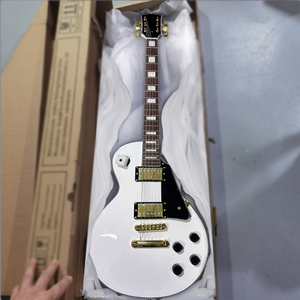
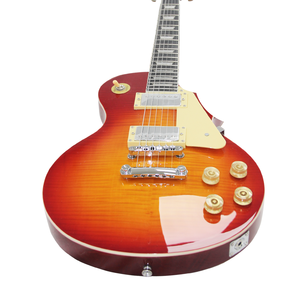
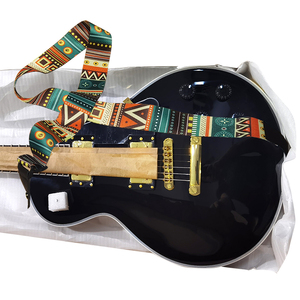
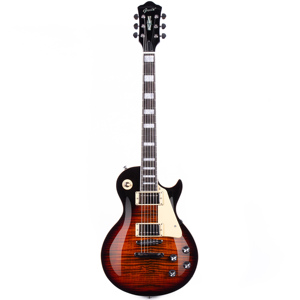

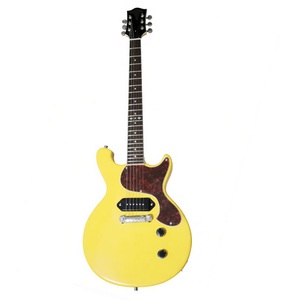
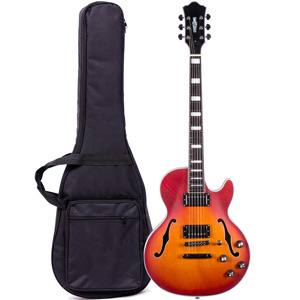
Engineering Whitepaper: The Evolution of Chinese LP Electric Guitar Manufacturing
The global fretted instrument market has experienced an irreversible structural transformation. Where historical instrument procurement viewed Asian manufacturing predominantly through the prism of cost reduction, modern China LP electric guitar fabrication clusters (notably in Weifang, Shandong, and Guangdong corridors) now represent the global baseline for micron-level CNC precision woodworking, climate-stabilized tonewood conditioning, and ultra-high-repeatability finish chemistry. For procurement heads, private label orchestrators, and distributor networks, securing a tier-one manufacturing partnership in China requires an exhaustive comprehension of acoustic mechanics, raw material supply dynamics, and manufacturing execution.
1. Structural Anatomy of the Modern LP: Wood Curing and Joinery
The signature sustain, mid-range punch, and acoustic decay of an LP-style solid-body guitar depend entirely on the interplay between density, wood moisture equilibrium, and neck joint integrity. Traditional single-cutaway guitars suffer dramatically if raw timber stock is subjected to accelerated drying cycles.
- Thermal Kiln-Drying & Equilibrium Stabilization: Top-tier Chinese facilities subject Okoume, African Mahogany (Khaya), and Western Maple to 60-day vacuum thermal conditioning. This brings raw timber moisture content down to an exacting 8% to 10%—the critical equilibrium range that prevents fingerboard shrinkage, fret sprouting, and neck warping when exported to arid or sub-zero climates across North America and Northern Europe.
- Tenon Joint Precision: Long Tenon vs. Transitional Box Joints: Acoustic coupling relies heavily on the neck-to-body interface. Utilizing automated 5-axis CNC cutters, factories produce authentic 1950s-style extended "Long Tenons" extending beneath the front pickup cavity. This maximizes surface-to-surface grain contact, reducing acoustic dampening and yielding superior resonance transfer over traditional bolt-on or poorly routed short-tenon variants.
- Laminated vs. Carved Solid Caps: Professional supply specifications dictate a distinct separation between entry-level veneer tops and archival instrument builds. Premium contract pipelines construct body blanks featuring an authentic 15mm bookmatched solid carved hard maple cap bound directly to an aged mahogany chassis, creating the quintessential bright transient attack married to low-end fundamental body warmth.
2. Electronic Circuitry & Electro-Acoustic Consistency
Modern consumers and professional reviewers scrutinize electronics with forensic intensity. Chinese OEM suppliers have upgraded far beyond generic ceramic bar pickups and erratic linear mini-pots.
Leading factories now offer customized pickup architectures tailored specifically to brand voicing parameters:
- Vintage P-90 Systems: Wound with 42 AWG plain enamel wire around sand-cast Alnico V magnets, delivering dynamic, touch-sensitive edge-of-breakup grit without excessive 60-cycle hum interference.
- Modern High-Gain PAF Replicas: Featuring unpotted or lightly vacuum-wax-potted Alnico II coils, scatter-wound to emulate original 1959 output specs with asymmetrical DC resistance (7.6k neck / 8.4k bridge) for blooming harmonic overtones.
- Wiring Harness Modernization: Commercial buyers can configure full brass shaft potentiometers (custom audio taper 500kΩ), braided vintage push-back cloth wiring, Orange Drop or paper-in-oil capacitors, and shielding paint cavities that exceed European CE and RoHS low-noise electro-magnetic interference thresholds.
3. Future Procurement & Manufacturing Trends (2025–2030)
As international supply chains optimize for environmental sustainability, regulatory scrutiny, and instant multichannel consumer feedback, several overarching market developments are defining the next procurement decade:
- CITES Compliance & Alternative Fretboards: Traditional Indian Rosewood continues to face stringent export permit bottlenecks. Advanced factories have spearheaded certified sustainable fingerboard alternatives—such as roasted jatoba, high-pressure phenolic composite laminates, and thermally stabilized purpleheart—that mirror the oily density, fret-seating resilience, and pitch clarity of Dalbergia species without regulatory vulnerability.
- Automated Plek Pro Neck Leveling: High-throughput lines are increasingly adopting robotic Plek computer-controlled fret analysis and dressing. This eliminates manual human variability, guaranteeing that every single production-line instrument ships with an action setup below 1.5mm at the 12th fret without buzz.
- Low-VOC Electrostatic Polyurethane vs. Thin-Skin Nitrocellulose: Stringent environmental oversight in industrial provinces has driven massive investment into zero-emission closed-loop electrostatic spray finishing. In tandem, specialized custom shops have perfected thin-skin nitro finishes (under 0.08mm) that allow the wood pores to breathe, satisfying the demand for authentic vintage patina aging.