B2B Acoustic Engineering & OEM Whitepaper
China Top OEM Acoustic Guitar Manufacturers & Manufacturing Hub
Architecting Enterprise Fretted-Instrument Solutions: CNC-Precision Lutherie, Kiln-Stabilized Tonewood Science, and Resilient Global Supply Chain Execution for Prestigious Brand Catalogs.
Verified Manufacturing Portfolios
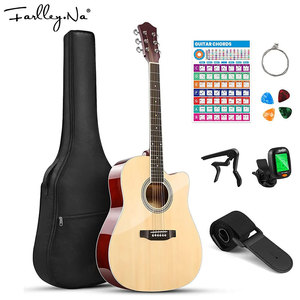
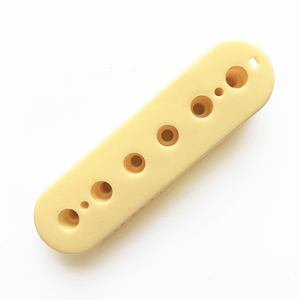
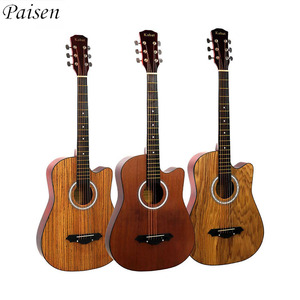
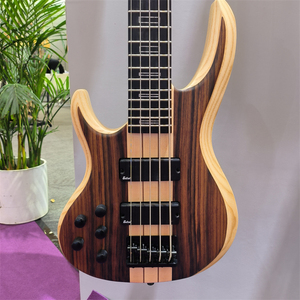
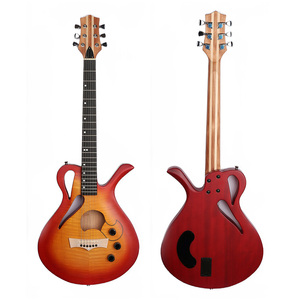
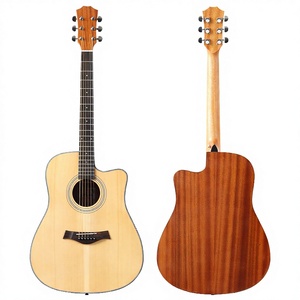
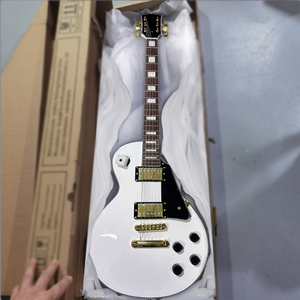
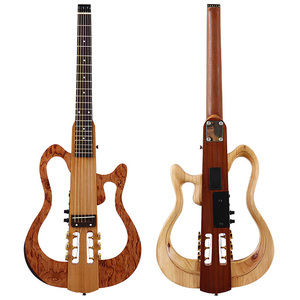
Featured OEM / ODM Acoustic & Electric Lineup
High-performance production benchmarks ranging from arched-top acoustics and solid-wood entry guitars to electro-acoustic configurations and precision components engineered for global distribution.
Industrial Capabilities & Heritage
Why Global Brands Entrust Their OEM/ODM Manufacturing to Us
Rooted in stringent lutherie traditions and amplified by state-of-the-art manufacturing automation, we bridge the gap between boutique tone artisanry and scalable enterprise delivery.
150,000+
Annual Fretted Production Capacity
<0.02 mm
CNC Neck Joint Milling Tolerance
8.5% ±1%
Automated Tonewood Equilibrium Moisture
100%
CITES & Lacey Act Verified Sourcing
Institutional Sourcing & Tonewood Seasoning
Sustained acoustic excellence is anchored in raw botanical integrity. Our facility maintains an active reserve of over 300,000 board feet of tonewood, including AAA Sitka Spruce, Engelmann, Western Red Cedar, African Mahogany, and Sapele. Every timber billet undergoes an initial two-year atmospheric natural seasoning, followed by secondary radio-frequency vacuum kiln drying. This eliminates residual sap crystallization, equalizes internal cell tension, and ensures our instruments resist warping under extreme climatic variance from Nordic winters to tropical humidity.
High-Precision 5-Axis CNC & Plek Fret Dressing
While classical voicing remains handcrafted, geometric repeatability requires computerized automation. We deploy multi-axis Italian and German CNC routing suites for soundboard graduated parabolic thicknessing, compound radius fingerboards, and dovetail neck joints. Furthermore, our flagship OEM lines incorporate simulated string-tension computer fret-leveling, ensuring buzzing-free action at sub-1.8mm bass specs, neck relief constancy, and unmatched factory-direct playability right out of the master export carton.
Tier-1 Regulatory & Environmental Compliance
Serving top-tier instrument conglomerates demands ironclad corporate and environmental compliance. Our production workflows strictly align with ISO9001 and ISO14001 methodologies. We guarantee uncompromised CITES Certification for Dalbergia variants and timber documentation for the US Lacey Act and EU Timber Regulation (EUTR). Transitioning toward zero-VOC waterborne electrostatic finishes and advanced UV curing chambers, we reduce environmental footprints while accelerating body cure cycles.
Strategic Market Intelligence
Future Procurement Trends in Global Acoustic Manufacturing
How international distributors, educational brands, and institutional importers are reshaping their supply agreements for 2025–2030.
Decentralized Inventory & Agile Modular MOQs
The traditional paradigm of ordering monolithic 40-foot full-container-loads (FCL) of a single SKU is undergoing profound decentralization. Forward-thinking musical instrument brands now demand hybrid container consolidation. Procurement models favor suppliers that can orchestrate mixed-SKU logistics: pairing high-volume Dreadnought acoustics with ergonomic Parlor sizes, 3/4-scale student instruments, and left-handed variants without penalizing buyers with cost-prohibitive Minimum Order Quantities.
- Dynamic master-carton color SKU splitting
- Direct-to-fulfillment EDI dropship integration
- Buffer-stock consignment management for core hardware
Thermal Torrefaction & Alternative Bio-Composites
Due to escalating climate disruptions and the vulnerability of delicate quarter-sawn tonewoods, procurement specifications increasingly mandate Thermo-Treated (Torrefied) Soundboards. By baking spruce tops in an oxygen-deprived kiln at 180°C–200°C, the wood’s hemicellulose breaks down, imitating the acoustic crystallization of a 50-year-old vintage instrument while eliminating molecular moisture absorption. Concurrently, high-density Richlite and carbon-fiber lattice braces are overtaking traditional endangered woods.
- Zero-expansion synthetic ebony fingerboards
- Hydrophobic resonance tops for zero fret-sprout
- Post-cure acoustic velocity amplification (+18% sound projection)
Drop-Testing & Sustainable E-Commerce Packaging
With direct-to-consumer (D2C) online channels capturing over 40% of retail guitar volume, physical damage during transit is the leading cause of channel margin erosion. Procurement directors are replacing standard single-wall cardboard with ISTA-3A / 6-Amazon Certified Engineered Packaging. Acoustic guitars must now withstand 1-meter multi-angle drop tests without neck fractures or bridge delamination, using molded biodegradable honeycomb liners in place of non-recyclable EPS foams.
- Dual-chamber headstock suspension boxes
- Automated drop-impact deceleration logging
- 100% recyclable, plastic-neutral exterior packaging
Luthier Engineering Frontier
Acoustic Guitar Manufacturing: Technological Horizons
Examining the convergence of algorithmic acoustic modeling, advanced electro-acoustic transducers, and ergonomic body architectures.
V-Class & Asymmetrical Soundboard Voicing
The historical X-bracing paradigm is being replaced by asymmetric and longitudinal bracing matrices that untangle the historical trade-off between volume and sustain. By selectively stiffening the center-line while allowing outer soundboard flexibility, our engineering team optimizes harmonic in-tune intervals across all 14 frets clear of the body.
Smart Actuators & TransAcoustic Integration
Modern musicians demand ambient spatial effects without outboard amplifiers. The integration of internal DSP micro-actuators drives reverb, chorus, and delay directly through the guitar soundboard via physical vibrations. Our OEM division supplies drop-in active preamp harnesses with onboard rechargeable Li-ion power units, Bluetooth streaming, and low-profile capacitive touch bezels.
Ergonomic Contours & Beveled Armrests
High-end lutherie appointments such as lower-bout armrest bevels, Florentine sound ports, and fan-fret (multi-scale) fingerboard layouts have transitioned into standardized production options. Our 3D surfacing machines cleanly execute radiused comfort body contours, increasing player ergonomics while preserving internal air volume and bass response.
Sub-Micron UV Coating Technologies
Legacy thick polyurethane finishes inhibit soundboard vibration and dull upper-register harmonics. Modern manufacturing utilizes robotic multi-pass ultra-thin UV-cured polymer resins under 0.15mm total finish depth. This glass-like barrier provides resistance to checking and mechanical abrasions while preserving the wood's natural acoustic respiration.
B2B Procurement Knowledge Base
Acoustic Guitar OEM Procurement FAQ
Key considerations for commercial distributors, OEM brand executives, and supply chain managers evaluating Chinese manufacturing facilities.
What is the typical Minimum Order Quantity (MOQ) structure for custom acoustic guitar OEM projects?
Our standard production line operates on an MOQ baseline of 50 to 100 units per specification/colorway for laminate-body guitars, and 30 units per SKU for solid-top or all-solid acoustic configurations. For high-volume client launches or institutional importers establishing comprehensive catalog footprints, mixed-model container assortments (e.g., combining 41" Dreadnoughts, 40" Grand Auditoriums, 38" Parlors, and left-handed builds) can be grouped across a standard 20ft (approx. 400-500 guitars) or 40ft HQ container (approx. 1,000-1,100 guitars in gigbags/cartons). Sample prototypes for proprietary body profiles typically require 25 to 35 business days.
How do you safeguard wood stability against climate-induced cracking and fret sprouting post-export?
Climate resilience is built into our production process through environmental stabilization. Our wood preparation involves dual-stage desiccation: primary natural conditioning for 18–24 months, followed by computerized vacuum kiln stabilization that balances core equilibrium moisture content (EMC) to an exact 8.5% ±1%. All milling, bracing, top gluing, and assembly phases take place inside constant-humidity assembly cleanrooms stabilized between 45% and 52% relative humidity (RH). Frets are pressed, bound, and micro-dressed using automated Plek or multi-pass CNC edge-beveling tools that feature rounded ball-end terminations, preventing sharp edges or buzzes during cold-season retail delivery.
Can we specify custom headstocks, proprietary internal bracing, and branded electronics?
Yes. As a full-service ODM/OEM manufacturer, we manage CAD/CAM engineering workflows to bring proprietary blueprints to life. You can provide 2D DXF or 3D STEP files for unique headstock profiles, custom fretboard abalone/mother-of-pearl inlays, specific soundhole rosette marquetry, and modified bracing profiles (scalloped parabolic, parabolic ladder, or hybrid lattice). We maintain long-term partnerships with leading electronics brands (Fishman, LR Baggs, and custom piezo-transducer developers), and offer in-house OEM branding on preamps, endpin jacks, tuning machines, and internal laser-engraved soundhole wood badges.
What quality assurance checkpoints are conducted prior to container dispatch?
Our QA protocol adheres to Military Standard 105E (AQL 1.5/4.0) sampling inspections alongside our 5-phase lutherie inspection pipeline: (1) Raw timber moisture and grain integrity audit, (2) Sub-assembly soundboard resonance deflection testing, (3) Post-cure geometry laser inspection (neck pitch, bridge shear tension, and truss rod torque stability), (4) Playability tuning setup under full pitch tension (evaluating string height at 12th fret: Bass 2.2mm, Treble 1.8mm target specs), and (5) Environmental chamber stress testing (-15°C to 45°C) to prevent checking and glue joint failure.
What regulatory compliance certifications accompany our export shipments?
We supply complete documentation packages to streamline customs clearance across North America, the European Union, Japan, and Australasia. Shipments contain legal timber origin documentation compliant with the US Lacey Act, EUTR guidelines, and Australian Illegal Logging Prohibition Act. Where restricted timbers are explicitly requested, we provide full CITES re-export certificates. For electro-acoustic models, our installed electronics, batteries, and AC power options comply with CE, FCC, RoHS, and REACH toxicological testing regulations.
Direct Factory Cooperation
Scale Your Fretted Instrument Brand With A Proven Manufacturing Partner
Connect directly with our engineering and procurement team to request structural technical sheets, OEM line pricing matrices, and master sample development schedules.
Get Catalog