Acoustic Series
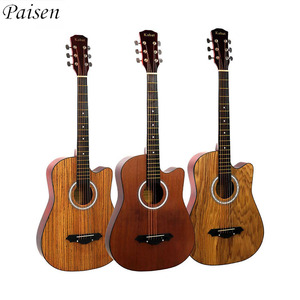
Paisen High Quality 38 Inch Solid Sapele Acoustic Guitar 6 Strings Folk Guitar for Kids
Solid Sapele
38" Folk Spec
Precision Action
Explore our foundational fretted instrument lineup, engineered across verified industrial facilities with climate-controlled curing, high-tolerance hardware, and global dealer compliance.
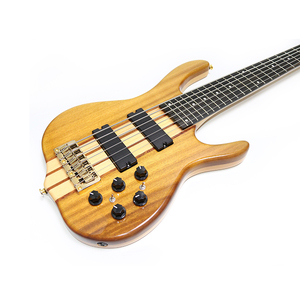
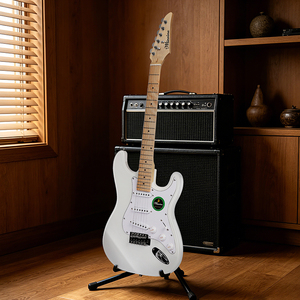
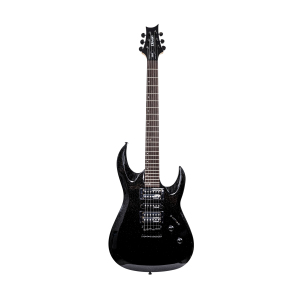
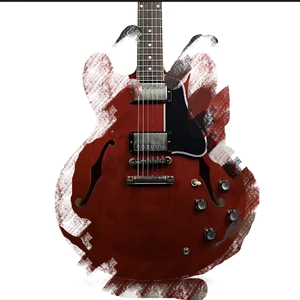
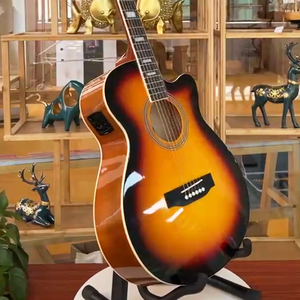
The global demand for 5-string electric and acoustic bass guitars has expanded exponentially across commercial music production, contemporary worship groups, metal subgenres, and session studio settings. Unlike traditional 4-string instruments (tuned E-A-D-G, fundamental 41.2 Hz on the low E), adding a fifth string tuned to low B introduces an extreme mechanical frequency requirement of 30.87 Hz. Producing an instrument that reproduces this sub-harmonic acoustic vibration without "muddy" overtone decay, dead spots, or string flop requires advanced mechanical engineering, structural timber stabilization, and acoustic impedance matching throughout the instrument's entire chassis.
Core Procurement Axiom: The low-B string exerts roughly 32 to 38 lbs of mechanical string tension alone, bringing total 5-string set tension upwards of 160 to 185 lbs (710 to 825 N). Factories that simply repurpose 4-string neck blanks and truss rod designs suffer catastrophic neck bowing, fret buzz along the 7th-to-12th fret plane, and rapid warranty claim spikes when exported to varying climatic zones.
The manufacturing process begins with strict timber quarantine. As a leading manufacturing exporter within the Jay Turser / JAM USA supply ecosystem, our partner facilities enforce a multi-phase stabilization cycle. Freshly cut lumber—whether Northern Hard Rock Maple (Acer saccharum), American Alder, African Okoume, or Sapele—is never routed immediately. Timber undergoes forced-air drying followed by dehumidification kiln cycles over 45 to 60 days until internal core moisture reaches precisely 8% to 10%.
For extended-range bass necks, this baseline is reinforced with multi-laminate construction. Our technical blueprints mandate 3-piece or 5-piece alternating-grain quarter-sawn hard maple coupled with walnut or rosewood stringers. This opposing-grain configuration counteracts longitudinal torsional twisting caused by the asymmetric string tension exerted by the disproportionately thick 0.125 to 0.135 gauge low-B string. High-tier lines incorporate dual structural carbon fiber stabilizer rods flanking a dual-action high-tensile steel truss rod.
One of the primary strategic considerations for international brand managers and instrument importers is determining the appropriate scale geometry:
Sub-40 Hz audio capture exposes every weak link in copper winding and electronic isolation. Jay Turser and partner OEM production platforms utilize dual-coil soapbar humbuckers and split-single coil configurations wound with Japanese 42-AWG or 43-AWG polyurethane-coated magnet wire. Alnico V magnets provide punchy mid-range transient articulation, while high-density ceramic poles deliver high-output modern clarity capable of driving studio active preamps.
All cavity routings undergo dual-coat electrostatic conductive graphite shielding paint, followed by grounding copper foil applied to the control plate cavity. Our active 9V and 18V EQ preamps feature custom surface-mount board (SMD) low-noise op-amps, providing +/- 12dB boost and cut across 40 Hz (Bass), 800 Hz (parametric sweepable Mid), and 6.5 kHz (Treble) with a zero-noise floor.
Map your regional distribution catalog against verified product categories, targeting distinct consumer price bands, tone woods, and international retail margins.
| Product Platform | Target Category | Scale & Construction | Tonewood Configuration | Electronics & Hardware | Container Pack (Carton) |
|---|---|---|---|---|---|
| Standard Series 500 | Retail Entry / School Ensembles | 34" Bolt-On Maple Neck (Dual Carbon Rods) | Solid Poplar / Basswood Body | JB Style Alnico V Single-Coil Set, Passive V/V/T | 6 Pcs / Master Carton (Drop-Test Certified) |
| Custom Pro LT-5 | Mid-Tier Stage / Semi-Pro Retail | 35" 5-Pc Maple/Walnut Laminate Bolt-On | North American Alder / Quilted Ash Top | Active 9V Dual Soapbar Humbuckers with 3-Band EQ | 4 Pcs / High-Density Foam Fitted Carton |
| Neck-Thru Master NT-5 | Pro Stage, Studio & Boutique Private Label | 34.5" Continuous Neck-Thru Hard Maple | Mahogany Wings with Burl Maple Veneer | 18V Custom Active Preamp, High-Mass Monorail Saddles | 4 Pcs / Deluxe Hardshell or Heavy Gig Bag |
| Progressive Fanned-Fret FF-5 | Modern Progressive / High-Gain Metal | 34"-37" Multi-Scale Fanned Fretboard | Lightweight Okoume with Flame Maple Cap | Slanted Ceramic Humbuckers with Series/Parallel Switch | 4 Pcs / Reinforced Export Crate |
| Acoustic Jumbo 5-String | Unplugged Performance / Folk & Worship | 34" Set Neck with Cutaway Jumbo Chamber | Solid Spruce Top, Sapele Back & Sides | Under-Saddle Piezo Transducer with Built-In Tuner Preamp | 2 Pcs / Double-Corrugated Foam Suspenders |
How automation, acoustic material science, and global environmental mandates are transforming the electric and acoustic bass export sector.
Atmospheric baking of maple necks at 180°C to 220°C in an oxygen-depleted vacuum kiln permanently crystallizes natural hemicellulose and lignin within the wood cellular structure. The resulting roasted wood exhibits near-zero hygroscopic sensitivity, resisting the severe seasonal neck warping that often plagues extended-range 5-string necks when shipped through maritime container routes spanning equatorial humidity to sub-zero destination ports.
The manual fret dressing of 5-string basses is prone to human fatigue, particularly across the wide 75 mm to 80 mm fingerboards. China’s premier manufacturing plants now integrate German Plek computer-controlled scanning and milling machines into mass production pipelines. Every fingerboard is leveled under simulated string tension, achieving action down to 1.5 mm on the G string and 1.8 mm on the low B without acoustic buzz.
Environmental scrutiny in the European Union (EU Deforestation Regulation) and the United States (Lacey Act) makes complete timber origin transparency mandatory. Exporters must avoid uncertified Dalbergia species in fingerboards and bridge blocks. Leading suppliers now offer certified Pau Ferro, Indian Laurel, Tech-Wood laminates, and kiln-stabilized Black Richlite composite fingerboards accompanied by verified Lacey and CITES certificates.
Derived from decades of supplying international distributors under the Jay Turser brand and JAM USA LLC oversight, our manufacturing infrastructure delivers unmatched B2B stability.
Body contours, neck pockets, pickup cavities, and truss rod channels are milled on synchronized four-axis Japanese and German CNC routing machines. We maintain tolerances within +/- 0.03 mm, ensuring neck-to-pocket joints require zero shimming, delivering maximum kinetic energy transfer throughout the guitar frame.
Before packing, every assembled 5-string bass is tuned one whole step sharp (F#-B-E-A-D) and subjected to a 72-hour aging cycle in a climate-controlled room (45% RH, 24°C). Instruments that develop neck relief variances greater than 0.3 mm are routed back to luthiers for truss rod recalibration and fret leveling.
We provide full-spectrum customization: custom headstock branding (laser engrave, mother-of-pearl inlay, silk-screen metal foil), bespoke pickup winding profiles, custom body routing, proprietary hardware finishes (Cosmo Black, Gold, Satin Chrome), and tailor-made multilingual retail packaging.
Direct technical and operational answers to support purchasing directors, category managers, and commercial musical instrument distributors.
Our standard manufacturing MOQ for custom-branded OEM production is 100 units per model, with the flexibility to divide finishes into batches of 25 to 50 units per colorway. For existing catalog platforms (such as our 400 and CL bass series architectures), trial evaluation orders can start at 50 units. Boutique neck-thru and fanned-fret custom runs require an initial tooling MOQ of 60 to 100 units depending on hardware selections.
To eliminate low-B flaccidity on traditional 34-inch instruments, we implement three mechanical engineering requirements: (1) Increasing headstock downward break angle to 14° using angled scarf-joint headstocks or precision-placed string retainers; (2) Designing high-mass solid zinc or brass bridges with string-through-body routing options to increase overall speaking string tension; and (3) Precision CNC nut-slot carving with individual slot relief tailored specifically for 0.125 to 0.135 gauge low-B strings.
Every commercial container shipment is dispatched with an official Plant Quarantine Certificate, Fumigation Certificate, Certificate of Origin (Form A / Form E), and complete botanical species declaration invoices identifying the scientific genus and harvest location of all woods utilized (e.g., Acer saccharum, Fraxinus americana, Populus tremula). We strictly use CITES-exempt timbers or certified alternative laminates to ensure seamless customs clearance in Rotterdam, Hamburg, Los Angeles, and Long Beach.
Yes. Our engineering department uses multi-axis laser digitizing arms to scan physical master neck samples provided by clients. We capture thickness at the 1st, 7th, and 12th frets, nut width, fingerboard radius (typically 12", 14", or 16" compound for 5-strings), and transition tapers. This data is converted directly into CNC G-code, delivering consistent neck-profile replication across tens of thousands of production units.
Prototyping and sample development typically require 35 to 45 days, allowing for custom CNC tooling and sample finishing. Upon formal client sign-off on the physical golden sample, mass production lead times range between 55 and 75 days. This window ensures the mandatory 45-day wood conditioning and acclimatization cycle cannot be bypassed, preventing future seasonal warping after export.
Every bass is packed in an individual moisture-barrier polyethylene bag containing silica desiccant pouches, seated securely within a form-fitting EPS foam or molded EPE cradle. This inner triangular box is fabricated from high-burst 250 lb test 5-ply corrugated cardboard. Master export outer cartons consolidate 4 to 6 units in 7-ply heavy-duty shipping cartons, certified to pass international ISTA-1A drop, crush, and vibration transit tests.
Absolutely. We operate an in-house automated pickup winding facility capable of adjusting bobbin turns, wire gauge (42 vs 43 AWG), scatter-wind patterns, and magnet compositions (Alnico II, III, V, or Ceramic 8). We also program active EQ center frequencies according to your target acoustic signature—for instance, scooping the 450 Hz lower mids for contemporary slap playing or boosting the 1.2 kHz upper mids for heavy rock pick articulation.
Consult with our senior luthiers, OEM production directors, and supply chain managers today. Request complete technical specification sheets, physical golden samples, and container-level pricing tailored to your market.
This site uses cookies to improve your browsing experience. To learn how cookies are used, please review our Privacy Policy. By clicking “I Agree” or continuing to use this site, you consent to this use.