Featured OEM/ODM Electric & Specialty Production Runs
Explore our high-demand OEM/ODM product portfolio spanning solid-body basswood platforms, headless ergonomic silent frames, semi-hollow architectures, and touring hardware configurations designed for distributor catalog scaling.
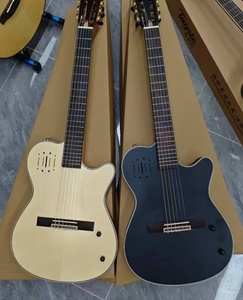
Silent Guitar Classical CG100 39 Inches Matte Nylon String
Solid frame design with onboard piezo preamp, active headphone monitoring circuit, and premium tonewood fingerboard. Ultra-low stage feedback ratio.
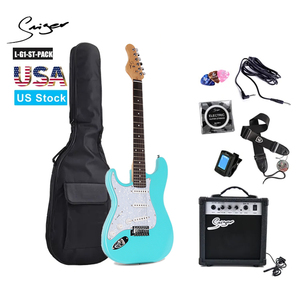
Smiger Custom Wholesale Left-Handed ST Electric Guitar
Select lightweight basswood chassis, 22-fret hand-dressed medium jumbo wire, SSS pickup architecture, and mirrored ergonomic left-hand routing.

Electric Guitar LP Studio EB Night Black Maple Cap
High-density resonance basswood/mahogany substrate topped with flamed maple veneer, dual Alnico-V humbuckers, and high-gloss multi-layer polyurethane coating.
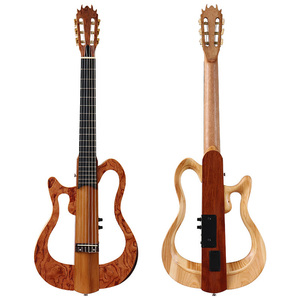
Foldable Left-Handed Silent Travel Guitar 39-Inch OEM
Detachable aluminum wing system on kiln-dried core body, custom bridge piezo pickup, engineered for compact air travel and mobile studio silent tracking.
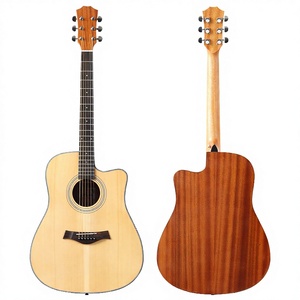
41-Inch 6-String Sitka Spruce Acoustic Guitar
X-braced resonant soundboard, engineered sonokeling fretboard, ultra-thin satin pore-filling finish for optimized projection and educational institution bulk supply.
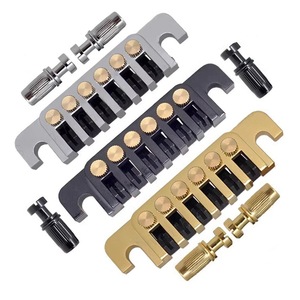
Corrosion-Resistant Fine-Tuning TP-6 Tailpiece Bridge
Die-cast brass-zinc alloy bridge with micro-adjusters, 48-hour salt-spray electroplating endurance, engineered for high-sustain rock and metal guitars.
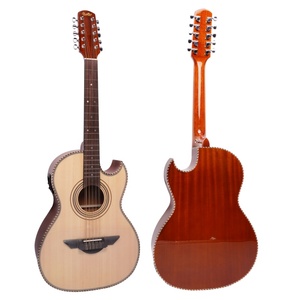
10-String Acoustic Bajo Quinto Florentine Cutaway
Florentine aesthetic body, reinforced internal bracing calibrated for heavy string tension, genuine spruce top, and dual-action carbon-composite neck rod.
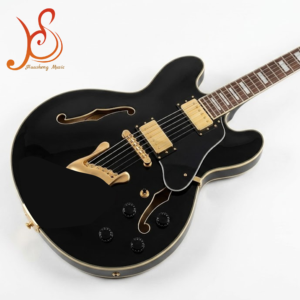
HUASHENG Gold Hardware Semi-Hollow Body Electric
Center-block internal basswood acoustic spine, bound F-holes, premium dual humbucking set, gold hardware plating, and warm resonant jazz-blues tonal response.
Basswood (Tilia americana) Acoustic Dynamics in Electric Guitar Engineering
In modern industrial electric guitar manufacturing, tonewood selection governs not only raw mechanical workability but also resonant balance, dynamic range, and high-frequency damping behavior. Basswood (predominantly Tilia americana or fine-grained Northern European linden) has transcended its historical categorization as an entry-level lumber to become one of the most acoustically neutral, predictable, and sought-after substrates for high-performance electric guitars and precision studio instruments.
Cellular Porosity and Fundamental Damping Coefficient
From an acoustic physics perspective, basswood exhibits a closed, homogeneous cellular grain with a remarkably uniform density profile (average specific gravity ranging between 0.38 and 0.44 g/cm³). Unlike ring-porous hardwoods like northern ash or variegated red oak, basswood lacks alternating bands of dense summerwood and porous springwood. This microscopic uniformity delivers an exceptionally low internal friction coefficient for transversal string vibrations.
When high-output electromagnetic pickups capture string excitation, the basswood body absorbs sharp high-frequency transient spikes (above 5 kHz) without muddying lower-mid frequencies (between 250 Hz and 800 Hz). The resultant tonal profile features a warm, pronounced fundamental with smooth harmonic overtones. This predictable spectral linearity makes basswood electric guitars uniquely suited to high-gain amplification, digital impulse response (IR) modeling, and studio multi-tracking where erratic frequency resonance creates phase clutter.
Moisture Gradient Stabilization Protocols
The foremost hurdle in mass-exporting basswood electric guitars to regions with extreme humidity swings (such as Northern Europe, Scandinavia, Canada, and the United States Midwest) is hygroscopic dimensional stability. Unprocessed basswood exhibits a high volumetric shrinkage coefficient (up to 15.8% from green to oven-dry).
Our OEM manufacturing facility executes a proprietary dual-stage dehumidification and high-frequency vacuum kiln drying protocol spanning 28 continuous days:
- Stage 1: Pre-conditioning — Slow ambient atmospheric conditioning reduces raw log moisture content from 45% down to 18% under controlled laminar airflow.
- Stage 2: Radio-Frequency Vacuum Kiln Processing — Deep core thermal exposure extracts cell-bound sap moisture uniformly, locking the timber core into an equilibrium moisture content (EMC) of exactly 8% to 10%.
- Stage 3: Cryogenic Stabilization Aging — 14-day resting in climate-monitored buffer halls prior to CNC milling eliminates internal tensile stress, guaranteeing zero post-assembly warping, neck-pocket binding, or finish sunken grain lines.
Comparative Physical & Acoustic Matrix: Tonewood Substrates
| Tonewood Species | Avg. Specific Gravity | Resonance Envelope | CNC Tooling Wear Ratio | Polyurethane Adhesion | Recommended OEM Product Role |
|---|---|---|---|---|---|
| American Basswood (Tilia) | 0.38 – 0.44 | Flat mid-range, soft treble, pronounced low-mids | Minimal (Extended cutter life) | Superior (Uniform pore saturation) | Core Electric / Metal / Studio |
| Red Alder (Alnus rubra) | 0.41 – 0.49 | Bright upper-mids, rapid transient attack | Low to Moderate | High (Requires grain isolation) | Traditional Single-Coil Platforms |
| African Mahogany (Khaya) | 0.50 – 0.62 | Dark fundamental, deep lows, compressed highs | Moderate to High | Demands heavy grain filling | Heavy Set-Neck Archtops |
| Swamp Ash (Fraxinus nigra) | 0.45 – 0.55 | Scooped mids, bell-like high shimmer | High (Abrasive silicate inclusions) | Requires multiple filler cycles | Translucent Custom Shop T-Styles |
Corporate Engineering Advantages: Backed by Global Brand Lineage
Partnering with an established enterprise division backed by JAM USA LLC infrastructure affords global importers, multi-location music chains, and private labels complete manufacturing predictability, stringent E-E-A-T corporate accountability, and zero-defect quality control.
Sub-Millimeter 5-Axis CNC Precision
Every neck pocket, pickup cavity, and truss rod channel is carved using high-speed German and Japanese industrial 5-axis CNC machining stations. Neck pockets maintain an ultra-tight ±0.05 mm tolerance threshold, guaranteeing wood-to-wood mechanical resonance transmission and zero lateral neck shift during transit.
Automated Electrostatic Finishing Line
Our clean-room finishing facilities utilize reciprocal electrostatic spray booths with pressurized air purification. We offer thin-skin polyurethane (PU), high-gloss polyester (PE), and eco-compliant waterborne lacquers that safeguard basswood from denting while avoiding acoustic resonance chokes.
Plek-Grade Computerized Fret Dressing
To resolve the industry-wide complaint of fret buzz and uneven crown heights upon overseas arrival, our neck production lines employ computerized fret press-fitting, cryogenic fret-end spherical beveling, and automated optical laser fret-leveling to maintain an action height below 1.2 mm at the 12th fret without choke.
CITES, REACH & RoHS Full Compliance
We eliminate customs confiscation and clearance delays through 100% legal tonewood traceability. Our timber supply chains are fully certified under FSC guidelines. Non-rosewood fretboard alternatives (such as technical ebony, roasted jatoba, and thermo-treated maple) comply fully with CITES Appendix II regulations.
End-to-End Brand Asset Support
Beyond contract woodworking, our corporate division supplies global buyers with turnkey marketing collateral: high-resolution white-background studio photography, 4K video walkarounds, technical exploded CAD schematics, and multilingual end-user packaging designed to maximize retail margins.
ISTA-3A Drop-Tested Maritime Packaging
Export shipments endure multi-point temperature swings, container sea moisture, and port transshipment impact. Every production batch is packed in 5-ply reinforced double-corrugated export cartons with custom-molded high-density EPE foam cradles and desiccant silica saturation monitoring.
Future B2B Procurement & Engineering Trends (2025–2030)
As international supply chain costs stabilize, consumer preferences among guitarists are evolving rapidly. Distributors and private-label brand owners must align their OEM production manifests with emerging technological, aesthetic, and environmental trends to prevent catalog obsolescence and maintain high inventory turnover velocity.
1. Torrefaction & Roasted Basswood Emergence
Torrefaction (thermal modification under an oxygen-depleted nitrogen environment at 180°C–220°C) has officially expanded from high-end maple necks into body substrates. Roasted basswood completely caramelizes hemicellulose compounds within the wood cells, reducing moisture absorption by up to 60% and dropping total instrument body weight by an additional 7% to 10%. For global distributors, roasted basswood lines offer an unassailable sales narrative: vintage acoustic resonance, structural immunity to environmental cracking, and rich amber-hued aesthetics.
2. Hybrid Exotic Veneering Over Acoustic Basswood
While basswood delivers elite mid-frequency balance, its natural visual grain is understated and pale. Market procurement data reveals an accelerating shift toward drop-topping basswood cores with micro-thin bookmatched veneers of 5A flamed maple, burl maple, quilted bubinga, and spalted mango. This composite engineering strategy provides the visual clout of a $2,500 boutique instrument while preserving the lightweight comfort and cost efficiency of an industrial basswood core.
3. Modern Multi-Scale & Headless Ergonomics
The meteoric rise of progressive rock, modern metal, and bedroom home-recording artists has pushed fanned-fret (multi-scale) and headless ergonomic guitars from niche novelties into high-volume catalog staples. Basswood's weight-relief profile makes it the benchmark tonewood for headless builds, compensating for the relocated center of mass and guaranteeing zero neck-dive when paired with modular aircraft-grade aluminum bridge systems.
4. Eco-Compliant Waterborne UV-Curable Finishes
Impending European Union and North American ESG regulations targeting volatile organic compounds (VOCs) are driving tier-1 distributors toward UV-cured waterborne polyurethane. These cutting-edge finishes cure instantly under ultraviolet lamp banks, curing to a glass-like 0.08 mm thickness that permits the basswood core to breathe and vibrate freely, unlike old-fashioned thick polyester dips.
Frequently Asked Questions for B2B Importers & Brands
Detailed answers addressing engineering tolerances, minimum order thresholds, custom OEM branding, and international freight protocols for institutional fretted instrument buyers.
Why is basswood preferred over mahogany or alder for entry-to-intermediate electric guitars?
What is your standard Minimum Order Quantity (MOQ) for custom OEM guitar production?
How do you prevent neck-pocket binding cracks and body shrinkage during sea transit?
Can your engineering team execute custom electronic pickup winding and proprietary wiring?
What quality control inspection standards are enforced before export container sealing?
1. Acoustic & Playability Bench: String action (1.2 mm – 1.5 mm at 12th fret), neck relief (0.25 mm), zero fret buzz across all frets, electronic output phase check.
2. Optical Finish Inspection: Surface gloss level verified by 60° glossmeter; 100% inspection under 1200 lux shadowless LED lighting to verify zero orange peel, runs, or pinholes.
3. Hardware Salt-Spray Testing: Hardware batches endure standard ASTM B117 salt spray exposure to ensure anti-tarnish durability in humid maritime climates.
4. Comprehensive Final Reporting: A formal AQL 2.5/4.0 inspection certificate with serial-stamped photographic evidence is issued prior to ocean bill of lading release.