Featured OEM/ODM Production Models & Critical Hardware
From complete standard-setting entry guitars to mission-critical hardware and protective gig accessories, explore our verified manufacturing capabilities built for global distribution networks.
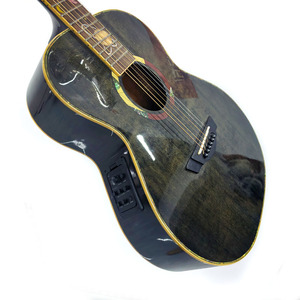
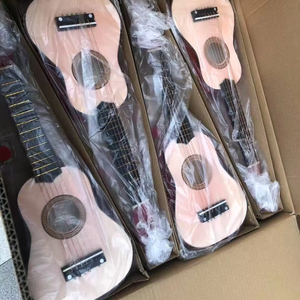
Industrial Engineering Standards for Beginner Acoustic Guitars
Why the entry-level segment is the most demanding manufacturing discipline in modern lutherie: balancing climate tolerance, automated volume, and immediate student tactile feedback.
Kiln Seasoning & Thermo-Equilibrium
The foremost point of failure in export acoustic instruments is structural warping caused by humidity differential between Asian manufacturing hubs and dry Western retail regions. Tier-1 OEM factories implement a minimum 60-day conditioning cycle combining forced dehumidification kilns with resting maturation rooms.
By enforcing an Equilibrium Moisture Content (EMC) strictly calibrated between 8% and 11%, soundboards, braces, and neck blanks resist bell-top sinkage, bridge peel, and neck twists during trans-oceanic shipping container transport.
Automated Multi-Axis CNC Joinery
Traditional beginner instruments often suffered from uneven fret ends and improper neck-to-body dovetail alignment, producing string buzzing and unacceptable high action. Modern OEM plants employ 5-axis CNC machining for fretboard slotting and neck tenon shaping.
Automated pneumatic fret-press arrays seat nickel-silver or rounded Cupronickel frets under uniform pressure before robotic end-dressing, eliminating "fret sprout" complaints regardless of geographic destination climate swings.
Finishing Physics: UV Cure vs. Nitro
Thick polyester finishes deaden acoustic resonance, creating a muddy response that discourages budding musicians. Contemporary OEM exporters leverage ultra-thin photopolymer UV-cured lacquers applied at dry film thicknesses under 0.15mm.
Instantaneous ultraviolet curing hardens finishes in seconds without VOC evaporation downtime, preserving soundboard elasticity, yielding crisp projection, and resisting scratch hazing throughout heavy classroom instructional use.
B2B Material Selection & Cost Engineering Analysis
Compare tonewood configurations, structural bracing architectures, and supply chain trade-offs to optimize retail price positioning against acoustic fidelity.
| Spec Category | Entry Price Tier (USD $30 - $60) | Mid-Tier Student (USD $60 - $110) | Advanced Educational (USD $110 - $180) |
|---|---|---|---|
| Soundboard (Top) | Laminated Linden / Basswood Economical | Laminated Sitka Spruce / Agathis High Durability | Solid Sitka Spruce (Grade A/AA) True Resonance |
| Back & Sides | Basswood Laminate with Multi-ply Edge | Sapele / Agathis / Okoume Veneer | Mahogany / Walnut / Rosewood Alternative |
| Internal Bracing | Parallel Straight Bracing | Scalloped X-Bracing (Automated Pine) | Hand-Voiced Sitka Quarter-Sawn X-Brace |
| Neck Architecture | Nato / Okoume with 2-Way Truss Rod | Mahogany with Dual-Action Carbon Rods | 3-Piece Canadian Maple / Sapele Core |
| Fretboard Material | Technical Dense Engineered Wood (HPL) | Engineered Purpleheart or Blackwood | Thermally Treated Ovangkol or Laurel |
| Target Action (12th Fret) | 2.8mm - 3.2mm (Basic Setup) | 2.4mm - 2.6mm (Factory Plek/Gauged) | 2.0mm - 2.3mm (Luthier Inspection Setup) |
Upcoming Sourcing Dynamics in Beginner Acoustic Lutherie
Global supply chain shifts, regulatory barriers, and evolving consumer ergonomics are redefining the procurement specifications demanded by top musical distributors.
1. Non-CITES Synthetic & Thermowood Shift
With tightening international forestry restrictions on Dalbergia and bubinga species, brand buyers are avoiding cross-border customs confiscation risks by switching entirely to Richlite, HPL fretboards, and torrefied birch.
Torrefied (baked) woods remove moisture cells permanently, simulating thirty years of natural acoustic aging while making entry-level guitars immune to severe winter indoor heating humidity drops.
2. Ergonomic "Small-Body" Dominance
Traditional dreadnought models (41-inch) are rapidly conceding market share to 36-inch Parlor, 000, and travel mini-shapes. Fueled by youth home practice and bedroom producers, compact bodies lower shipping container dimensional weight tariffs by over 22%.
OEM factories are redesigning internal sound chambers with offset parabolic soundports to ensure 36-inch student guitars produce the low-end frequency output historically reserved for full-sized guitars.
3. "Direct-to-Box" Retail Ready Bundles
Global e-commerce channels (Amazon, Thomann, Sweetwater) demand drop-ship certified packaging that withstands 1.2-meter drop tests without detuning or cracking headstocks. Our OEM lines incorporate customized ISTA-3A certified crash-tested packaging.
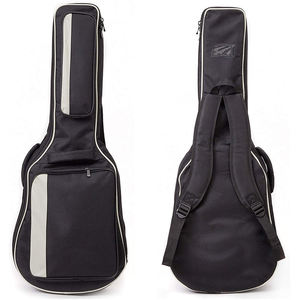
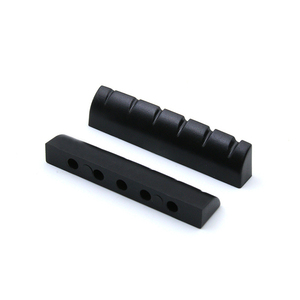
Each master carton integrates moisture-absorbent silica cartridges, string tension de-stress blocks, and complete accessory bundles (gig bags, tuners, bone nuts) for immediate out-of-box customer satisfaction.
World-Class Governance Backed by Global Distribution Synergy
Consistently bridging the gap between cost-effective Asian manufacturing efficiency and strict North American/European quality assurance standards. Our manufacturing ecosystems mirror the proven operational models established across international brands like Jay Turser under JAM USA LLC.
Multi-Family Industrial Breadth
Streamline your SKU procurement under one single export relationship spanning acoustic ranges (Jay J, Jay Jr, JTA), classic electric solid-bodies (300 & LT series), and modern active electric basses (400 & CL series).
Strict Player-First Ergo Calibration
Every batch adheres to microscopic string-height action thresholds, fret leveling inspection under Plek standard simulations, and precise hand-rolled fingerboard edges to protect beginner student muscle retention.
Marketing & Listing-Ready Assets
Accelerate your time-to-market. High-resolution studio white-background photography, 3D CAD renders, exploded hardware specs, and full packaging compliance artwork are provided with every OEM batch production run.
Frequently Asked Questions for OEM/ODM Buyers
Direct technical answers addressing minimum order volumes, private label branding methods, humidity warranties, and international customs documentation.
What are your standard Minimum Order Quantities (MOQ) for custom private branding?
For standard acoustic models using regular production tonewoods (Linden, Sapele, Sitka Spruce), our baseline MOQ starts at 50 to 100 units per finish colorway. For fully bespoke custom body molds, scale lengths, or proprietary headstock inlays, initial production runs typically require 300 units or a consolidated 20-foot shipping container load.
How do you prevent bridge lifting and neck warpage in cold, dry destination climates?
We deploy rigorous environmental chambers simulating 30% relative humidity before packaging. Bridge glue joints are mechanically anchored with dual under-bridge wood dowels alongside high-tensile aliphatic resin glues. Every neck integrates a two-way bidirectional truss rod allowing adjustments for both forward and back bow in any regional climate.
Are all tonewood species compliant with international Lacey Act and CITES certifications?
Yes. We provide complete traceable chain-of-custody documentation with every commercial export bill of lading. By prioritizing non-restricted alternatives like tech-wood, Laurel, Purpleheart, and sustainably farmed Okoume, we ensure frictionless clearance through US Fish & Wildlife and European Union environmental import inspections.
Can you provide custom-molded drop-tested retail packaging for Amazon FBA and D2C brands?
Absolutely. We specialize in ISTA-certified e-commerce packaging consisting of five-layer double-wall corrugated outer cartons, internal high-density molded EPE foam neck braces, and sealed interior polyethylene vapor barriers designed to survive international courier transport without carton crush or detuning.