Standard & Custom Fretted Instruments for Volume Sourcing
From standard double-cutaway SSS platforms to extended-scale hollow bodies, student lines, and precision tonewood chassis. Engineered for seamless private labeling and regional distributor deployment.
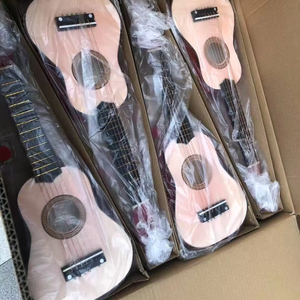
Wholesale 21 Inch Basswood Small Guitar 6 Strings Small Acoustic Guitar Musical Instruments for Children Kids Beginners Playing
Scale Length: 21-Inch Ergonomic Student Scale
Target Channel: Music Academies & Retail Gift SKUs
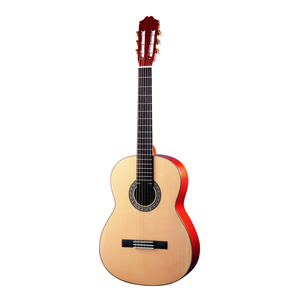
Wholesale Price 39 Inch Solid Spruce Mahogany Back Gloss Classical Guitar
Body Construction: Selected Mahogany Sides/Back
Finish: High-Gloss Mirror Polyurethane
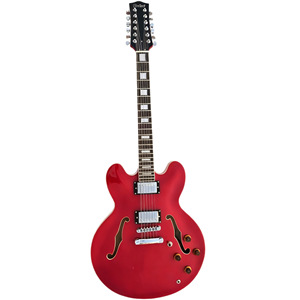
Factory Direct Sale Twelve-String Jazz Electric Guitar with Maple Back F-Hole Semi-Hollow Body
Timber: Flamed Maple Back, Center Solid Block
Pickups: Dual Vintage Alnico Humbuckers
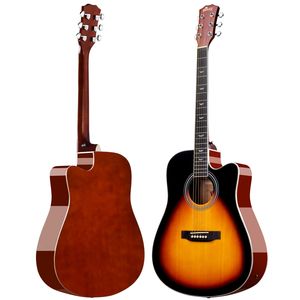
41-Inch Folk Acoustic Cutaway Guitar Package for Beginners Students Kids
Inclusions: Padded Gig Bag, Clip Tuner, Straps
Fretwork: Hand-Dressed Nickel-Silver Frets
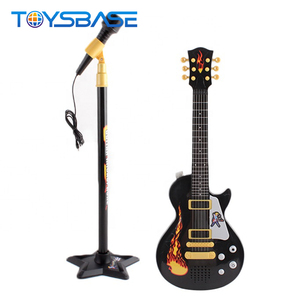
High Quality With Microphone Plastic Toy Kids Electric Guitar
Features: Built-in Speaker, Auxiliary Microphone
Volume Sourcing: OEM Blister / Gift Box Ready
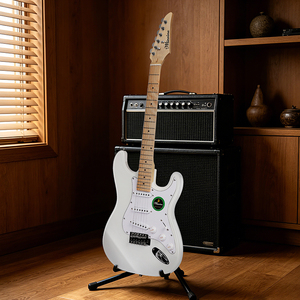
Popular Entry Level 22 Frets SSS Pickup Electric Guitar Pack for Beginner Players
Electronics: SSS Ceramic/Alnico Single Coils, 5-Way
Hardware: Vintage 6-Screw Synchronized Tremolo
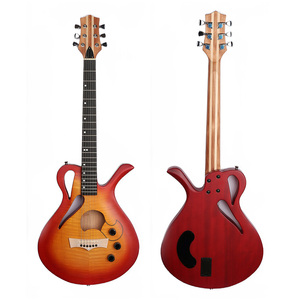
Customized high-quality personalized items Professional 6-String Electric Guitar - Handcrafted- Semi-Hollow Mahogany Body
Neck Joint: Precision Set-In Mortise & Tenon
Finishing: Nitrocellulose / Thin-Skin Poly
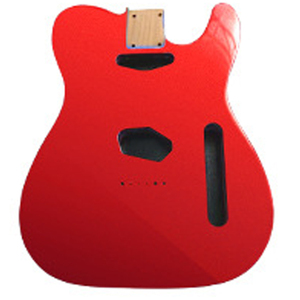
Quality Quality Wholesale ALDER Guitar Body Parts for Electric Guitar Essential Guitar Components
Routing: SSS/HSH Universal Pickup Cavity
Compatibility: Standard 56mm Strat-Spec Neck Pocket
1. The Engineering Architecture of Modern OEM/ODM ST Electric Guitar Manufacturing
The standard "ST" (Stratocaster-style double-cutaway) electric guitar remains the definitive benchmark and volume anchor of the international musical instrument industry. For enterprise-level distributors, brand licensors, and high-volume e-commerce retailers, sourcing from qualified OEM/ODM ST electric guitar factories and exporters is no longer just a transaction based on unit price. It is an intricate technical audit of industrial consistency, timber moisture management, multi-axis automated CNC repeatability, electronic shielding integrity, and rigorous environmental regulatory compliance.
Modern ST guitar fabrication demands an empirical manufacturing philosophy. The instrument's primary acoustic chassis—consisting of the solid body, the neck, and the fingerboard interface—must balance structural rigidity with harmonic resonance. In tier-one OEM facilities, body blanks of North American Alder (Alnus rubra), European Basswood (Tilia americana), or Okoume are stabilized inside radio-frequency vacuum dry kilns until internal moisture content reaches an exact 8% to 10% equilibrium. This thermo-hygrometric control halts cross-grain warping, neck cupping, and fret sprout when instruments are shipped across contrasting oceanic climates.
Factory Insight on Dimensional Stability: "The most frequent cause of post-import warranty returns in North American and European distributor channels is dimensional neck deformation caused by ambient relative humidity changes. Advanced factories mitigate this by utilizing quartersawn Canadian hard rock maple or computerized vacuum thermo-treatment (roasting) at 180°C–210°C, transforming cellulose structures into crystalline forms that are chemically impervious to ambient humidity shifts."
Computerized multi-axis CNC routers handle body contours, tummy cuts, arm contours, and universal pickup routing (HSH or swimming pool configurations) with tolerances clamped within ±0.05 mm. The neck pocket—the critical mechanical junction dictating string acoustic transference and action sustain—is milled with interference-fit precision. A loose neck pocket saps midrange attack and causes micro-shifting during overseas container transit, while an overly compressed fit creates catastrophic finish hairline fractures at the neck joint relief corners.
2. Enterprise Production Methodology: From Rough Lumber to Global Palletization
Understanding an OEM exporter's operational methodology provides buyers with the clarity required to negotiate OEM/ODM master service agreements. A premier manufacturing ecosystem operates across five interconnected production modules:
Module 1: Automated Wood Conditioning & Resawing. Raw lumber logs are inspected for knot defects, mineral streaks, and runout. Automated cross-cut saws and bookmatching planers prepare two-piece or three-piece glued body blanks using aliphatic resin emulsion adhesives, ensuring joint bonds stronger than the surrounding wood grain.
Module 2: Neck Profiling & Dual-Action Truss Rod Integration. Necks receive dual-action carbon-steel truss rods inserted through the rear channel or under the glued fingerboard. Radii ranging from 9.5 inches (vintage modern) to 12–14 inches (contemporary compound) are precision-machined alongside machine-pressed nickel-silver or stainless steel fretwire. Undercut fret tangs sealed with resin prevent edge snagging entirely.
Module 3: Electrostatic Lacquer Application & Automated Buffing. High-solid polyurethanes (PU) or environmentally stabilized polyesters (PE) are applied through high-voltage electrostatic reciprocal spray robots. This guarantees consistent 0.12–0.15 mm paint thickness across the body without creating heavy edge pooling that degrades natural acoustic vibration. Final gloss levels are achieved using robotic six-axis buffing wheels with diamond-compound polishing paste.
Module 4: Signal Architecture & Component Sourcing. Electromagnetic pickup assemblies determine tonal character. Professional OEM lines offer custom-wound bobbin configurations: staggered Alnico V magnets for classic chime, or overwound Ceramic bobbins for modern aggressive output. SSS wiring harnesses feature high-grade potentiometers (500kΩ for punchy humbucker hybrid configs, 250kΩ for crystalline single-coils), 5-way double-wafer switches, and fully shielded pickup cavities coated in nickel conductive paint to achieve sub-45dB signal noise floors.
Module 5: Acoustic Setup & Comprehensive AQL Quality Inspection. Prior to packaging, instruments undergo stringent setup protocols: nut slot depth filing via specialized gauges, 12th fret action calibration (set to 1.5 mm on high E, 2.0 mm on low E), intonation strobing, and 100% electronic phase testing. Packaging utilizes custom 5-ply corrugated master cartons passing ISTA 3A drop testing protocols to survive trans-oceanic logistics vibration.
3. Technical Sourcing Matrix: ST Electric Guitar OEM Specifications
When engineering an ST guitar product tier, brand procurement directors must balance bill-of-materials (BOM) cost allocations against market positioning expectations. The following matrix illustrates the architectural differences between commercial retail tiers:
| Component Tier | Entry-Level Commercial (Pack SKUs) | Intermediate Retail / Studio Series | Flagship Professional / Custom OEM |
|---|---|---|---|
| Chassis Tonewood | Laminated Poplar / Lightweight Basswood | Solid Selected Basswood / Okoume | 2-Piece Bookmatched North American Alder / Swamp Ash |
| Neck Construction | Hard Maple (Flat-sawn), Modern C Profile | Canadian Hard Rock Maple (Satin Poly) | Roasted Quartersawn Flame Maple (Oil Finished) |
| Fretboard Timber | Engineered Dense Wood / Laurel | Indian Laurel / Roasted Jatoba / Maple | Selected Rosewood / Solid Grade-A Roasted Maple |
| Fretwire & Leveling | 21/22 Standard Medium Nickel-Silver | 22 Medium Jumbo (Hydraulic Pressed) | 22/24 Extra Jumbo Stainless Steel (Hand-Dressed / PLEK) |
| Pickup Configuration | SSS Ceramic Magnets, Wax Potted | SSS or HSS Alnico V Vintage Voiced | Custom-Wound Handcrafted Alnico II/V, Coil-Split HSS |
| Bridge & Tremolo | Standard 6-Screw Synchronized Vintage | 2-Point Modern Pivot Tremolo (Die-Cast Saddles) | Wilkinson 2-Point / Gotoh 510 Spec w/ Steel Sustain Block |
| Tuning Machines | Standard Sealed Die-Cast (14:1 Ratio) | Precision Sealed Tuners (16:1 Ratio) | Staggered Height Locking Machine Heads (18:1 Ratio) |
| Nut Material | Precision Molded ABS / Synthetic Bone | Engineered Graphite / High-Density PPS | Unbleached Real Cattle Bone / Tusq-Engineered |
| Target FOB Benchmark | $28.00 – $45.00 / Unit (MOQ 300) | $65.00 – $110.00 / Unit (MOQ 150) | $140.00 – $260.00+ / Unit (MOQ 50) |
4. Technological & Market Dynamics Shaping ST Guitar Manufacturing
The global fretted instrument market is navigating a pronounced shift toward higher perceived value at aggressive price points. Several technical innovations are transforming production lines across Asia and worldwide exporter networks:
Widespread Adoption of Torrefied (Roasted) Woods
Thermal modification ovens remove volatile organic compounds and moisture without chemical agents. Torrefied maple necks offer bulletproof seasonal dimensional stability and a coveted amber hue, formerly limited to boutique luthier shops.
Stainless Steel Frets on Mid-Tier Catalogs
Automated CNC fret-bending, pressing, and micro-beveling equipment allow factories to install durable stainless steel frets on sub-$100 guitars, giving OEM brands an immense marketing edge regarding fret longevity and silky string bending.
Direct-to-Consumer Drop-Ship Ready Packaging
Traditional master shipping cartons required dealer setups before purchase. Progressive exporters now provide drop-test ISTA 3A certified individual retail packaging, complete with pre-stretched strings, moisture desiccant, and barcoded cartons ready for fulfillment.
5. Future Sourcing & Global Procurement Trends for Fretted Instruments
Corporate procurement teams cannot afford to view supply chains through a purely low-cost lens. Navigating the next decade of musical instrument distribution requires proactive alignment with several international macro-trends:
Strict Lacey Act & EU Timber Regulation (EUTR) Traceability: Custom border declarations require ironclad timber provenance. Exporters must provide verifiable chain-of-custody documentation for every board foot of Dalbergia (Rosewood), Swietenia (Mahogany), or Acer (Maple). Utilizing verified alternative tonewoods like roasted jatoba, purpleheart, and thermally modified laurel avoids costly port inspections and product impoundment.
Near-Zero Finish Formulations: Global environmental directives (REACH, RoHS, California Prop 65) have accelerated the phaseout of aromatic solvents. Leading factories have modernized spray bays with ultra-violet (UV) light cured acrylics and waterborne polyurethane finishes, dropping VOC emissions by 85% while cutting curing cycle times from 14 days down to 40 seconds under UV lamps.
Modular Circuit Architecture for Rapid SKUs Customization: Rather than producing fixed wiring configurations, smart OEM facilities fabricate quick-connect terminal blocks on pickguards. This enables brand owners to offer interchangeable loaded pickguards (SSS vintage chiming, HSS modern metal, or P90 punch) across identical body routes, slashing factory minimum order quantities (MOQs) while expanding dealer catalog options.
6. Enterprise OEM/ODM Manufacturing Advantages & Institutional Reliability
Choosing the correct manufacturing partner is the single most pivotal operational decision for an instrument brand or musical retailer. Building upon the proven engineering lineage of the world-renowned Jay Turser Guitars (a brand division of JAM USA LLC), our manufacturing and export framework is anchored by decades of fretted instrument innovation, global distribution accountability, and comprehensive dealer support networks.
Decades of Industry Heritage
Grounded in the celebrated Jay Turser tradition of building high-value, easy-playing electric guitars, acoustics, and basses that foster lifelong musical progress.
Tier-1 Backing by JAM USA LLC
Operates under the governance and logistical scale of JAM USA LLC and Exertis, ensuring financial stability, reliable shipping allocations, and transparent supply contracts.
Standardized Quality Milestones
Every batch passes through our stringent 40-point quality check—fret crowning, truss rod testing, bridge grounding, and harmonic resonance audits.
Turnkey Private-Label Solutions
Complete OEM services from bespoke headstock silhouette shaping, silk-screened logos, custom pickguard colorways, to branded packaging and multi-language manuals.
7. Frequently Asked Questions: B2B Sourcing, Technical Audits & Export Logistics
Direct technical responses addressing common logistical, engineering, and contractual questions faced by procurement teams:
What are typical production lead times for customized OEM ST guitar container orders?
What Minimum Order Quantities (MOQs) apply to custom headstock designs and logo branding?
How does your factory ensure compliance with CITES appendices and international timber regulations?
Can pickups, wiring harnesses, and bridge components be specified to custom brand requirements?
What climate stability guarantees are provided to prevent fret sprout during overseas shipping?
Are product packaging and beginner starter kits customizable for direct retail shelves?
Initiate Your Next OEM/ODM Production Run
Connect with our technical engineering team to review CAD drawings, request sample prototyping, analyze FOB/CIF pricing, and explore customized fretted instrument solutions for your commercial market.