OEM/ODM Wholesale Guitars Factories & Exporters

Precision Industrial Luthiery, High-Capacity Automated Production Lines & Global B2B Private-Label Solutions Engineered for Leading Distributors and Music Chains

120,000+ Monthly Instrument Output
<0.38% Defect Rate (AQL Level II)
100% CITES & Lacey Act Compliance
68+ Export Markets Served
Production-Ready OEM Platforms

High-Volume Export Guitar Lineup

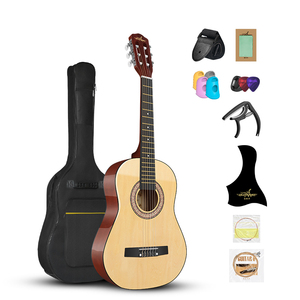
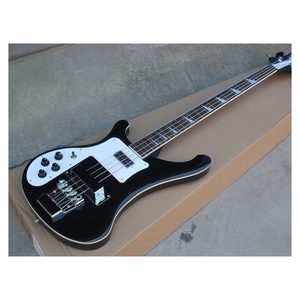
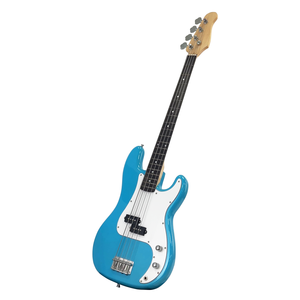
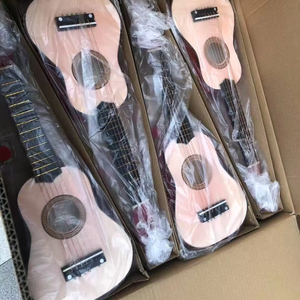
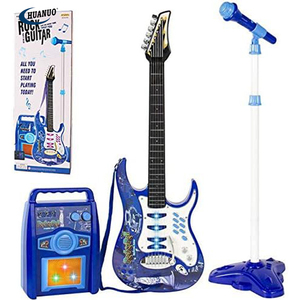
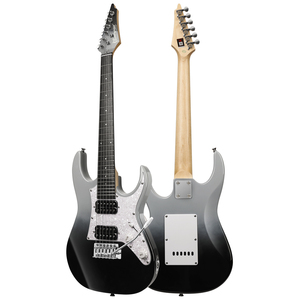
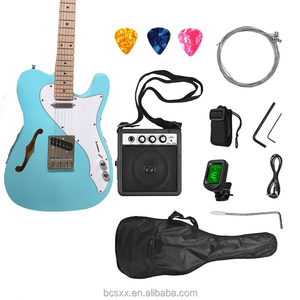
Engineered to exact international dimensional standards, our versatile product line spans premium solid-body electrics, resonant classical starter packs, ergonomic student models, and punchy performance basses.

Market Dynamics & Global Sourcing

Future Procurement Trends Shaping Wholesale Guitar Supply Chains

Strategic analysis for enterprise importers, chain buyers, and distributors navigating evolving regulatory landscapes, consumer shifting preferences, and inventory turns.

1. Supply Chain De-Risking & Hybrid Inventory

Global musical instrument distributors are pivoting away from single-batch massive speculative orders toward agile, split-shipment manufacturing cycles. To optimize inventory carry costs and prevent retail stockouts, tier-one brands contract flexible OEM capacities that allow dynamic seasonal batching.

Our OEM operations support cross-docking schedules and staged container shipments, maintaining 99.4% on-time fulfillment rates across North American, European, and Asia-Pacific freight routes.

2. Stringent Environmental & Timber Audits

Procurement directors must navigate tightening ecological mandates, specifically CITES Appendix II restrictions on rosewoods (Dalbergia) and the Lacey Act's strict chain-of-custody documentation. Importers now demand full traceability back to legal logging concessions.

We provide full FSC-certified timber streams, utilizing thermally treated woods and technical composites (such as high-density blackwood and Richlite) that completely bypass customs timber clearance bottlenecks.

3. E-Commerce "Drop-Ship Ready" Packaging

With direct-to-consumer musical sales accelerating via Amazon, Thomann, and Sweetwater marketplaces, bulk shipping packaging is no longer acceptable. Distributors require ISTA 3A and 1A drop-test certified retail cartons that survive parcel courier transit without internal structural damage or finish checking.

Our factory-level engineering includes 5-ply corrugated outer boxes with form-fitting molded expanded polyethylene (EPE) cradle foam.

Industrial Luthiery 4.0

Technological Advancements in Modern Guitar Manufacturing

Bridging traditional tonal resonance with robotic precision engineering to deliver flawless neck ergonomics, micro-tolerance fret dressing, and resilient finishes at mass scale.

5-Axis CNC Precision Neck Carving

Neck stability is the primary determinant of instrument longevity and playability. Modern high-volume guitar manufacturing relies on multi-spindle 5-axis CNC machining centers operating within ±0.02mm tolerance. This eliminates human neck-profile variance across production runs, ensuring that every neck pocket, truss rod channel, and compound radius fingerboard mates with mechanical harmony.

Robotic Electrostatic UV Curing Finishes

Traditional nitrocellulose and thick polyester coatings either release high VOCs or deaden acoustic wood resonance. Cutting-edge factories now utilize ultra-thin photo-curable UV polyurethane resins applied by robotic spray arms. Curing instantly under high-intensity ultraviolet lamps, this process produces a crystal-clear, scratch-resistant barrier under 85 microns thick that lets tonewoods vibrate freely.

Computerized Plek Fret Dressing & Intonation

Fret buzzing and irregular string clearance remain the #1 return reason for retail instruments. Our advanced finishing bays incorporate automated fret leveling and crown profiling stations. By tension-simulating string pull during acoustic measurement, frets are leveled to sub-micron accuracy, allowing an ultra-low, buzz-free string action of 1.5mm on the bass side and 1.2mm on the treble side right out of the box.

Manufacturing Dimension Legacy Workshop Standard Our Industrial OEM/ODM Standard Importer Value Impact
Wood Equilibrium Moisture (EMC) 12% - 15% (Ambient air dry) 6% - 8% (Dual Dehumidification Kilns) Eliminates fret sprout, neck warping, and body cracking in dry retail climates.
Neck Joint Milling Manual hand-routed templates Automated 5-Axis Twin-Spindle CNC (±0.02mm) Maximum vibrational energy transfer, zero heel gap, consistent sustain.
Coating Thickness 180 – 250 microns (heavy poly) 60 – 85 microns (Eco-Friendly UV Cured) Enhanced acoustic projection, resonance, and fast scratch-resistant cure times.
Fret Finishing Quality Manual beveling & spot filing Semi-Automated Cryogenic Wire Plek Leveling Zero buzzing, buttery smooth edge beveling, reduced return rates under 0.4%.
Electronics & Shielding Standard copper wire / unshielded cavities Conductive Graphite Coating & Shielded Cabling Hum-free performance in high-EMI stage and recording environments.
Why Partner With Our Factory

Enterprise Advantages Built on Proven Manufacturing Discipline

Anchored by the engineering heritage of world-renowned instrument groups such as Jay Turser and parent organization JAM USA LLC, our facility represents the pinnacle of dependable musical instrument mass production.

End-to-End Turnkey OEM/ODM

From initial CAD rendering and physical 3D-printed prototyping to custom headstock silhouette tooling and proprietary pickup winding, our R&D department turns custom concept drawings into mass-manufactured realities within a rapid 45-day sampling cycle.

Rigorous Multi-Stage QA Protocols

Every single instrument undergoes a mandatory 4-stage inspection gateway: incoming raw tonewood ultrasonic density checks, post-carving structural stability review, 48-hour climate equilibrium testing, and final master luthier string setup and electronic continuity testing.

Complete Family SKU Consolidation

Lower your administrative overhead by ordering across all three fretted instrument families under one master manufacturing contract: solid-body electrics (e.g., 300 & LT series platforms), travel and classroom acoustics (Jay J & JTA families), and solid punch electric basses (400 & CL series).

Procurement Knowledge Base

Frequently Asked Questions for Wholesale Guitar Importers

Detailed technical answers covering Minimum Order Quantities (MOQ), tonewood legality, private label tooling, moisture stabilization, and customs paperwork.

What are the standard Minimum Order Quantities (MOQs) for OEM private label guitar manufacturing?
Our standard OEM minimum order quantity is typically 50 units per model and finish for solid body electric guitars and basses, and 100 units for entry-level acoustic models. For custom hardware plating (e.g., gold hardware, custom engraved neck plates) or unique proprietary body mouldings, initial tooling MOQs of 200 units may apply. We also offer mixed-container consolidations (e.g., combining 4 distinct series into one 40-foot High Cube container) to optimize working capital for international regional distributors.
How does your factory ensure international CITES, Lacey Act, and EU Timber Regulation compliance?
We operate in total conformity with global forestry preservation laws. All natural tonewoods utilized in our manufacturing (such as North American Hard Maple, African Okoume, and Asian Basswood) are documented with complete chain-of-custody FSC certificates and USDA Lacey Act declaration declarations. For rosewood species governed under CITES Appendix II, we provide pre-certified re-export permits or supply standard alternatives like thermally-modified engineered tech-wood and Richlite fingerboards that require zero endangered species documentation at global customs ports.
How do you manage wood moisture content to prevent neck warping and fret sprout in destination markets?
Wood stabilization is our core competitive advantage. All rough lumber undergoes vacuum radio-frequency drying followed by extended stabilization in computerized climate-controlled kilns until an Equilibrium Moisture Content (EMC) of 6% to 8% is reached. Before assembly, wood blanks are rested in humidity-regulated holding bays matching standard North American and European heated indoor conditions (45% relative humidity). This scientific protocol guarantees that neck alignment remains dead true, truss rod adjustments function smoothly, and fret tangs do not sprout during dry winter store displays.
Can you accommodate bespoke hardware, pickups, and electronic custom winding specifications?
Yes. We possess dedicated in-house pickup winding and electronics assembly lines. We can manufacture customized Alnico II, Alnico V, or high-output ceramic magnet pickups wound to specified DC resistance targets (e.g., vintage 5.8k-ohm single coils or hot 14.5k-ohm bridge humbuckers). We also partner with premium tier-one hardware suppliers (Wilkinson, Grover, Bigsby, Floyd Rose) for custom branded builds or assemble with our own precision-engineered cost-effective OEM tuners and die-cast bridges.
What is the standard production lead time from sample sign-off to container loading?
Initial master prototype delivery takes 25 to 35 business days following CAD approval. Upon formal sign-off and receipt of production deposit, typical mass-production lead times span 45 to 60 days for solid-body instruments, and up to 65 days for complex multi-ply arched semi-hollow models or multi-layer nitrocellulose/gloss finishes. Staged forward-planning programs allow contracted clients to book rolling monthly capacity allocations for continuous container dispatches.
Enterprise OEM / ODM Partnerships

Ready to Expand Your Fretted Instrument Portfolio?

Download our complete comprehensive 2026/2027 OEM Wholesale Catalog complete with model blueprints, tonewood selections, container pack matrices, and tiered distributor pricing schedules.

Get Catalog