Engineered Acoustic Instruments, All-in-One Kits & Sub-Assemblies
Precision-manufactured platforms configured for immediate assembly, branded resale, and custom OEM scale. Each unit conforms to standardized dimensional tolerances and acoustic humidity stabilization protocols.
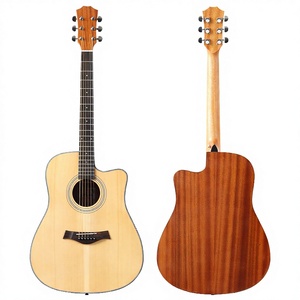

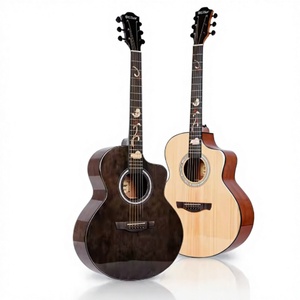
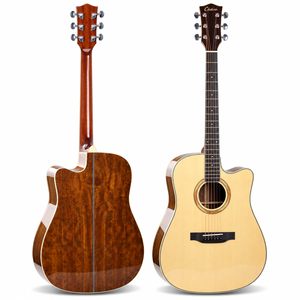
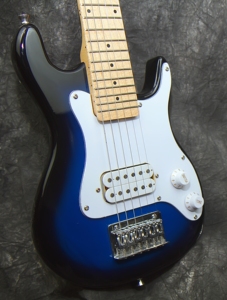
The Global Acoustic Guitar Kit & Fretted Instrument Supply Chain
The global manufacturing ecosystem for acoustic guitars, DIY assembly kits, and fretted instrument components has experienced a fundamental paradigm shift. In prior market cycles, procurement managers and B2B brand owners sourced acoustic guitar kits primarily based on unit landing price. However, the rise of global e-commerce, heightened consumer technical sophistication, and aggressive quality rating metrics across omni-channel retail platforms have elevated the criteria for selecting acoustic guitar kit factories and suppliers.
An acoustic guitar kit is substantially more demanding from an engineering standpoint than an electric guitar kit. While a solid-body electric instrument can forgive micro-variations in wood stability through electronic compensation and bridge adjustments, an acoustic guitar is an intricate, mechanical transducer. It relies on internal mechanical equilibrium, air cavity resonance, and micro-tolerances along the neck joint, top plate thicknessing, and bracing geometry. Sourcing teams must audit prospective manufacturing partners not merely as woodworking mills, but as acoustic laboratories capable of sustaining industrial-grade climate control, precision CNC machining, and comprehensive wood seasoning.
Equilibrium Moisture Content (EMC)
Top-tier suppliers utilize computer-regulated dehumidification kilns ensuring tonewood rests at 8% to 10% moisture content, eliminating top sink and fret sprouting during transit.
Multi-Axis CNC Joint Tolerances
Compound dovetail and precision mortise-and-tenon neck joints cut within ±0.05mm thresholds guarantee predictable string action and acoustic coupling out of the box.
CITES & Lacey Act Compliance
Full chain-of-custody documentation on Sitka Spruce, Mahogany, Walnut, and alternative technical synthetics guarantees customs clearance in North America and the EU.
Evaluating the Top 10 Acoustic Guitar Kit Manufacturing Archetypes
When selecting among the top 10 industrial manufacturing hubs globally—predominantly concentrated across specialized lutherie clusters in Shandong (Weifang/Changle), Guangdong (Huizhou), Guizhou (Zheng'an), and established centers in Indonesia—procurement directors must assess operations across four critical competencies: timber seasoning infrastructure, structural joint integrity, automated fret levelling, and unboxing pack-out readiness.
| Factory Archetype / Hub | Primary Production Focus | Joint Architecture | Finish Options | Target Wholesale Segment |
|---|---|---|---|---|
| Enterprise OEM/ODM Hub (e.g., Jushia / Jay Turser) | Full-Scale Complete Kits & Finished Guitars | Engineered CNC Dovetail & Bolt-On | Ultra-Thin Poly, Satin, UV Curable | Global Brand Owners, Retail Chains & Importers |
| High-Volume Dreadnought Specialist | 41" Spruce Plywood / Entry Bundles | Traditional Mortise & Tenon | Open Pore, Matte, Dip-Sealed | Educational Tenders, Mass Market E-Commerce |
| Artisan Luthier Kit Fabricator | Solid Top (Sitka/Cedar) Semi-Carved | Hand-Fitted Compound Dovetail | Unfinished / Seal Coat Only | Boutique Builders, High-End DIY Enthusiasts |
| Hybrid Component & Sub-Assembly Plant | Necks, Slotted Fretboards, Pre-Bent Sides | Standardized Modular Tenon | Raw Wood Conditioned | Regional Assemblers, Repair Networks, Custom Shops |
| Juvenile & Travel Kit Manufacturer | 30" to 38" Reduced Scale & Classical | Reinforced Dowel / Mini Tenon | Non-Toxic Acrylic Gloss / Satin | School Ensembles, Youth Music Curricula |
Future Procurement Trends in Acoustic Guitar Manufacturing (2025–2030)
The global fretted instrument market is evolving rapidly under dual pressures: ecological stewardship of old-growth tonewoods and consumer demand for professional-grade acoustic performance at accessible price brackets. Procurement teams planning their inventory pipelines must account for the following technological trajectories:
1. Advanced Torrefaction (Thermo-Cured Tonewoods)
Torrefaction—baking soundboard woods (such as Sitka Spruce or Engelmann) in an oxygen-deprived kiln at temperatures between 180°C and 220°C—is no longer reserved exclusively for master-grade custom acoustics. Tier-1 manufacturing facilities are integrating large-scale torrefaction into commercial OEM kit tops. The cellular breakdown of hemicellulose and volatile resins replicates the vintage resonance, cellular rigidity, and humidity immunity of a 50-year-old instrument. For B2B importers, thermo-cured tops drastically reduce warranty claims related to cracking and swelling in variable regional climates.
2. Precision Plek Machine Fretting & Cryogenic Fretwire
Historically, the biggest consumer barrier to DIY acoustic kits was uneven fret seating and fret buzz, which demanded expert luthier intervention. Modern suppliers are investing in automated fret-pressing jigs and in-line Plek-style scanning machinery for pre-slotted fingerboards. By deploying high-tensile 18% nickel-silver and cryogenically treated frets that are crowned and beveled before shipment, factories deliver DIY kits that assemble into low-action, buzz-free performance instruments instantly.
3. Eco-Friendly Waterborne UV Finishes and Ultra-Thin Coatings
Environmental regulations regarding volatile organic compound (VOC) emissions are tightening across North America and Europe. Conventional solvent-based polyurethane and nitrocellulose lacquers are being superseded by automated robot-applied UV-curable waterborne finishes. These coatings cure under UV lamps in seconds, allowing for film thicknesses under 0.08mm. This thin acoustic footprint preserves natural soundboard velocity and projection while offering superior scratch resistance and eco-certification compliance.
4. Modular Pre-Wired Acoustic-Electric Preamp Systems
Demand for hybrid acoustic-electric capability is surging across beginner and intermediate player categories. Leading suppliers are engineering snap-in, solderless undersaddle piezo and internal condenser microphone systems. These systems eliminate the need for end-users or assembly technicians to perform delicate soldering or invasive routing, expanding the commercial viability of DIY kits among non-technical end customers.
Technical Blueprint: Anatomy of a Commercial-Grade Acoustic Kit
To differentiate low-grade, hobby-grade novelties from high-performance commercial inventory, purchasing agents must evaluate five critical sub-assemblies during the factory pre-shipment audit:
Soundboard Bracing Architecture
Scalloped X-bracing with quarter-sawn spruce tone bars ensures structural equilibrium against 160 lbs of string tension while releasing acoustic bass response around the lower bouts.
Dual-Action Steel Truss Rod Integration
Two-way adjustable truss rods anchored beneath an engineered rosewood or high-density technical wood fretboard permit dynamic seasonal relief correction in both convex and concave directions.
Bridges, Nuts & Compensated Saddles
High-density synthetic bone or CNC-machined real bone nuts and compensated saddles guarantee pristine intonation along the 12th fret without requiring manual file adjustments by the consumer.
When engineering kits for commercial distribution, the factory must balance ease of assembly with structural longevity. If the neck pocket fit is too loose, the acoustic energy transfer collapses; if it is too tight, finish checking or neck heel fractures occur under humidity changes. Our contract manufacturing processes implement optical laser coordinate measurement machines (CMM) to certify that every neck tenon and body mortise exhibits a repeatable tolerance within the golden 0.05mm window.
The Enterprise Advantage: Manufacturing Pedigree & Quality Architecture
Navigating the global supply market requires a manufacturing partner with proven financial stability, deep engineering expertise, and accountable corporate governance. Operating with the institutional backing and engineering heritage of Jay Turser and JAM USA LLC, our manufacturing network bridges the gap between Asian industrial scale and Western quality expectations.
Why Tier-1 Importers & Chains Partner With Our Facilities:
- Unified Multi-Category Catalog: From 41-inch acoustic dreadnoughts and cutaways, nylon-string classical instruments, and 30-inch junior guitars to solid-body electric packages (300 Series, LT Series, 30 Jr) and electric basses (400 Series, CL Series), our consolidated container shipping eliminates multi-vendor operational overhead.
- Strict Acoustic Environmental Controls: Wood storage yards, CNC rough-milling shops, and final packaging lines operate under continuous 24/7 digital climate control (RH 45%–55%, 22°C), safeguarding wood cell structures against post-export warping.
- Turnkey Private Label & Listing-Ready Assets: We provide full OEM customization including laser-etched headstocks, custom branded soundhole labels, barcoded packaging compliant with retail logistics, and high-resolution white-background studio photography for immediate listing activation.
- Accountable International Compliance: Every batch is audited for REACH, RoHS, CITES non-restricted wood compliance, and CARB Phase 2 / TSCA Title VI formaldehyde emissions on laminated wood components.
Comprehensive B2B Sourcing FAQ: Acoustic Guitar Kits & OEM Guitars
Review standard technical and commercial terms below. For custom requests or localized container delivery schedules, connect directly with our global engineering team.
What are the standard Minimum Order Quantities (MOQs) for custom OEM acoustic guitar kits?
How do your factories control wood stability and prevent neck warping during ocean freight?
Can we request specialized tonewood configurations for market-specific compliance?
What level of pre-assembly is performed on the acoustic guitar kits before packaging?
What are the standard production lead times for 20ft and 40ft HQ container orders?
Scale Your Fretted Instrument Brand With Industrial Precision
Initiate factory-direct negotiations, request comprehensive physical evaluation samples, or consult with our manufacturing engineers regarding bespoke OEM specifications, MOQ structures, and localized container freight logistics.
Inquire Now