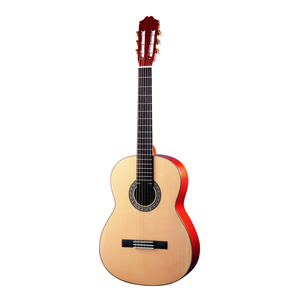
Model: CG-3900-SP
Engineered for high-throughput distribution, institutional music education tenders, and private-label retail lines. Audited for structural neck stability, resonance optimization, and climate transit tolerance.
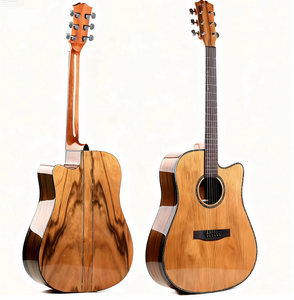
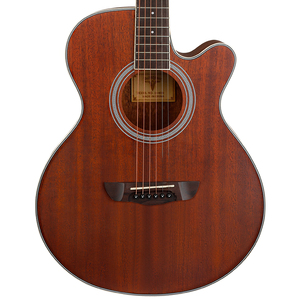
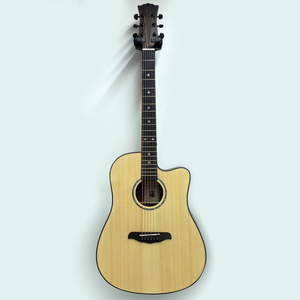
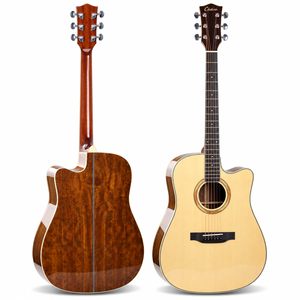
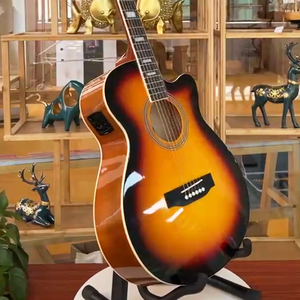
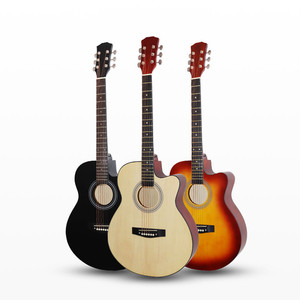
Procuring acoustic guitars at commercial scale requires an analytical understanding of industrial lutherie, environmental equilibrium moisture content (EMC), and supply chain velocity. Unlike solid-body electric instruments whose dimensional tolerances are forgiving, an acoustic guitar is an ultra-thin pneumatic resonance chamber under approximately 75 to 85 kilograms of continuous mechanical string tension. When sourcing thousands of units destined for varying climatic zones—from the humid summer coastlines of Florida to dry winter conditions in Scandinavia—procurement managers cannot treat acoustic guitars as generic boxed merchandise.
B2B Technical Sourcing Rule: Over 68% of post-import warranty returns in acoustic guitars stem from improper tonewood dehydration cycles and unstable glue joint polymers, resulting in soundboard belly bulges, sharp fret ends, and bridge lifting within 90 days of retail floor placement.
Top-tier manufacturing facilities adhere to strict multi-stage drying routines. Raw logs of Sitka spruce, Engelmann spruce, African mahogany (Khaya ivorensis), sapele, and basswood undergo an initial open-air seasoning of 6 to 18 months, reducing free water within cellular lumens. Next, computerized vacuum kiln-drying cycles slowly extract bound cellular moisture until the wood reaches a target core moisture content of 8% to 10%.
In high-grade OEM lines, wood components then enter a controlled acclimation holding chamber maintained strictly at 45% to 50% relative humidity (RH) at 22°C (72°F) for a minimum of 14 days before computerized CNC cutouts and thickness sanding occur. This process permanently stabilizes cellular cellulose and lignin against future hydrostatic expansion or rapid contraction, ensuring consistent neck angle geometry and dead-flat fretboards upon delivery.
| Tonewood Variety | Sourcing Origin | Target Density (kg/m³) | EMC Desiccation Window | Acoustic Role & Structural Profile |
|---|---|---|---|---|
| Solid Sitka Spruce | Pacific Northwest (US/Canada) | 420 - 450 | 28 Days Controlled Dehydration | High velocity soundboard projection; high stiffness-to-weight ratio |
| Laminated Mahogany/Sapele | West Africa / Southeast Asia | 560 - 640 | 21 Days Vacuum Conditioning | Back & sides structural damping; mid-range harmonic emphasis |
| American Black Walnut | North America | 610 - 660 | 35 Days Thermal Kiln Curing | Balanced frequency response; CITES-free premium aesthetic |
| Engineered Basswood | Northeast Asia | 380 - 410 | 14 Days Continuous Low-Temp | Entry-level student instruments; high machinability, lightweight |
| Sonokeling / Rosewood Alt. | Indonesia / Controlled Plantations | 780 - 850 | 40 Days Stabilized Desiccation | High wear-resistance fretboard and bridge plate anchoring |
High-volume suppliers differentiate their capabilities by shifting from manual template sawing to 5-axis simultaneous CNC routing. The neck-to-body dovetail joint represents the primary transfer point for acoustic energy. A loose neck joint absorbs kinetic frequency, deadening sustain and causing premature pitch drift. Advanced manufacturers utilize computer-controlled laser scanning to mill tenons and mortises with tolerances tighter than ±0.05mm, ensuring a near-friction-fit wood-to-wood bond that requires minimal aliphatic resin glue.
Furthermore, internal acoustic bracing—specifically quartersawn scalloped X-bracing—is machined via high-precision spindle routers. By optimizing the parabolic profile of spruce tone bars, soundboards achieve high longitudinal tensile resistance while remaining pliable enough across the lower bout to project deep, resonant bass fundamentals. In premier facilities, finished soundbox sub-assemblies pass through automated acoustic frequency analyzers that ping the wood plate, reading vibration nodes to confirm modal compliance before binding and lacquer application.
A rigorous audit of production capacity, technological sophistication, compliance certifications, and private-label OEM terms across key global manufacturing zones.
Leveraging the supply chain infrastructure of JAM USA LLC, this manufacturing network specializes in high-volume, value-driven electric, bass, and acoustic guitars. Renowned for strict climate-controlled assembly lines, exceptional finish consistency, and deep private-label tooling programs tailored to national distributors and chain music retail.
One of the largest contract musical instrument builders worldwide, powering OEM production for global mega-brands. Cor-Tek's automated electrostatic coating facilities and robotic buffing lines provide flawless thin-film polyurethane and UV finishes at massive commercial scale.
Operating enormous woodworking complexes in Cileungsi, Indonesia, Samick provides end-to-end timber processing from raw log harvesting to finished export cartons. Outstanding for solid-top classical and dreadnought models requiring extensive quartersawn spruce seasoning.
A premier luthier-grade OEM partner historically contracted by high-end Western brands. Known for scalloped hand-voiced bracing, nitrocellulose lacquer options, and meticulous attention to fret leveling and micro-beveling, commanding premium price tiers.
Situated in the world's largest acoustic guitar manufacturing hub (Zheng'an Guitar Industrial Park), this supplier leverages complete vertical supply chain integration—from fretwire casting to machine head stamping—delivering unmatched cost efficiency in entry-to-mid-tier lines.
A technological pioneer in carbon-fiber and High-Pressure Laminate (HPL) composite acoustic guitars. Enya's die-cast molding processes remove timber-warping risks entirely, offering international importers virtually zero return rates due to humidity shifts.
Operating on traditional violin workshop craftsmanship scaled for international distribution, Eastman utilizes hand-carved solid spruce and solid mahogany/rosewood construction with classic varnish finishes. Top choice for boutique dealer catalogs and master-series runs.
Specializing in high-precision contract builds for mid-to-high level branded acoustics. World Musical Instruments is famous for razor-sharp fretboard inlays, multi-ply binding perfection, and rigorous mechanical quality validation standards.
Strategically positioned near major Meranti, Mahogany, and Rosewood plantations, this facility provides duty-optimized export channels into North America and Europe, minimizing import tariff friction under Generalized System of Preferences (GSP) schemes.
A premier OEM export provider focusing on high-velocity student, entry, and intermediate tier dreadnought and concert acoustic guitars. Features proprietary moisture stabilization chambers, attractive wholesale bundle packages, and turnkey carton drop-test compliance.
Strategic purchasing insights navigating international trade policies, material science shifts, and evolving consumer playing styles.
Customs inspections across the United States, EU, and Japan have intensified regarding Dalbergia species and uncertified rosewood variants. Leading procurement channels have transitioned entirely to sustainable alternates: thermally modified eucalyptus, engineered Blackwood, Laurel, and Richlite synthetic fingerboards. Sourcing certified sustainable tonewoods with immutable chain-of-custody documentation is now mandatory to avoid shipping confiscations.
Consumer demand has pivoted strongly toward guitars featuring internal vibrating actuators that generate built-in reverb, delay, and chorus effects directly from the acoustic soundhole without an external amplifier. Factory-fitted USB-C rechargeable preamps, integrated Bluetooth connectivity, and magnetic microphone dual-pickup systems are becoming the top revenue-driving tier in mass-market retail catalogs.
To combat supply volatility in premium timber, commercial factories are deploying torrefaction (oxygen-free thermal baking at 180°C). This artificially ages wood cell walls, yielding the vintage tone and golden-amber aesthetic of a 50-year-old soundboard. Simultaneously, structural HPL formulations are dominating traveler and student categories due to extreme resistance to temperature spikes and rain.
Drawing on the established musical manufacturing heritage of Jay Turser and our overarching parent organization, JAM USA LLC, we offer international brand owners and procurement agencies an institutional manufacturing partner combining American commercial reliability with high-efficiency overseas production facilities.
Consolidate your SKU catalog under a single, accountable corporate roof. From solid-body electric guitars (300 & LT series) to classical student guitars, bass guitars (400 & CL series), and 41-inch cutaway dreadnoughts, our mixed-container dispatch options maximize margin velocity and streamline custom paperwork.
Every production batch undergoes a 5-step QA inspection: electronic laser fretboard scanning, string action calibration (≤2.2mm at 12th fret low E), bridge tensile pull tests (>90 kg dynamic shear), 48-hour climatic shock exposure (10°C to 45°C at 85% RH), and certified ISTA-1A drop-testing packaging.
We provide complete turnkey OEM solutions: custom CNC headstock profiles, pad-printed or mother-of-pearl laser inlays, proprietary bracing voice profiles, custom color bursts (satin matte to high-gloss mirrored UV), and branded high-density transit gig bags manufactured on our own textile lines.
We eliminate border seizures and regulatory penalties. All tonewood stocks are supported by verified phytosanitary certificates, FSC timber documentation, and full Lacey Act declarations. Our logistics teams handle FOB, CIF, or DDP direct-to-warehouse delivery with transparent scheduling.
Detailed technical, operational, and financial answers tailored for commercial musical instrument buyers and institutional importers.
For standard factory-spec instruments with custom silkscreened or laser-engraved headstock logos, our baseline MOQ begins at 100 pieces per model/finish. For completely custom tooling—including bespoke body shapes, non-standard scale lengths, custom rosette inlays, and proprietary preamp electronics—the standard production run MOQ is 300 to 500 pieces. Consolidated full container load (FCL 20GP or 40HQ) orders may combine up to 4 distinct models to optimize ocean freight economics.
Our facilities implement strict moisture stabilization engineering. All timber undergoes 21-to-35-day automated kiln dehydration and secondary aging chambers to reach an Equilibrium Moisture Content (EMC) of 8% to 10%. During final carton packaging, each instrument is wrapped in a high-density polyethylene vapor-barrier sleeve along with industrial silica desiccant packets (50g) designed to absorb condensate shifts when passing through tropical ocean shipping lanes.
Traditional Polyurethane (PU) takes days to fully gas-off and cure, often resulting in thicker overall coats (0.25mm to 0.40mm) that slightly dampen soundboard vibration. Modern Automated Ultraviolet (UV) Cured Finishes cure instantly under high-intensity ultraviolet lamp arrays. This allows our lines to apply ultra-thin protective coats (under 0.15mm), maximizing soundboard vibrational freedom, enhancing acoustic projection, and preventing yellowing over extended retail display periods.
Yes. We enforce 100% legal compliance across our supply network. All mahogany, spruce, maple, and walnut timbers are supplied with valid government phytosanitary inspection certificates and FSC chain-of-custody documentation. For fretboards, we utilize non-restricted hardwoods (such as Laurel, Walnut, and Sonokeling sourced from certified Indonesian plantations) or synthetic high-density Techwood/Richlite, eliminating any risk of customs detention or CITES border delays.
Standard OEM repeat orders maintain an average production cycle of 45 to 60 days. Initial custom OEM runs requiring custom mold casting, tooling calibration, and prototype golden-sample sign-offs typically require 75 to 90 days. We also maintain rolling buffer stocks of semi-finished components (carved necks and pre-joined bodies) to accommodate expedited replenishment orders for institutional education accounts.
Absolutely. We specialize in drop-ship ready e-commerce packaging. Our standard mail-order master cartons utilize 5-ply double-wall corrugated cardboard (K=K grade) reinforced with form-fitting molded expanded polyethylene (EPE) corner protectors, internal neck support cradles, and impact-resistant bridge blocks. These packages conform directly to ISTA-1A / 3A drop standards, ensuring less than 0.5% breakage rates through domestic courier networks.
Connect directly with our senior engineering and export accounts desk. Access complete OEM/ODM price matrixes, full container load volume discounts, and physical golden sample evaluation programs.
This site uses cookies to improve your browsing experience. To learn how cookies are used, please review our Privacy Policy. By clicking “I Agree” or continuing to use this site, you consent to this use.