Precision-Engineered Fretted Instruments & OEM Units
From traditional handcrafted nylon-string acoustics to hybrid silent travel models and student performance instruments, review our high-precision manufacturing line ready for international trade specifications.
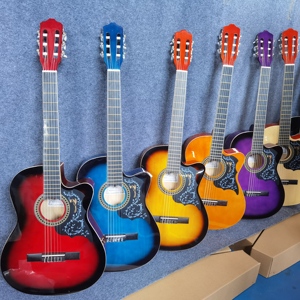
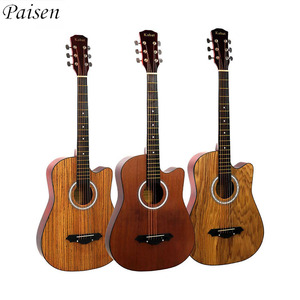
Global Manufacturing Audit: Top 10 Classical Acoustic Guitar Production Clusters
In modern commercial instrument distribution, navigating the landscape of classical acoustic guitar manufacturing requires looking past simple geographical boundaries. Sourcing executives and musical instrument procurement managers evaluate manufacturing partners based on thermodynamic tonewood stabilization, automated bracing tolerances, adhesive curing cycles, and stringent international timber compliance. The classical guitar represents one of the most acoustically delicate and structurally demanding fretted instruments in mass production. Because classical guitars rely on low-tension nylon strings coupled with fan-bracing patterns rather than high-tension steel-string X-bracing, the resonant responsiveness of the soundboard relies almost entirely on top plate deflection, wood grain uniformity, and bridge assembly precision.
Across the global production landscape, specific manufacturing epicenters dominate tier-one contract assembly and brand licensing. In China, industrial clusters across Guangdong (Huizhou and Qiuchang) and Guizhou (Zheng'an) account for over 60% of the world's commercial student and intermediate classical guitar volume. These facilities combine high-capacity 5-axis CNC machining centers with multi-stage computerized dehumidification kilns, allowing factories to yield exceptional batch uniformity at target trade prices. High-end luthier ateliers across Valencia and Madrid, Spain, sustain the legacy Hauser, Torres, and Ramirez architectural blueprints, while specialized production facilities in Indonesia, Japan, and Central Europe serve specialized institutional and orchestral segments.
| Manufacturing Cluster / Region | Core Structural Specialization | Primary Tonewood Ecosystem | Factory Production Dynamic | Ideal Procurement Objective |
|---|---|---|---|---|
| Guangdong Industrial Cluster (China) | Automated CNC carving, fan bracing, precision polyurethane & UV curing | Solid Engelmann Spruce, Sitka Spruce, Sapele, Laminated Agathis | High-capacity OEM/ODM, scalable automated multi-line production | High-volume institutional orders, school fleets, entry-to-intermediate distribution |
| Zheng'an Guitar Industrial Park (China) | Integrated batch drying, robotic neck sanding, rapid bridge coupling | Sapele, Mahogany, Basswood, Engineered Walnut fingerboards | Massive scalable output, competitive container-load fulfillment | Global private-label supply, competitive starter retail programs |
| Valencian Traditional Workshops (Spain) | Spanish heel assembly, ultra-thin traditional lacquer, hand-voiced tops | Spanish Cedar, Red Cedar, European Spruce, Indian Rosewood | Artisan-guided batch production, extended natural air drying | Concert-grade instruments, boutique classical dealer networks |
| Central Java Manufacturing Base (Indonesia) | Equatorial wood drying control, composite bracing, hybrid classical builds | Indonesian Rosewood, Meranti, Mahogany, Nato tops | MNC-invested standardized facilities, automated production flows | Mid-tier brand licensing, diversified tariff supply line balance |
| Nagano & Shizuoka Workshops (Japan) | Micron-level joinery, climate-adaptive truss rods in classical necks | Hokkaido Spruce, Selected African Mahogany, Ebony | High-precision low-to-medium volume production | Professional conservatories, flagship boutique product portfolios |
When assessing the capability of a top classical acoustic guitar factory, engineering buyers examine three core technical benchmarks:
1. Moisture Control & Equilibrium (EMC Optimization): The structural longevity of a nylon-string guitar depends on keeping kiln-dried wood within an 8% to 10% equilibrium moisture content during production. Improper wood seasoning leads to top sinking, fretboard shrinkage, fret sprout, and bridge liftoff when exported across changing climates. Tier-one facilities house constant-temperature, humidity-regulated cleanrooms for assembly and gluing.
2. Soundboard Thicknessing & Fan-Bracing Uniformity: Unlike steel-string guitars that withstand up to 180 lbs of tension, classical tops experience approximately 80 to 90 lbs. The soundboard must be planed to precise micro-tolerances—often between 2.0mm and 2.4mm for solid spruce or cedar—to allow free fundamental resonance while preventing rotational bridge roll. Modern CNC laser profiling ensures fan-brace struts match target weight-to-stiffness profiles before lamination.
3. The Neck-to-Body Joint Architecture: The traditional Spanish heel (where the neck block is integrated directly into the body frame during soundbox assembly) provides direct acoustic energy transmission. However, for large-scale container distribution, precision CNC-machined dovetail and mortise-and-tenon joints provide higher serviceability and stability against international shipping shifts.
Future Classical Guitar Sourcing & Technological Trends
Anticipate supply chain evolutions, regulatory adjustments, and material engineering changes shaping commercial guitar inventory over the next decade.
CITES-Compliant Bio-Composites
With increasing global restrictions on Dalbergia species and traditional rosewoods, progressive factories are adopting thermo-modified eucalyptus, high-density technical walnut, and black richlite composite fretboards. These materials deliver superior dimensional stability, eliminate customs bottlenecks, and resist climate-induced fret protrusion.
Hybrid Acoustic-Silent Architecture
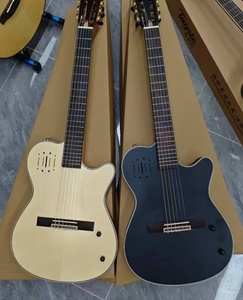
Urban density, noise restrictions, and commuter needs are driving market demand toward silent classical instruments like our CG100 series. Incorporating onboard preamps, headphone outputs, and collapsible structural bodies allows distributors to target modern home learners, traveling professionals, and digital home studio setups.
Integrated Dual-Action Truss Rods
While purist vintage classicals avoided neck reinforcement, commercial volume distributors now require lightweight carbon fiber rods or low-profile two-way truss rods in nylon-string necks. This engineering advancement reduces warranty return rates from tropical-to-arid shipping lanes to less than 0.2% globally.
Enterprise Manufacturing Infrastructure: The Jay Turser Advantage
Supported by our corporate parent organization JAM USA LLC, our manufacturing and distribution network bridges precision instrument crafting with high-velocity global supply chain accountability. We understand the commercial dynamics faced by major instrument importers, wholesale distributors, and institutional purchasing directors: you require catalog clarity, stable production tolerances, protected margins, and verified manufacturing workflows.
Turnkey Line Architecture
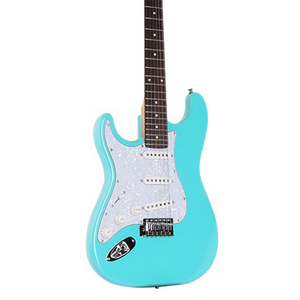
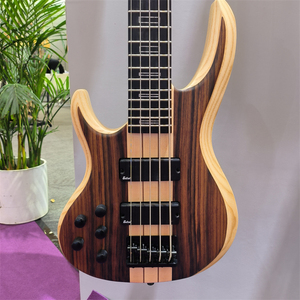
We provide unified multi-family fretted instrument supply spanning beginner classicals, 38-inch student acoustics, 300 Series electric platforms, and professional neck-through active basses. Simplify your procurement across a single vetted manufacturer.
Global Compliance Framework
Our production facilities maintain comprehensive compliance across Lacey Act documentation, European REACH chemical finishing safety guidelines, and complete CITES non-restricted timber verifications, guaranteeing seamless customs processing.
Digital Distribution Assets
Every series program comes complete with high-resolution white-background studio photography, verified barcode tagging, spec-sheet collateral, and standardized packaging ready for e-commerce cross-docking or retail floor merchandising.
Procurement & OEM Manufacturing FAQ
Direct technical answers addressing minimum order volumes, quality verification, finishing options, and supply contracts.
What are standard factory MOQs for custom private label classical acoustic guitar production?
How does the factory control acoustic action height and string buzz across varying export destinations?
What wood species are recommended to avoid international trade delays under CITES and Lacey Act regulations?
What environmental finishing technologies are deployed in your finishing facilities?
Can we order mixed containers across classical, acoustic, electric, and bass models?
Ready to Upgrade Your Fretted Instrument Supply Chain?
Connect directly with our corporate OEM/ODM engineering and dealer sales desk to request sample evaluations, factory audit sheets, and wholesale container price lists.
Inquire Now