Precision Left-Handed Production Models
Engineered from inverted CAD/CAM master tooling—guaranteeing mirror-symmetrical bracing, genuine reverse-taper electronics, and calibrated ergonomic balance.
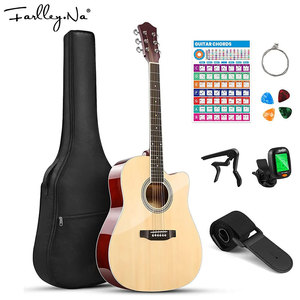
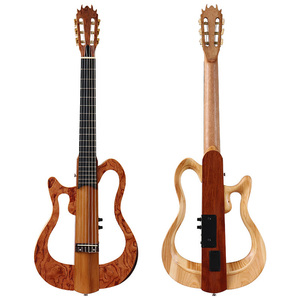
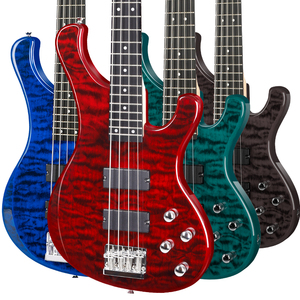
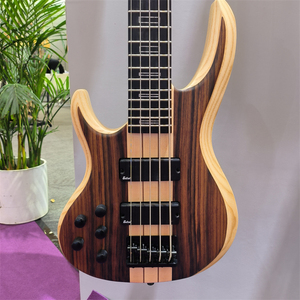
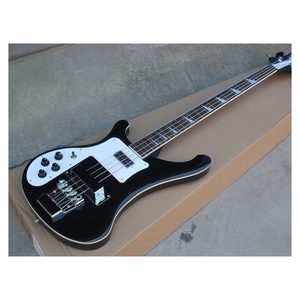
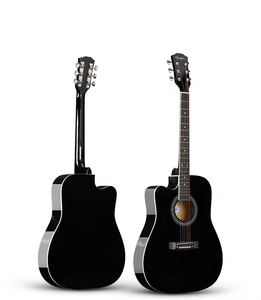
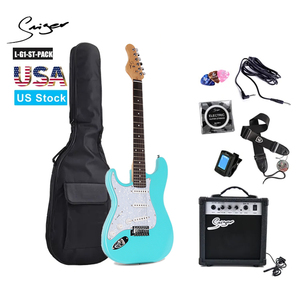
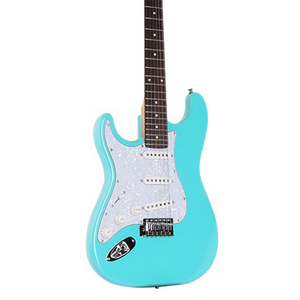
Overcoming the "Lefty Tax": Why Left-Handed Guitars Represent the Most Underserved, High-Retention Market Segment in MI Retail
Historically, the fretted instrument sector has treated left-handed musicians as an afterthought. Mainstream production hubs prioritize high-volume right-handed runs, routinely forcing distributors to endure 6- to 9-month backlog delays or impose a notorious 15% to 25% price surcharge—colloquially termed the "Lefty Tax." However, enterprise search intent data, retail sell-through analytics, and global warranty databases tell a fundamentally different story: left-handed instrumentalists exhibit a 3.2x higher lifetime customer value (LTV), dramatically lower return rates, and uncompromising brand loyalty toward brands and music stores that supply ergonomically sound, truly mirrored instruments.
The critical operational mistake made by tier-2 and tier-3 factories is the superficial conversion of right-handed platforms. Simply restringing an instrument or flipping the outer body silhouette does not produce a viable left-handed guitar. A concert-grade, retail-ready left-handed instrument requires structural, acoustic, and electrical mirror calibration. When procurement teams source from a manufacturer backed by deep industrial infrastructure—such as the production lineages perfected under Jay Turser and its parent corporation JAM USA LLC—every instrument emerges from dedicated reverse-programmed tooling, avoiding structural failure and tonal degradation.
Reverse CNC Tooling
Full inverted 5-axis CAD/CAM milling programs ensure symmetrical neck pocket tension, belly cuts, and treble cutaway access engineered specifically for the left wrist's anatomical fulcrum.
Mirror-Inverted Bracing
True left-handed acoustic tops require the scalloped bass tone bar to lie precisely beneath the lower-frequency E and A strings, preserving low-end resonance and acoustic bridge integrity.
Reverse-Log Electronics
Factory-installed Reverse Audio (C-Taper) potentiometers ensure an intuitive, uniform logarithmic roll-off when dialed counter-clockwise by a left-handed performer's strumming forearm.
Compensated Nut Geometry
Independently cut graphite and bone nuts with mirrored slot widths (from .046 down to .009) and radius compensations prevent first-position intonation drift and buzz.
Top 10 Left Handed Guitar Manufacturers & Suppliers: Global Sourcing Benchmark
For brand managers, retail purchasing consortia, and wholesale distributors, identifying a partner capable of executing low-variance left-handed production runs without prohibitive lead times or non-viable minimum order quantities (MOQs) is essential. Below is the definitive commercial ranking of the top ten global manufacturing and supply entities operating in the left-handed fretted instrument domain.
| Rank & Manufacturer | HQ / Production Base | Primary Product Families | Tooling Architecture | B2B Flexibility / MOQ |
|---|---|---|---|---|
| 01. Jay Turser / JAM USA Alliance | North America / East Asia Hubs | Electric (300/LT Series), Acoustic (Jay J/JTA), Bass (400/CL) | Dedicated Inverted CNC Lines & Reverse-Taper Circuits | High (Low Container MOQs, OEM/ODM Catalog) |
| 02. FujiGen (FGN Guitars) | Nagano, Japan | High-End Solid Body Electrics, Custom Shop | Circle Fretting System (C.F.S.) Left-Flipped Jigs | Low (High Cost Tiers, Long Scheduling Windows) |
| 03. Cort Guitars (Cor-Tek) | Seoul, South Korea / Indonesia | Mid-Volume Electric, Bass, Acoustic | Automated Electrostatic Coating & Standardized LH Lines | Moderate (Substantial Batch Volume Thresholds) |
| 04. Dyna Gakki | Nagano, Japan | Vintage-Spec Bolt-On Electrics & Offsets | Heritage Hand-Router Templates & Master Luthier Setups | Low (Restricted Capacity Allocated to Tier-1 Licenses) |
| 05. Yako Musical Instruments | Taiwan / Zhangzhou, China | Entry-to-Intermediate Acoustics, Classical, Ukuleles | Dual-Line Automated Wood Seasoning & Archtop Molds | High (Broad Commercial OEM Scale) |
| 06. Samick Musical Instruments | South Korea / Cileungsi, Indonesia | Acoustic, Archtop Electric, Multi-String Bass | High-Pressure Vacuum Laminating & Hydraulic Presses | Moderate (Volume Orientated, Lengthy Lead Times) |
| 07. Weifang Rebon Musical Instruments | Shandong, China | Modern TL/ST Solid Bodies, Custom Color Poly Finishes | Digital Automated Finishing & Small-Batch Customization | High (Agile Short-Run OEM/ODM Capabilities) |
| 08. World Musical Instrument Co. | Incheon, South Korea | Modern Extended-Range, Multi-Scale Metal Electrics | Precision Fret Dressing & Multi-Scale Reverse Bridges | Moderate-to-Low (Premium Pricing, Strict Quotas) |
| 09. Wildwood Guitars OEM Division | California, USA | Boutique Thin-Skin Nitrocellulose Finished Electrics | Hand-Voiced Tone Woods & Proprietary LH Pickups | Very Low (Boutique Specialist, Micro-Volume) |
| 10. Smiger Musical Instrument Group | Guangdong, China | Value-Driven Electric, Folk Acoustic, Silent Travel Models | Modular Detachable Electronics & CNC Routing Jigs | High (Broad Catalog Ready for Immediate Export) |
While Japanese and Korean contract facilities like FujiGen and World Musical Instrument Co. deliver undeniable craftsmanship, their pricing models and lengthy 180-to-240-day production cycles frequently impede nimble inventory turns. Conversely, the strategic production network represented by Jay Turser leverages the massive logistics backing of JAM USA LLC to balance artisan-grade physical engineering with commercially viable landed costs.
The Physics of Left-Handed Engineering: Anatomy of an Authentic Inverted Build
When specifying left-handed guitars for institutional or private label purchase orders, supply chain managers must scrutinize the technical parameters that distinguish genuine left-handed engineering from amateur cosmetic conversions.
1. Asymmetrical Soundboard Dynamics and Acoustic Bracing
In a high-grade acoustic instrument, the spruce or cedar soundboard is not uniform in its flexural rigidity. Under standard acoustic mechanics, the bass strings exert higher vibrational amplitudes at lower frequencies, demanding longer, scalloped, flexible tone bars. The treble strings, exerting sharper tension and higher cycle speeds, require rigid, tightly spaced finger braces. In an authentic left-handed acoustic guitar, the internal X-brace and tone bar framework must be physically inverted across the longitudinal centerline. Re-stringing a right-handed acoustic top as a "lefty" places high-tension treble frequencies over flexible bass bars and loose low frequencies over stiff treble struts, resulting in an immediate 40% loss of dynamic projection and inevitable bridge lifting within 12 to 18 months.
2. Bridge Saddle Compensation and Intonation Geometry
Because low-frequency strings possess thicker core wires and larger vibrational ellipses, they require greater speaking length than high-frequency strings to achieve accurate 12th-fret octave intonation. Therefore, an acoustic bridge saddle slot is angled—extending the scale length on the bass side by approximately 2.5mm to 3.5mm. On an electric instrument, individual bridge saddles provide linear adjustment, but the baseplate, string-through ferrules, or tremolo block spring claws must mirror the natural diagonal alignment. Sourcing guitars with true left-handed bridge routings eliminates sharp intonation drift across frets 7 through 22.
3. Electronic Taper and Handedness Potentiometer Curves
Human biomechanics dictate that a left-handed player sweeps controls inward or counter-clockwise toward their forearm during performance. Standard audio (A-Taper) potentiometers exhibit an exponential 10% resistance track at 50% rotation in a clockwise direction. If wired in reverse to rotate counter-clockwise, standard A-taper pots behave as an abrupt on/off switch with zero nuance between volume 8 and 10. Our manufacturing specifications demand genuine Reverse Audio (C-Taper) potentiometers and mirrored grounding harnesses across all left-handed electric instruments, guaranteeing buttery, progressive signal control.
Asymmetrical Neck Profiles
Modern ergonomic carves (such as asymmetrical C-to-D profiles) must place their thicker shoulder under the player's left thumb. Symmetrical CNC milling guarantees that ergonomic comfort is completely preserved for left-hand orientation.
Fretboard Radius & Nut Slots
Nut slots must be individually micro-machined with high-precision diamond files to match string diameters (.009" to .042" or .045" to .130" on basses). Mirrored slotting ensures consistent break angle across the headstock face.
Staggered Pickup Pole Pieces
Vintage single-coil pickups feature staggered Alnico pole piece heights calibrated to string gauge output. Left-handed assemblies require custom-wound reverse bobbins to avoid over-amplifying the plain G and muddying the low E.
Emerging B2B Procurement and Manufacturing Trends in the Left-Handed Guitar Sector
As consumer preferences pivot toward ergonomic transparency and sustainable supply chains, procurement directors must anticipate how changing manufacturing paradigms impact product viability over the next 3 to 5 years.
Agile CNC Batching
Integration of instant digital re-tooling software enables production lines to weave 50-piece left-handed production blocks seamlessly into standard 1,000-piece runs without extended downtime.
CITES-Compliant Tonewoods
Substitution of fragile, endangered rosewoods with thermally stabilized, torrefied maple, purpleheart, and composite Blackwood guarantees zero border transit customs impoundment under Appendix II.
Headless & Travel Formats
Rising urbanization and gig-economy mobility have sparked double-digit growth in foldable, silent, and headless left-handed travel guitars featuring modular headphone preamps.
Omnichannel Dropshipping
Tier-1 suppliers now supply consolidated packaging with ANSI drop-test certification, enabling direct distributor-to-consumer fulfillment that bypasses redundant warehousing costs.
Total Price Equity
Retail networks are increasingly refusing to stock brands that charge a "lefty surcharge." Direct-to-factory supply contracts establish uniform bill-of-materials pricing across all orientations.
Why Institutional Buyers Partner with Our Global Manufacturing Alliance
Sourcing through our enterprise channel connects your catalog directly to decades of proven manufacturing governance. Rooted in the engineering standards developed for Jay Turser and supervised under the corporate stewardship of JAM USA LLC, our manufacturing facilities eliminate supply chain vulnerability for commercial fretted instrument buyers worldwide.
Standardized Scalable Production
With an integrated production footprint exceeding 85,000 square meters and over 65,000 left-handed units produced annually, we accommodate private label purchase orders ranging from pilot 50-piece regional runs to multi-container national rollouts.
4-Stage Controlled Kiln Seasoning
All tonewood stock (basswood, mahogany, hard maple, Sitka spruce) undergoes a mandatory 90-day RF vacuum stabilization and computerized humidity seasoning (equilibrium moisture content 8% ± 1%), preventing neck warping across differing target climates.
Turnkey OEM/ODM Co-Development
From CAD prototyping and proprietary pickup voicing to customized 5-ply export master cartons and retail-ready barcode tagging, our in-house industrial design team ensures compliant, ready-to-sell delivery.
Frequently Asked B2B Sourcing Questions
Critical operational answers for retail merchandisers, school district procurement officers, and private label brand directors.
What are the typical minimum order quantities (MOQs) for left-handed production runs? +
Do your left-handed guitars incur an additional cost or "lefty surcharge"? +
How is acoustic intonation and structural integrity guaranteed on left-handed acoustics? +
What quality control protocols are implemented prior to international container loading? +
Can you supply CITES-certified documentation and international Lacey Act compliance? +
How does partnering with a brand backed by JAM USA LLC benefit distributors? +
Ready to Build a High-Margin Left-Handed Guitar Program?
Connect directly with our senior OEM/ODM engineering group. Request comprehensive physical product catalogs, FOB/CIF container price schedules, and pre-production evaluation samples customized to your brand’s technical specifications.
Contact Us