Featured OEM/ODM String Instruments & Precision Components
Explore our top-tier export configurations, encompassing student dreadnoughts, neck-thru electric basses, nylon classical models, and CNC-machined guitar hardware engineered for high-volume retail durability.
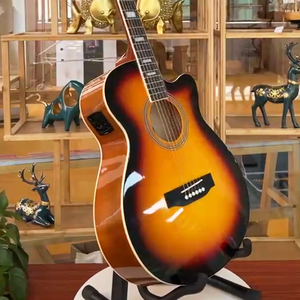
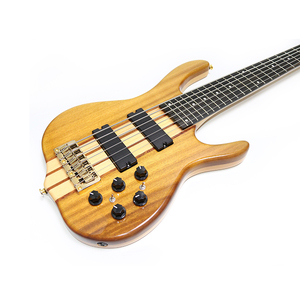
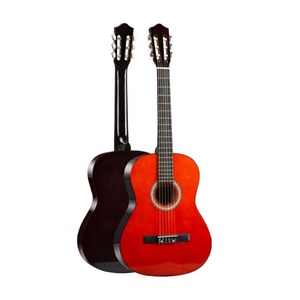
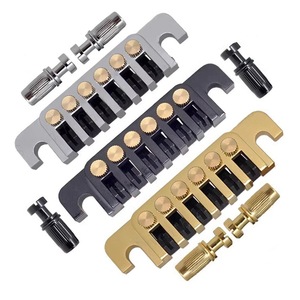
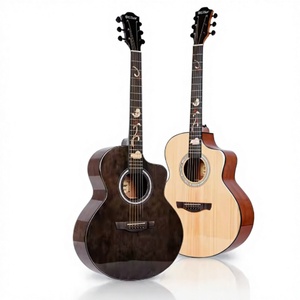
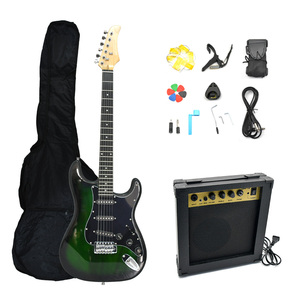
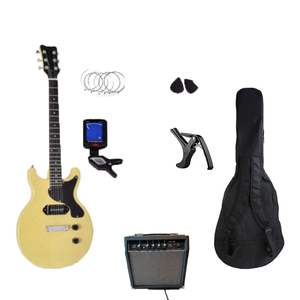
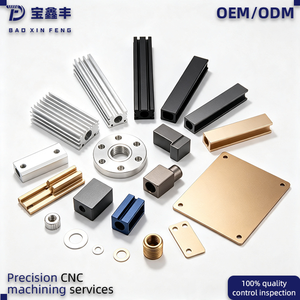
Industrial White Paper: The Modern Paradigm of Chinese Acoustic-Electric Manufacturing
Over the past two decades, musical instrument manufacturing in China has completed a fundamental pivot from manual, labor-intensive carpentry to data-driven acoustic engineering, automated 5-axis CNC wood profiling, and rigorous environmental stabilization. For corporate brand owners, international wholesalers, and supply chain directors, sourcing from China is no longer merely a low-cost volume calculation; it represents access to an integrated manufacturing ecosystem capable of delivering microscopic fretwork consistency, stable electro-acoustic performance, and full compliance with global trade statutes such as the US Lacey Act, EU Timber Regulation (EUTR), and CITES Appendix II.
Acoustic and acoustic-electric guitars represent an exceptionally demanding intersection of structural engineering and organic acoustics. Unlike solid-body instruments where magnetic inductance drives tone production, an acoustic soundboard operates under sustained static tension approaching 75 to 85 kilograms (165 to 185 lbs) of string pull. The instrument's primary diaphragm—traditionally Engelmann, Sitka spruce, or resonant linden—must be braced to withstand permanent mechanical deformation while preserving high vibrational compliance across the 80 Hz to 15 kHz frequency spectrum.
Our industrial infrastructure bridges the divide between artisanal hand-voicing and high-speed robotic production. Through long-term capital backing aligned with international standards (such as our heritage with JAM USA LLC and premier brand distribution lines like Jay Turser), our facilities employ automated environmental equilibrium conditioning, electrostatic thin-film lacquering, and integrated electro-acoustic transducer testing. Every instrument passing down the assembly line is optimized for climatic endurance, ensuring that when containers land in North American or Northern European distribution depots, neck relief, action height, and intonation stay dead-on spec.
| Manufacturing Stage | Legacy Processing Baseline | Our Advanced Industrial Protocol | Impact on B2B Product Quality |
|---|---|---|---|
| Tonewood Kiln Drying | Open-air atmospheric curing (14–18% EMC) | Dehumidification kilns with RF vacuum cycling (6–8% EMC) | Zero fingerboard shrinkage, no fret sprouting during sea transit |
| Neck Carving & Tenon Fit | Manual shaper routing; hand-sanded neck pockets | Dual-spindle 5-axis CNC machining (±0.02mm pocket gap) | Maximized string vibration energy transfer, rock-solid neck angle |
| Fretwork Leveling | Visual manual filing and hand buffing | Automated Plek precision simulation and diamond crown polishing | Buzz-free low action (1.8mm 12th fret), immediate playability out of box |
| Finish Application | Heavy polyester wet spray (thickness >0.25mm) | Electrostatic micronized UV-cured polyurethane (<0.08mm) | Uninhibited top plate resonance, enhanced transient acoustic response |
B2B Sourcing Trends: Strategic Procurement Outlook for 2025–2030
Procurement directors within major musical instrument conglomerates face changing compliance realities, supply volatility, and shifting player demographics. The fretted instrument market is evolving rapidly, driven by e-commerce fulfillment pressures, digital learning integration, and heightened corporate governance (ESG) scrutiny. To maintain inventory margins and protect brand equity, purchasing strategies must adapt to three structural developments:
Technological & Material Breakthroughs in Acoustic-Electric Luthiery
The boundary between traditional craftsmanship and modern material science has blurred. Today's commercial success depends on continuous physical testing and repeatable manufacturing recipes. When evaluating factory partners, brand engineering teams scrutinize three specific technical metrics:
A. Advanced Electro-Acoustic Coupling: Conventional under-saddle piezoelectric elements (piezo crystals) often suffered from harsh high-frequency transients and the infamous "piezo quack." Our factory utilizes multi-element ceramic transducers combined with micro-thin vulcanized rubber dampening shims. By voicing the onboard active preamp with a customized 4-band analog notch filter, we flatten the harsh 3.2 kHz resonance peak, delivering a smooth, natural acoustic tone directly to mixing consoles or audio interfaces.
B. Equilibrium Moisture Control (EMC) Enclosures: Tonewood is naturally hygroscopic, absorbing and desorbing moisture according to surrounding relative humidity (RH). Instruments manufactured under unmonitored atmospheric conditions in tropical manufacturing regions face disastrous top warping, neck back-bowing, and bridge detachment when exposed to dry winter environments in export markets. Our factory operates automated climatic conditioning rooms maintained at precisely 45% to 50% relative humidity and 22°C (72°F) across all gluing, bracing, and assembly phases.
C. Carbon Fiber & Multi-Scale Headless Innovations: In electric and bass guitar manufacturing, ergonomic headless architectures and multi-scale fanned frets have transitioned from boutique custom shops into high-volume OEM demand. Utilizing precision 5-axis aluminum milling for independent bridge tuners and dual carbon-fiber neck reinforcement rods, our factory supplies tournament-ready instruments that maintain tuning stability under aggressive stage performance and regional transit.
Our Enterprise Manufacturing Advantages & Western QC Heritage
Drawing on an industrial legacy shared with global instrument networks (including extensive OEM engineering for respected brand families such as Jay Turser and its parent organization JAM USA LLC), our facility provides an unmatched combination of scalable manufacturing volume and stringent Western quality standards. We offer international partners distinct competitive advantages:
Global B2B Procurement FAQ (Frequently Asked Questions)
Key operational questions and detailed engineering answers for purchasing executives, product managers, and supply chain directors sourcing fretted instruments from China.