Featured Production Portfolio & Specialized Models
Explore our top-tier solid body electrics, versatile acoustics, extended-range basses, and custom CNC milled hardware components crafted for international guitar brands and institutional distributors.
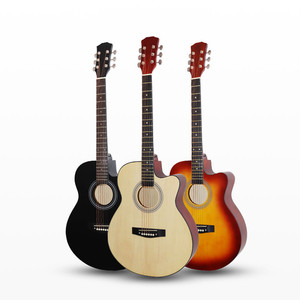
40 Inch Folk Acoustic Guitar Wholesale Matte Solid Basswood Guitar for Beginner
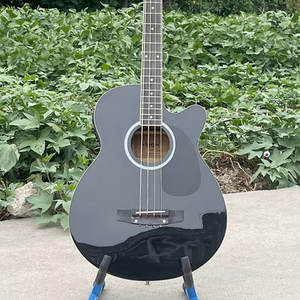
Cheap Price Gloss Aiersi Factory Price Black Colour Cutaway 4 String Electric Acoustic Bass Guitar for Sale
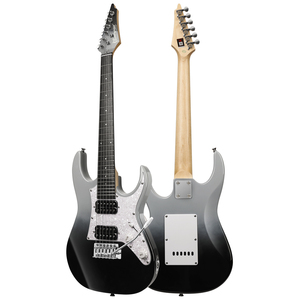
Wholesale children's electric guitars in various colors with maple necks and glossy finish hot-selling electric guitar models
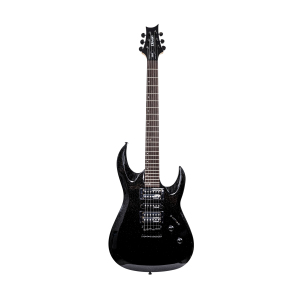
Professional Bass Guitar 6 String HH Pickups 24 Frets Fixed Bridge 25.5 Inch Solid Body Gloss Finish OEM Private Label
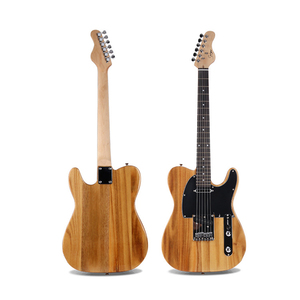
S-G17/S-G18 Semi Hollow F Hole TL Electric Guitar Solid Mahogany Body Active Pickups Semi Matte Finish 6 String Factory
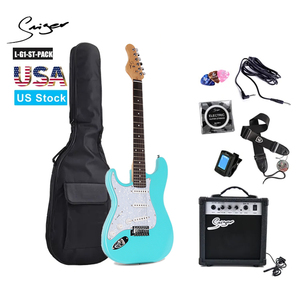
Smiger Custom Brand Wholesale Left ST Guitar Price 22 Frets Upgrade Left Handed Electric Guitar 6 Strings
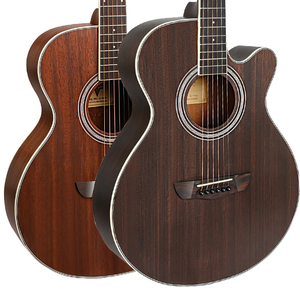
Bullfigter D-4015 Chinese Guitar Brands 40 Inch High Cost Performance Rosewood Fingerbroad Mahogany Body Acoustic Guitar
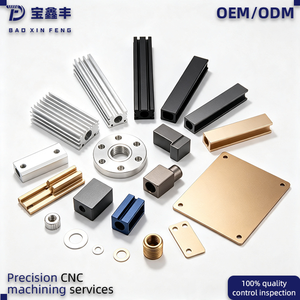
Guitar Parts Custom CNC Machined Precision Guitar Components Aluminum Factory
Industrial Authority & Engineering Infrastructure
Combining high-volume OEM scale with luthier-grade acoustic and solid-body precision. Backed by corporate manufacturing standards aligned with tier-1 international music conglomerates.
Industrial 5-Axis CNC Precision
Our production floor operates multiple synchronized 5-axis CNC router lines dedicated to neck pocket milling, contour carving, and truss rod channels. Tolerances are held strictly within ±0.02mm, guaranteeing seamless neck-to-body wood-to-wood acoustic transfer, absolute bridge perpendicularity, and repeatable fretboard radius curvature across every OEM batch.
Scientific Kiln Drying & Stabilization
Tonewood vulnerability to climate-induced fret sprout, neck warping, and body seam splits is completely neutralized prior to machining. Our timber yards feature closed-loop dehumidification kilns and thermal aging chambers that stabilize North American Alder, African Mahogany, and Hard Rock Maple to an optimal Equilibrium Moisture Content (EMC) of 8% to 10%.
Turnkey Private Label & Custom Finishing
From custom pickup winding (Alnico II/V, active humbuckers) to specialized multi-layer finishes—including ultra-thin polyurethane, nitrocellulose lacquers, and metallic flake coatings—we offer end-to-end contract customization. We support custom headstock silhouettes, laser-etched neck plates, custom wiring harnesses, and drop-tested export packaging.
Solid Body Guitar Architecture: Mass, Rigidity, and Electronic Integration
In the contemporary B2B guitar market, the definition of a superior solid body electric guitar extends far beyond cosmetic symmetry. Wholesale distributors, music chain brand managers, and educational purchasing consortia require deep metallurgical, wood science, and electromagnetic consistency. A solid body guitar relies entirely on the mechanical rigidity of its neck-to-body interface and the resonant density of its core tonewood to sustain string vibrational energy without premature acoustic decay.
1. Tonewood Selection Dynamics & Resonant Velocity
A primary failure point in budget OEM guitar production is inadequate timber selection and rushed seasoning. When raw alder, basswood, or mahogany is milled with high internal moisture gradients, cellular collapse occurs as the finished instrument enters air-conditioned retail spaces or arid export destinations. In our manufacturing facility, raw lumber undergoes a 90-day progressive drying cycle, alternating between natural atmospheric ventilation and vacuum frequency kiln heating.
Dense African Mahogany (Khaya ivorensis) is selected for our premium single-cut and modern set-neck double-cut builds, offering specific gravity values between 0.50 and 0.65 g/cm³ to accentuate fundamental mid-frequency punch. For classic bolt-on architectures, kiln-dried American Basswood and select Alder provide a uniform cellular grain structure that accepts ultra-thin polyurethane sealing coats without sinkage, preserving high-frequency acoustic harmonics while minimizing overall shipping weight per carton.
2. Neck Joinery Mechanics & Structural Load Integrity
String tension across a standard 6-string instrument tuned to concert pitch exerts approximately 45 to 55 kg (100–120 lbs) of forward continuous pull. In multi-string and 6-string extended-scale bass configurations, this static force exceeds 90 kg. Without microscopic precision in the neck pocket, the joint suffers micro-shifting, resulting in erratic intonation, neck angle drift, and lost sustain.
Our automated high-speed router tooling carves neck pockets with CNC-controlled interference fits. The tolerance between the heel of the hard maple neck and the body pocket wall is held to under 0.05 mm—a frictionless, drop-in mechanical union that eliminates the need for tone-dampening plastic shims. Coupled with dual-action hardened steel truss rods flanked by dual aerospace-grade carbon fiber stabilizing rods, our necks resist torsional twist and longitudinal bow through extreme seasonal shifts.
| Engineering Attribute | Standard Commercial Grade | Our Enterprise Factory Benchmark | B2B Quality Dividend |
|---|---|---|---|
| Wood Moisture Control | 14% - 18% (Air dried) | 8% - 10% (Vacuum Kiln Dried) | Eliminates fret sprout, neck warping, finish checking |
| Neck Pocket Tolerances | ±0.25mm (Loose tolerance) | ±0.02mm (5-Axis CNC Milled) | Direct mechanical string energy coupling; zero shims |
| Fretwork Processing | Manual hand-hammered & quick file | Cryogenic fret wire, Plek-standard automated crown | Under 1.2mm 12th fret action without buzzing |
| Electronics & Potentiometers | Generic 20% tolerance, unshielded | A-Grade Alpha pots, conductive cavity shielding | -85dB hum floor, smooth logarithmic volume taper |
| Finish Thickness | 0.35mm - 0.50mm heavy poly coat | 0.12mm - 0.18mm thin-film UV cure | Enhanced wood breathability, increased acoustic resonance |
3. Electromagnetic Shielding & High-Impedance Coiling
Signal degradation in OEM instruments commonly stems from cost-cutting in pickup winding and cavity shielding. Solid body guitars are inherently susceptible to 50/60Hz electromagnetic interference (EMI) generated by stage lighting, digital audio workstations, and power transformers. Our assembly line implements comprehensive dual-coat conductive graphite shielding paint across all control cavities and pickup troughs, joined directly to a star-ground grounding topology.
Our OEM pickup division fabricates custom-wound single coils and humbuckers using imported 42 and 43 AWG copper wire and sintered Alnico II, Alnico V, or high-flux Ceramic magnets. Humbuckers undergo high-temperature paraffin-beeswax vacuum potting to thoroughly penetrate the internal windings. This completely eliminates microphonic screech under high-gain amplification while retaining articulate string-to-string dynamic separation.
Strategic Sourcing & Next-Gen Manufacturing Trends
Key technological shifts and international regulatory factors dictating wholesale purchasing decisions for major fretted instrument brands over the next decade.
Torrefied (Roasted) Timber Dominance
Global demand is rapidly shifting toward thermally modified maple and okoume necks. By baking wood in an oxygen-depleted kiln at over 180°C, hemicellulose and organic volatiles are vaporized. The result is a hyper-stable, moisture-impervious tonewood that exhibits vintage golden aesthetics, enriched acoustic resonance, and virtually zero sensitivity to seasonal relative humidity shifts.
CITES-Free Alternative Fretboards
Strict global enforcement of CITES Appendices has made Indian Rosewood tracking costly and bureaucratic. Smart B2B procurement programs are pivoting directly to sustainable engineered composites, high-density Laurel, technical Blackwood, and torrefied Jatoba. These tonewood alternatives match ebony and rosewood in Janka hardness and surface slickness while ensuring friction-free global customs clearance.
UV-Cured Thin-Film Polymers
Traditional volatile solvent lacquers face stringent global environmental restrictions and slow curing lead times. Modern OEM supply chains have embraced robotic automated UV-curable finishes. These coatings dry instantaneously under focused ultraviolet lamps, achieving glass-like gloss or silky satin sheens at a fraction of the coating thickness, directly enhancing instrument vibration.
Frequently Asked Questions for Importers & Dealers
In-depth technical, logistics, compliance, and customization answers for institutional procurement directors, musical instrument brand owners, and wholesale buyers.
What are your minimum order quantities (MOQ) for OEM/ODM private labeling? +
How does your factory prevent fret sprout and neck warping during trans-oceanic shipping? +
Can you manufacture guitars according to our proprietary body contours and CAD/CAM models? +
Are all tonewoods fully compliant with CITES and international Lacey Act regulations? +
What quality control protocols are implemented prior to shipping fretted instruments? +
What finishing options are available for mass-production solid body runs? +
Can we specify third-party hardware and electronics (e.g., Wilkinson, Floyd Rose, Seymour Duncan)? +
What packaging standards are used to prevent shipping transit damages? +
What are your production lead times for standard wholesale vs. custom OEM orders? +
What international payment terms and commercial trade options do you offer? +
Accelerate Your Musical Instrument Supply Chain
Partner with an engineering-driven Chinese manufacturing leader. Request our full OEM/ODM product catalog, customized wholesale price sheets, or initiate a custom prototype build with our engineering team today.
Send an Inquiry