Featured Commercial-Grade Instruments & Accessories
Engineered for high inventory turnover, balanced tonal response, and rigorous build standards across entry-level and intermediate retail categories.
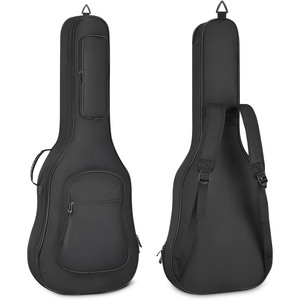
Durable Water-resistant 600D Nylon Oxford Travel Acoustic Gig Bag
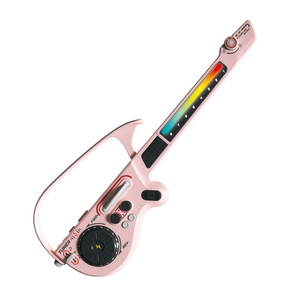
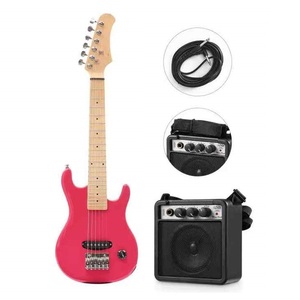
Factory Wholesale 30 Inch Electric Guitar Kit with Amp, Cable & Bag
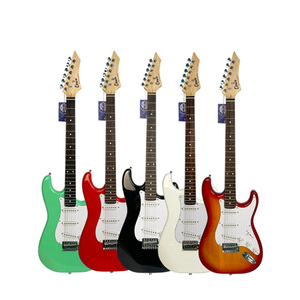
Customized ST Classic Adult Size Electric Guitar OEM Program
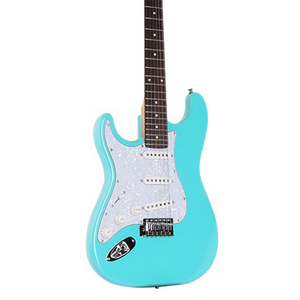
L-G1-FB-L Left-Hand ST Electric Guitar with 3 Single Pickups
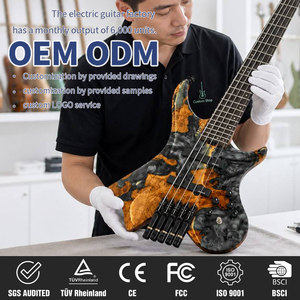
GALYDA 5-String Headless Resin Burl Top Roasted Maple Active Bass
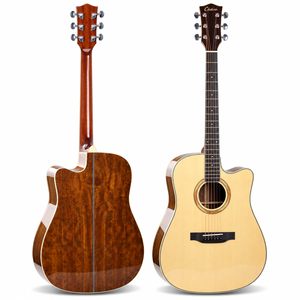

Strategic Manufacturing Capabilities & Institutional Foundation
In the hyper-competitive global musical instrument market, locating a trusted affordable electric guitar manufacturer demands far more than evaluating unit costs. Commercial brand owners, regional distributors, and large-scale educational procurement bodies require manufacturing partners capable of delivering absolute dimensional consistency, robust wood stabilization, compliant supply chains, and transparent engineering governance. Operating under the institutional backing and rigorous oversight of JAM USA LLC, our manufacturing ecosystem bridges industrial high-output capacity with traditional luthier craftsmanship.
Jay Turser’s core manufacturing philosophy rests upon the conviction that entry-level and intermediate instruments must possess immediate playability. When neck profiles warp, frets sprout, or electronics exhibit RF interference, retailer margins erode under customer returns and warranty repairs. To solve this systemic failure point, our assembly lines deploy automated environmental control chambers, multi-axis computerized routing centers, and standardized quality-control gates derived from decades of OEM execution across North American, European, and Asia-Pacific consumer markets.
Value-Engineered Tonewood Curing
Multi-stage automated vacuum kilns balance internal cell moisture down to an optimal 8%–10% equilibrium moisture content (EMC), virtually eliminating neck shrinkage, fret spout, and structural warping across differing microclimates.
Computer-Controlled Routing & Joinery
Heavy-duty industrial 5-axis CNC machines execute neck pockets, mortise tenons, truss rod channels, and pickup cavities with micro-metric tolerances under 0.05mm, maximizing resonance transfer and acoustic coupling.
Integrated Corporate Accountability
Operating as a key fretted instrument division within JAM USA LLC, our supply chain offers global procurement teams clear contractual governance, credit stability, ethical labor practices, and end-to-end container tracking.
Future Procurement Trends in the Global Electric Guitar Industry (2025–2030)
The wholesale procurement of electric guitars and associated fretted instruments is experiencing an unprecedented structural transformation. Historically, competitive pricing was achieved primarily through labor-cost arbitrage. However, shifting tariff regimes, ecological regulations, and evolving retail expectations have forced international supply chain executives to fundamentally re-engineer their sourcing architectures. Enterprise procurement managers must track four pivotal vectors to maintain retail margin stability and customer lifetime value:
Torrefaction & Roasted Necks
Thermal modification processes (baking tonewoods at 180°C–220°C in oxygen-deprived kilns) are moving rapidly into entry-level and mid-market instruments. Torrefied maple necks crystallize residual sap, creating imperviousness to relative humidity swings and dramatically lowering distributor defect write-offs.
Modern Headless & Active Architecture
Once reserved for boutique lutherie, headless ergonomics, multi-scale fanned frets, and active EQ circuits (exemplified in our GALYDA Series) are now demanded by next-generation players. Wholesalers must broaden stock portfolios beyond static retro shapes to capture progressive bassists and traveling session players.
Eco-Certified Finishes & Materials
Stringent REACH and EPA limits on VOC emissions have led tier-one factories to replace heavy solvent finishes with thin-film ultraviolet (UV) curable coatings. These finishes accelerate cure cycles from weeks to minutes while yielding thinner, more acoustically resonant resonant skins that let the tonewood breathe.
Turnkey SKU Bundling
Big-box retailers and e-commerce platforms favor turn-key fulfillment sets. Integrating custom-padded 600D water-resistant gig bags, calibrated solid-state practice amplifiers, cables, and electronic tuners into unified retail SKUs maximizes average order values while shrinking freight cube volume.
Advanced Manufacturing Technology: From Raw Ingot to Resonant Instrument
Achieving professional acoustic criteria within an affordable wholesale price tier requires high technological discipline. Our manufacturing plants eliminate variance through automated robotics, precision metallurgical casting, and electro-acoustic testing regimes.
1. Micro-Finished Fretwork & Automated Crown Polishing
The primary indicator of an inferior electric guitar is rough fret ends and irregular fret heights, causing buzz and finger fatigue. In our production line, after fingerboards are slotted via precision circular saws, nickel-silver and stainless steel frets are pressed with uniform pneumatic pressure blocks. Frets undergo automated planar beveling at an exact 35-degree taper, followed by multi-stage micro-grit wheel polishing. This guarantees zero fret tang overhang, regardless of ambient winter dryness in distribution hubs.
2. Shielded Electronics Cavities & Consistent Electromagnetic Winding
Budget electric guitars often suffer from electromagnetic hum and high parasitic capacitance. Our production incorporates high-conductivity conductive carbon paint sprayed into pickup cavities and control routes, sealed with aluminum shielding foil. Pickups are wound on computer-governed CNC coil winders with precise tension monitoring, utilizing polysol-coated copper wire and hand-charged Alnico or ceramic magnets to ensure balanced frequency response across all production batches.
3. Resilient Structural Neck Joinery
Whether assembling a traditional bolt-on ST neck with steel plate reinforcement or executing a deep set-in mortise-and-tenon joint on a classic single-cut gold top, wood-to-wood contact is maximized. Neck heels are machined alongside matching body pockets on the same tooling shift to eliminate variance, resulting in an airtight structural fit that transmits sustain naturally throughout the instrument body.
B2B Procurement & Manufacturing FAQ
Clear, direct answers for merchandising managers, purchasing directors, and musical instrument importers.
What are the standard Minimum Order Quantities (MOQ) for OEM/ODM electric guitars? +
How do your facilities ensure compliance with international timber regulations (CITES / Lacey Act)? +
Can instrument specifications (pickups, neck profiles, fret wire) be fully customized? +
What is the typical manufacturing lead time for full 20ft and 40ft HQ container orders? +
What packaging standards are implemented to eliminate maritime transit humidity damage? +
How is pre-shipment quality assurance executed across high-volume production runs? +
Build Your Fretted Instrument Sourcing Program
Partner with an established manufacturer backed by JAM USA LLC corporate infrastructure. Connect directly with our engineering and B2B wholesale team to request catalog pricing, material samples, and factory OEM audit reports.
Send an Inquiry