Factory-Direct Instruments for Central Asian Retailers
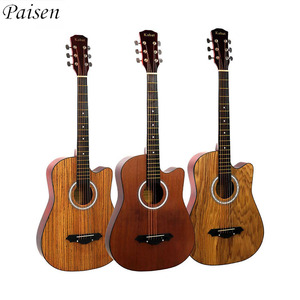
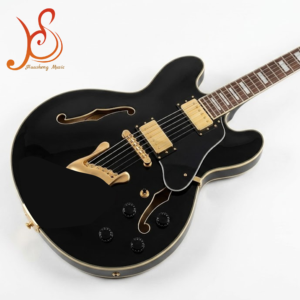
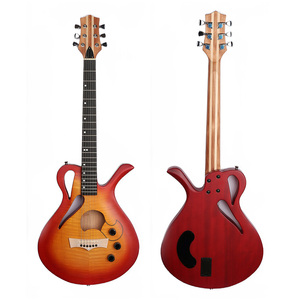
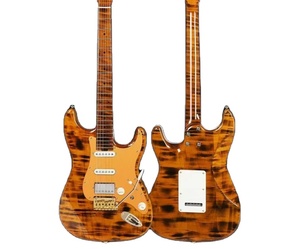
Explore our comprehensive OEM/ODM manufacturing capability spanning extended-range 5-string basses, semi-hollow archtops, solid-body electrics, and educational classroom instruments.
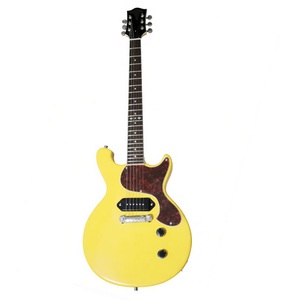
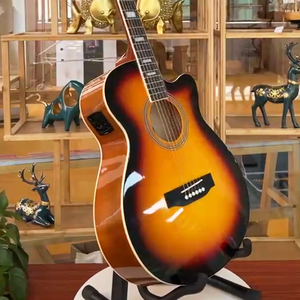
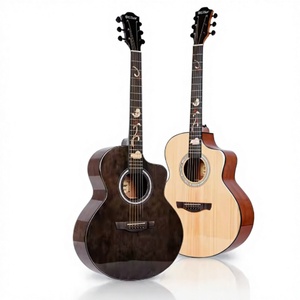
Engineering the Modern 5-String Bass for Uzbekistan's Evolving Musical Ecosystem
The contemporary Central Asian musical marketplace is undergoing a decisive paradigm shift. In Uzbekistan, where rapid urbanization, cultural modernizations, and massive public infrastructure investments converge, commercial demand for high-caliber extended-range fretted instruments has surged exponentially. The transition from legacy 4-string bass guitars to modern 5-string active and passive platforms is no longer an artistic niche; it is an economic necessity driven by stage performance acoustics, local recording requirements, and regional broadcasting standards.
For music instrument importers, wholesale distributors in Tashkent, institutional contractors in Samarkand, and regional retail networks across Fergana and Bukhara, procuring directly from tier-one guitar factories requires deep scrutiny. Sourcing 5-string basses is fundamentally more complex than acquiring conventional 6-string electric guitars or 4-string basses. The structural tension exerted by a heavy gauge .125 to .135 low-B string demands rigorous structural lutherie, specialized tonewood curing, reinforced neck laminations, and advanced active electronics to prevent mud in the sub-harmonic 30.87 Hz spectrum.
Uzbekistan Market Architecture: Application Scenarios & Commercial Drivers
Understanding the localized operational environments in Uzbekistan allows procurement directors to specify instrument configurations that minimize retail returns and optimize commercial sell-through. Three distinct commercial demand pillars define the Uzbek market:
The Live "To'y" & Event Industry
The Uzbek celebratory banquet culture (To'y) sustains a vast, highly lucrative live entertainment circuit. Modern wedding ensembles integrate microtonal vocal traditions and national percussion with Western synths and punchy low-end groove. A 5-string bass provides the necessary sub-frequencies without altering traditional tuning arrangements on keyboard synthesizers.
State Conservatoires & Ensembles
Tashkent State Conservatoire, regional specialized music lyceums, and the State Academic Symphony Orchestra increasingly procure extended-range basses. Modern arrangements of Uzbek classics (such as Shashmaqam fusion) mandate precise pitch definition down to low B0, requiring instruments with exceptional harmonic balance.
Broadcast & Urban Music Hubs
Tashkent’s burgeoning recording studios, television broadcast infrastructures (such as Yoshlar and Sevimli TV), and pop-rock venues require shielded active circuitry. Dual-coil humbuckers and 18V EQ systems eliminate stage interference from digital lighting rigs and LED video matrices prevalent in modern Uzbek venues.
Continental Climate Engineering: Overcoming Uzbekistan’s Extreme RH Fluctuations
A critical engineering failure observed in substandard electric basses shipped to Central Asia is severe neck warping, fret sprout, and fingerboard delamination. Uzbekistan features an aggressively continental climate: summer temperatures in Tashkent and Navoiy routinely exceed +42°C with ambient relative humidity (RH) plummeting below 18%, while winter brings freezing conditions with indoor heating driving RH to dangerously dry levels.
When sourcing extended-width 5-string bass necks (which measure approximately 45mm to 48mm at the nut and upwards of 74mm at the 24th fret), standard single-piece flat-sawn maple will warp under uneven low-B string pull. Our manufacturing partner specifications incorporate:
- Multi-Laminate Construction: Employing 5-piece or 7-piece laminated neck structures interleaving Canadian Hard Rock Maple with Walnut or Bubinga veneers. Opposing grain orientations counteract directional wood movement under extreme arid conditions.
- Dual-Action Carbon-Fiber Reinforced Truss Rods: Dual carbon-fiber reinforcement rods running parallel on either side of a heavy-duty two-way adjustable steel truss rod guarantee longitudinal stiffness without excessive mass.
- Automated Environmental Kiln Curing: All lumber undergoes vacuum RF (Radio Frequency) drying followed by 6 months of climate acclimatization chamber storage, stabilizing cellular moisture content to a targeted 8% to 10% tolerance suitable for Central Asian aridity.
- Beveled Fret Dressing & Blind Tang Slots: Cryogenically treated nickel-silver or rounded stainless-steel fret wire seated in blind fret slots completely eliminates sharp fret sprout caused by seasonal fingerboard contraction.
Comparative Technical Specification Matrix for Uzbek Trade Procurement
To assist institutional buyers and enterprise importers in categorizing instrument grades, our engineering team adheres to the following structural matrix:
| Series Grade | Body Core / Tonewood | Neck Architecture | Scale / Bridge Tension | Preamp & Electronic Pickup System | Target Retail / Commercial Channel |
|---|---|---|---|---|---|
| Institutional Entry (400 Series) | Solid Basswood or Roasted Okoume | 3-Piece Maple w/ Dual Truss Rod | 34-Inch Standard (Die-Cast 18mm) | Passive Split-P / Single-J, Alnico V Magnets | Music Academies, Beginner Rental Fleets |
| Commercial Stage (CL Series) | Selected Alder w/ Flame Maple Top | 5-Piece Hard Maple / Walnut Striping | 34.5-Inch or 35-Inch Drop Scale | Active 9V Preamp, 2-Band Parametric EQ | Wedding Musicians, Independent Retail Chains |
| Custom Pro / Archtop | Semi-Hollow Mahogany / Chambered Maple | Set-Neck Roasted Canadian Maple | 35-Inch Super Long (Individual Saddles) | Active 18V Preamp, 3-Band EQ w/ Mid-Sweep Switch | Broadcast Studios, Conservatoire Soloists |
Strategic B2B Advantages: The JAM USA LLC Pedigree
Sourcing directly through an enterprise with transatlantic infrastructure provides decisive advantages over unbranded trading middlemen. Backed by the operational scale of JAM USA LLC, our manufacturing ecosystems incorporate robust quality management protocols tailored for high-volume cross-border distribution:
ISO 9001 Batch Testing
Every bass production lot undergoes pneumatic string-load testing, salt-spray hardware electroplating assessment, and full Plek-style laser scanning for fret leveling, ensuring 100% out-of-the-box playability without localized bench setup labor.
Silk Road Logistics Optimization
Consolidated container shipping via China-Europe Railway Express (Yiwu/Zhengzhou to Tashkent Chukursay/Sergeli) delivers 14- to 22-day transit times, completely bypassing volatile maritime bottlenecks and reducing landed warehousing capital costs.
Digital Merchandising Assets
Uzbek retail partners receive complete, localized high-resolution marketing assets, technical spec sheets in Russian and English, and retail carton packaging engineered to withstand multi-modal rough handling without exterior damage.
Uzbekistan Wholesale Purchasing Guide
Direct technical and logistical answers addressing trade compliance, customs tariffs, packaging resilience, and minimum order requirements for Uzbekistan.
What are the standard customs classification (HS Codes) and import tariffs for electric basses entering Uzbekistan?
How do you prevent the low-B string from sounding muddy or loose on 34-inch scale instruments?
What packaging safeguards are implemented for rail cargo transiting Kazakhstan to Tashkent?
What are the Minimum Order Quantities (MOQ) and OEM private-label terms for distributors?
Do instruments comply with Uzstandard certification and electrical safety regulations?
Scale Your Musical Instrument Import Channel
Connect with our technical manufacturing division to discuss container allocations, customized fretboard configurations, factory audits, and direct rail logistics into Tashkent and surrounding Central Asian territories.
Send an Inquiry