Engineered for High-Turnover Commercial Distribution
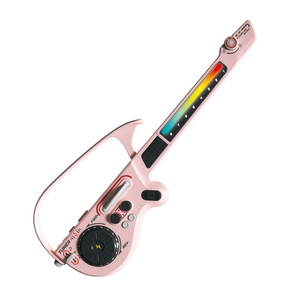
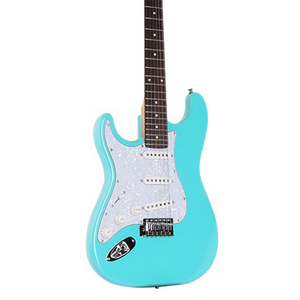
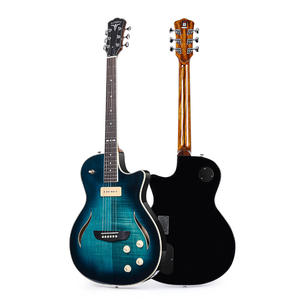
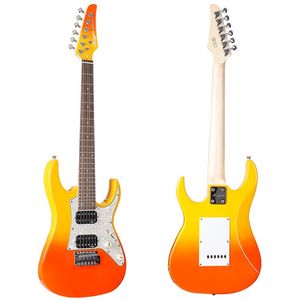
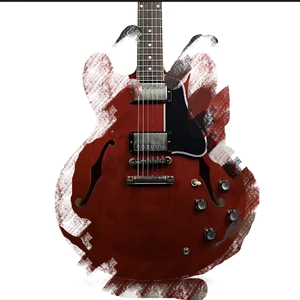
Source batch-inspected solid bodies, semi-hollow archtops, left-hand models, junior-scale electric sets, and precision CNC components crafted specifically to meet the high volume and stringent price brackets required by the Indian musical instrument market.
Executive Industry Whitepaper: Capitalizing on India's Electric Guitar Boom
The musical instruments landscape across India is undergoing unprecedented, structural expansion. Rapid digitization, explosive interest in independent music production (Indie-pop, Progressive Rock, Fusion, Bollywood playback), and the institutionalization of music academies in Tier-1 and Tier-2 metropolises have transformed the subcontinental electric guitar market. For guitar distributors, offline retail chains (spanning Mumbai, Bengaluru, New Delhi, Kolkata, Chennai, and Hyderabad), and direct-to-consumer eCommerce brands on Amazon India and Flipkart, securing an affordable, high-standard guitar export partner is no longer just about lowest-bid pricing—it is an operational imperative anchored in climatic resilience, supply continuity, and precision fretwork.
As an international manufacturing powerhouse operating alongside heritage distribution networks—inheriting the stringent quality control protocols established by Jay Turser (a division of JAM USA LLC / Exertis)—our production plants deliver scalable OEM and ODM solutions designed specifically to address India's unique trade parameters. This whitepaper analyzes product selection, subcontinental climate compatibility, tariff logistics under HS Code 9202.90.00, and commercial viability for Indian enterprise procurement teams.
1. Localized Application Scenarios: Where Jay Turser Platforms Dominate the Indian Subcontinent
Understanding user intent and end-market segmentation within India ensures domestic distributors avoid dead inventory. Our manufacturing lines categorize electric and hybrid fretted instruments into four high-velocity commercial pipelines:
Music Academies & Certification
Institutes preparing candidates for Trinity College London, Rockschool (RSL), and Royal School of Music across Indian metros require standardized instruments like our Jay Turser 300 Series. Solid double-cutaway basswood/poplar bodies paired with dependable tremolo bridges deliver accurate intonation without discouraging students through high string action or fret buzzing.
Live Gigging & College Festivals
College cultural festivals (such as IIT Saarang, Mood Indigo, and BITS Waves) alongside corporate pub circuits in Bengaluru, Pune, and Gurugram demand rugged road-warriors. Our LT Series and Semi-Hollow Archtops offer high-output humbuckers with wax-potted coils that resist electromagnetic feedback and 50Hz hum common in erratic venue power grids.
Home Studios & Content Creators
With affordable audio interfaces (Focusrite, Behringer) dominating bedroom production in Tier-2 and Tier-3 cities, home producers demand versatile pickup configurations. Instruments featuring our HSS or dual-humbucker tap controls allow Indian musicians to switch instantly between crisp clean tones for fusion-carnatic runs and punchy distortion for modern rock riffs.
2. The Climatic Engineering Challenge: Monsoon-Proofing Tonewoods for the Indian Environment
The single greatest operational challenge facing musical instrument importers in India is climate volatility. A guitar arriving at the Port of Nhava Sheva (Mumbai) or Chennai Port may encounter ambient relative humidity (RH) exceeding 85% during the Southwest Monsoon, only to be shipped inland to New Delhi, Rajasthan, or the Deccan Plateau where winter RH drops below 25% with temperatures surpassing 42°C in summer.
Under conventional manufacturing, sub-par imported guitars experience severe neck warping, sharp fret-end protrusion (fret sprouting), and top sinking or bridge lifting. To prevent costly retail returns and warranty claims, our production incorporates climate-engineered lutherie protocols:
| Manufacturing Protocol | Standard Low-Cost Competitor | Our Factory Export Standard (Jay Turser Standard) | Benefit for Indian Wholesalers |
|---|---|---|---|
| Moisture Content (MC) | 14% – 18% (Air dried) | 8% – 10% Controlled Dehumidification | Zero neck bow or twist during trans-Indian inter-state trucking. |
| Neck Reinforcement | Single-action, soft mild steel | Dual-Action Heavy Carbon Truss Rods | Full bi-directional neck relief adjustment across Monsoon and dry summers. |
| Fretboard Dressing | Quick rough-clipped fret wire | Hemispherical Rounded Fret Ends & Oil Sealing | Eliminates fret sprout when dry subcontinental winds shrink laurel/rosewood. |
| Electronic Shielding | Unshielded pickup cavities | Conductive Graphite Paint + Copper Foil Earth | Rejects RF hum from non-grounded Indian electrical sockets. |
| Hardware Coating | Basic decorative plating | Multi-Layer Anti-Corrosion Salt-Spray Tested Nickel | Prevents rust caused by coastal salinity in Mumbai, Chennai, and Kochi. |
3. Emerging Market Trends in the Indian Fretted Instrument Industry
Indian musical instrument distribution has evolved beyond generic acoustic flat-tops. Forward-thinking distributors must align purchasing orders with three major macroeconomic and consumer trends:
- Electrification of the Entry-Level Segment: While classical and dreadnought acoustic guitars previously constituted 75% of beginner sales in India, the price democratization of mini-amplifiers and digital multi-effects processors has triggered an electric transition. The "First Guitar" demographic increasingly chooses entry-level solid-body ST guitars priced between ₹8,000 and ₹14,000 INR wholesale/retail landing value.
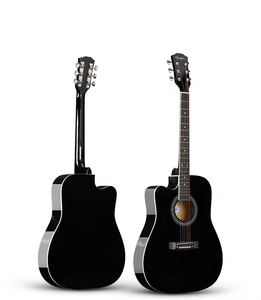
- Surge in Left-Handed & Junior Models: Historically neglected by Indian importers due to MOQs, left-handed players and junior musicians (ages 6–12) represent untapped market share. Our production capacity for dedicated LH models (e.g., L-G1-FB-L) and 3/4 scale kits (Magna M-3 / Jay Turser 30 Jr) empowers regional dealers to monopolize niche local demand.
- Demand for OEM/ODM Brand Creation: Rather than solely marketing multinational legacy brands with compressed single-digit profit margins, Indian distributors are launching private labels. Our factory specializes in customized headstock silk-screening, bespoke neck plates, and curated packaging to help Indian music corporations establish sustainable domestic brand equity.
4. Production Excellence: Backed by JAM USA LLC & Global Industrial Scale
Sourcing directly from our automated CNC woodwork, robotic electrostatic spray finishing, and cleanroom electronics assembly facilities provides international trading houses with structural advantages unmatched by fragmented small-scale workshops:
Direct Factory Direct Pricing
Eliminate intermediary trading companies. Gain Tier-1 FOB container rates that protect margin buffers against Indian basic customs duties and logistics inflation.
Rigorous Multi-Stage QA
Every single instrument undergoes a 14-point mechanical and electronic check: laser straight-edge fret leveling, pot-taper linearity, pickup output balance, and finish buffing.
Flexible Container Assortments
Consolidate solid-body electrics, semi-hollow archtops, electric basses, and acoustic series in a single 20ft or 40ft HQ container without restrictive per-model minimums.
Comprehensive Spare Parts Supply
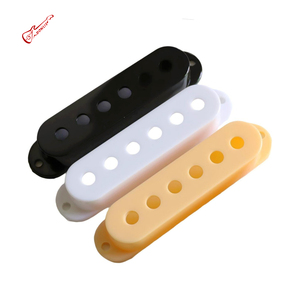
Access our specialized CNC hardware catalog—bridges, pickup covers, machine heads, and replacement necks—to maintain domestic after-sales service centers across India.