Export-Grade Electric & Acoustic Instruments
Precision-built fretted instruments engineered under rigorous quality benchmarks, optimized for European retail distributions, primary academies, and commercial lutherie integration.


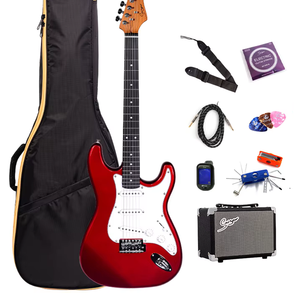
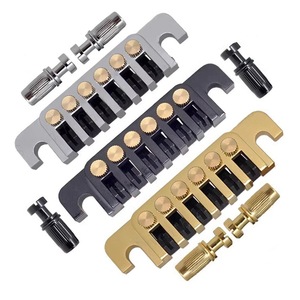
Engineering Basswood Electric Guitars for the Slovak Republic: Technical Authority & Supply Chain Resilience
Within the modern musical instrument manufacturing sector, American Basswood (Tilia americana) and select Asian Linden equivalents have solidified their role as the primary tonewood for high-precision, mid-to-high gain electric guitars. Renowned for its tight cellular structure, uniform grain density, and balanced acoustic resonance, basswood provides an exceptionally flat mechanical frequency response. Unlike dense northern hardwoods that can exhibit unpredictable harmonic spikes in high treble bands, basswood naturally softens shrill overtones while maintaining articulate velocity through mid-range frequencies (500 Hz to 2 kHz). For regional importers, brand proprietors, and wholesale distributors based in the Slovak Republic, sourcing factory-direct basswood electric guitars provides a decisive commercial edge: an optimal acoustic ratio between instrument weight, acoustic sustain, and competitive unit economics.
As the Central European musical retail landscape experiences rapid digitization alongside growing demands for student-to-intermediate instruments, procurement directors in Bratislava, Košice, Žilina, and Prešov face unique logistical and operational considerations. Instrument bodies imported into Slovakia must withstand dramatic continental seasonal shifts—from dry, freezing sub-zero conditions across the Carpathian basins during winter to elevated humidity levels in summer. Substandard wood seasoning directly precipitates fret sprout, structural neck bowing, and delaminating poly finishes. Our factory engineering addresses this challenge systematically through secondary computer-monitored kiln-drying procedures, ensuring every basswood blank shipped to Slovakia achieves a sustained equilibrium moisture content (EMC) of 8% to 10% prior to multi-axis CNC milling.
Tonewood Acoustic Specification: The Mid-Frequency Primacy of Basswood
Acoustic spectroscopy demonstrates that basswood possesses an average Janka hardness rating of approximately 410 lbf (1,820 N) and an average dried weight of 26 lbs/cu ft (415 kg/m³). This relative softness yields low internal friction (damping factor), allowing string vibrational energy transmitted via the bridge saddles to dissipate smoothly across the entire solid-body perimeter without phase cancellation. When combined with dual humbucking configurations or active preamplification systems, basswood guarantees an uncompromisingly rich tone suitable for modern rock, progressive metal, and educational jazz ensembles.
Localized Application Scenarios Across Slovakia's Musical Infrastructure
Strategic inventory deployment requires aligning factory-floor configurations with the actual operational touchpoints of the target territory. In the Slovak Republic, four distinct commercial segments drive consumer and institutional demand:
State Primary Art Schools (ZUŠ Network)
Slovakia maintains a comprehensive system of Základné umelecké školy (ZUŠ), supporting tens of thousands of enrolled students. Lightweight basswood solid bodies prevent premature physical fatigue among younger players (ages 10-16), offering an ergonomic double-cutaway platform with low string action and reliable fret levelling.
Omnichannel Retail & Independent Music Shops
From major retail operations across the Danube riverfront to boutique regional dealerships across Central Slovakia, storefronts require swift stock rotation. Basswood platforms, presented in vibrant metallic, gloss, and open-pore finishes, provide aggressive price-to-performance appeal that maximizes retailer gross margins.
Touring Bands, Club Stages & Festival Circuits
With an active underground rock and metal live circuit encompassing Bratislava venues, Košice performance spaces, and major summer festivals (such as Pohoda and Topfest), working musicians demand reliable secondary touring axes capable of maintaining tuning stability amid dynamic temperature swings.
Market Trends & Macro-Economic Dynamics in Central European MI Distribution
The musical instrument (MI) market across the Visegrád Group (V4) has witnessed sustained structural evolution. Understanding these structural macro-shifts enables wholesale partners to capitalize on emerging profit pools:
1. Shift Toward OEM Direct-to-Brand Procurement
Historically, Slovak retailers relied extensively on large German or Austrian master distributors for their instrument pipelines, absorbing significant intermediation markups. Today, mid-sized retail chains and e-commerce leaders are circumventing regional distributors by establishing proprietary private-label brands. Partnering directly with our enterprise-tier manufacturing facility allows importers to secure authentic tier-one factory pricing, custom branding (laser headstock engraving, custom silk-screened logos, unique pickup voicings), and tailored packaging designs optimized for European parcel delivery.
2. Stringent EU Environmental and Health Directives
Supplying the European Union demands strict adherence to environmental safety protocols. Slovakia actively enforces European standards regarding harmful substances. Our facility guarantees that all nitrocellulose and poly-based curing lacquers, chrome/gold electroplating processes, and soldering alloys are fully compliant with EU REACH (EC 1907/2006) and RoHS (2011/65/EU) regulations. Furthermore, our raw timber stocks are harvested through strictly documented concessions conforming to current EU Timber Regulations (EUTR) and forthcoming EUDR traceability protocols, eliminating border customs impoundments.
3. Rise of the Ergonomic, Ultra-Lightweight Spec
Modern consumers have moved decisively away from unwieldy 4.5kg+ instruments. Basswood's average finished body weight (approx. 1.5 to 1.8 kg unrigged) enables fully assembled electric guitars weighing an average of 3.1 to 3.4 kg. This ergonomic advantage is driving widespread adoption not only among student populations but also among home-recording studio creators throughout the Slovak creative freelance sector.
Factory Engineering Architecture & Corporate Strengths
Operating as an internationally recognized fretted instrument manufacturer, our manufacturing group—backed by deep parent company industrial lineage akin to the global operational standards of JAM USA LLC and premier instrument series (e.g., JT-300, 400 Series platforms)—maintains specialized capabilities tailored to high-volume commercial export:
Precision Kiln De-Moisturization
Dual-phase vacuum drying protocols eliminate cellular collapse, ensuring stable timber blanks that resist checking and torsional neck warping in cold Slovak winters.
Micro-Tolerance CNC Milling
5-axis industrial CNC machining centers mill body contours, pickup cavities, and neck joints with repeatable accuracy within 0.02 millimeters.
Multi-Stage Lutherie Inspection
Every guitar undergoes comprehensive fret levelling, edge crowning, fretboard dressing, intonation adjustment, and electronic sweep testing prior to carton packing.
Direct EU Intermodal Freight
Containerized sea transport via major European ports (Hamburg, Koper) with direct bonded rail-freight connectivity into dry-port logistics hubs across Slovakia.
Comprehensive OEM/ODM Tooling
Full customization capability covering bespoke neck carves (Modern C to Ultra-Slim D), radius choices (9.5" to 14"), pickup configurations, and custom finish formulations.
Dedicated Trade Account Support
Multilingual B2B account managers assisting with import clearance documentation, customs classification, spare component inventories, and after-sales support.
Procurement FAQ: What Slovak B2B Importers Need to Know
To facilitate effortless onboarding for corporate buyers and import specialists across the Slovak Republic, our logistics and technical legal teams have compiled answers to primary transactional inquiries:
What are the import tariff codes (TARIC) and Slovak VAT implications for electric guitars?
Electric guitars imported into the Slovak Republic fall under the EU Common Customs Tariff code TARIC 9207 90 10 00 (Musical instruments, the sound of which is produced, or must be amplified, electrically - Guitars). The standard third-country customs duty rate into the EU is typically 3.2% to 3.7%. Upon customs clearance into Slovakia, the local Value Added Tax (Daň z pridanej hodnoty - DPH) of 20% applies to the CIF value + duty amount. Slovak companies registered with a valid EU VAT ID (IČ DPH) can process this import through the standard reverse charge mechanism via their tax filings.
How does your factory protect basswood guitars against fret sprout during continental winters?
Fret sprout occurs when an improperly stabilized fingerboard shrinks faster than the metal fret wire during dry winter conditions. We mitigate this through a dual-step stabilizing process: first, maple and rosewood/tech-wood fingerboards undergo dehumidification cycling until moisture levels drop to 8-9%. Second, fret ends are bevel-ground at a 45-degree angle, crowned, and sealed with a protective conditioning treatment. Even when exposed to dry central heating in Bratislava or Žilina households, the dimensional variance remains strictly below 0.05%, preventing sharp fret edges.
What are the minimum order quantities (MOQ) and lead times for bespoke OEM orders?
Standard OEM production runs start at 50 to 100 units per model specification (finish, electronics, and headstock shape). For established distributors seeking complete 20ft or 40ft High Cube container loads (approx. 1,200 to 2,400 instruments), custom production runs typically require 45 to 60 calendar days from engineering sign-off to factory gate release. Sea transit to the Port of Koper (Slovenia) or Port of Hamburg (Germany) takes approximately 24 to 28 days, followed by 48-hour intermodal rail transit directly to distribution centers across Slovakia.
Do these instruments include CE certification and non-toxic surface finish documentation?
Yes. Electric guitars containing active electronics or onboard preamp circuitry strictly comply with the EU EMC Directive (2014/30/EU) and carry verified CE marking. Furthermore, all physical surface coatings are third-party laboratory tested to ensure zero banned phthalates, lead, or toxic volatile organic compounds (VOCs), fully aligning with EU REACH and EN71 safety parameters for student-targeted consumer products.
Can we request sample units for commercial evaluation prior to volume production?
Absolutely. We provide pre-production prototype and stock evaluation samples for verified commercial purchasers, musical instrument retailers, and distributor entities. Sample builds are typically dispatched via express air courier (DHL, FedEx) with delivery to your Slovak facility within 7 to 10 business days for rigorous lutherie inspection, setup verification, and acoustic assessment.
Initiate Your Wholesale Guitar Supply Partnership
Connect directly with our senior OEM manufacturing engineering desk. Obtain comprehensive trade price sheets, custom timber specifications, and containerized logistics solutions tailored specifically for the Slovak market.
Send an Inquiry