High-Velocity Wholesale OEM/ODM Instruments & Engineered Hardware
Engineered for private label brands, Canadian retail chains, regional luthier distribution, and institutional academic programs. Complete with customized branding, custom electronics, and kiln-dried timber stability.
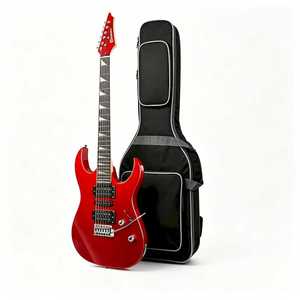
Wholesale Basswood Body Maple Neck Rosewood Fretboard Electric Guitar
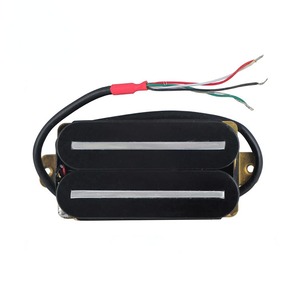
Dual Rail Humbucker Pickup with Coil-Split Function Replacement Parts

Factory OEM/ODM ST/TL/LP Electric Guitar with Rosewood Fingerboard
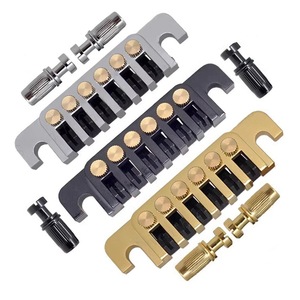
Corrosion Resistant Gold/Silver/Black TP-6 Micro-Adjustment Tailpiece
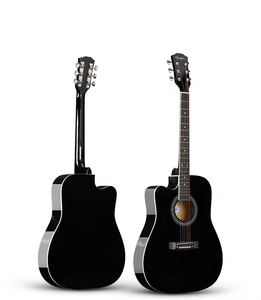
Wholesale 41-Inch Gloss Left-Handed Acoustic Folk Guitar
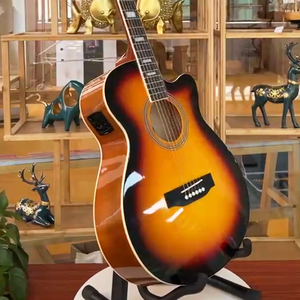
GA-H15 40-Inch Grand Auditorium Acoustic Student Guitar
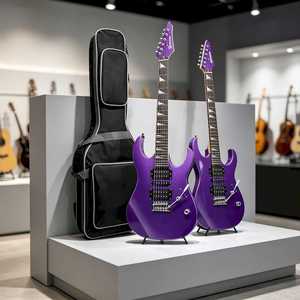
39-Inch Solid Body Electric Guitar Complete Practice Kit
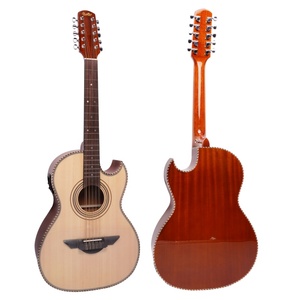
Florentine Cutaway 10-String Travel Acoustic Bajo Quinto
Engineering Bass Guitars for the Canadian Climate and Cross-Border Commerce
Procuring custom electric and bass guitars for the Canadian market demands substantially more than selecting aesthetic silhouettes and electronic pickup configurations. Canada represents one of the most mechanically demanding environments for fretted string instruments globally. Importers, distribution powerhouses, and private luthier labels face an acute logistical and structural challenge: extreme indoor-to-outdoor relative humidity (RH) differentials. During sub-zero winters in provinces such as Alberta, Saskatchewan, Manitoba, and Ontario, internal forced-air heating systems frequently drive residential and commercial indoor humidity below 15% RH. Conversely, coastal British Columbia and eastern Maritime summers expose timber bodies to over 75% RH.
Without meticulous, industrially monitored thermal conditioning, commercial solid-body instruments suffer severe structural degradation: fret sprout (fingerboard shrinkage exposing sharp fret wire ends), neck twist, forward bow beyond truss rod reach, finish checking in cold shipping containers, and bridge lifting. Our manufacturing consortium addresses these critical Canadian failure points through computerized vacuum drying kilns, multi-ply quarter-sawn laminated neck constructions, spoke-wheel dual-action truss rod architecture, and specialized polyurethane curing profiles that retain micro-flexibility even at minus 30 degrees Celsius.
Information Gain Directive for Canadian B2B Procurement: Standard commodity guitar factories run lumber through accelerated convective drying to roughly 12% moisture content (optimized for humid coastal regions of Southern China or Southeast Asia). When shipped directly across the Pacific to warehouse docks in Vancouver, Calgary, Toronto, or Montreal, timber undergoes violent desiccation. Our manufacturing facilities enforce an extended 45-day vacuum-cycling protocol that stabilizes tone-grade basswood, hard maple, and mahogany at 8.2% ± 1% Equilibrium Moisture Content (EMC), ensuring frets remain glass-smooth and necks dead-straight through deep Prairie freezes and humid Maritime summers.
Localized Application Scenarios in the Canadian Musical Landscape
How our custom OEM/ODM production lines solve immediate market pain points across Canadian retail channels, educational boards, and independent builder brands.
National Retail Chain In-House Brands
Canada's retail ecosystem is anchored by respected national chains like Long & McQuade, Steve's Music Store, Tom Lee Music, and prominent regional dealers across Quebec and Ontario. Retailers require consistent margins and turnkey supply lines that minimize setup-bench labor costs at the branch level.
- Factory fret-dressing and Plek-assisted radius calibration
- Turnkey private labeling on headstocks and backplates
- Master-carton retail barcoding (UPC-A/EAN-13 ready)
Provincial School Boards & Conservatories
Educational institutions across the Toronto District School Board (TDSB), Commission scolaire de Montréal, and Western Canadian school districts mandate rock-solid entry instruments for high-school band and modern jazz rhythm sections.
- Indestructible basswood bodies resistant to heavy student handling
- Fully enclosed zinc die-cast sealed tuning gears (1:18 ratio)
- Bundled with thick gig bags, reinforced cables, and setup hex keys
Canadian Boutique Luthiers & Indie Brands
Boutique brands based in British Columbia, Quebec, and Nova Scotia often lack the multi-axis CNC milling scale to produce semi-finished body blanks and finished roasted necks in small-to-medium runs at commercially viable margins.
- High-precision 5-axis CNC roughing and routing to 0.05mm
- Torrefied Canadian Rock Maple (roasted wood) sourcing
- OEM active 3-band EQ onboard preamps with mid-sweep
Key Industry Trends Driving Canadian Bass & Guitar Sourcing in 2025–2026
Strategic movements shaping consumer preferences, regulatory frameworks, and factory-level engineering standards across Canada.
Torrefied & Roasted Tonewood Stabilization
Thermal modification (roasting wood at 180°C–220°C in oxygen-deprived nitrogen chambers) has shifted from a luxury custom-shop novelty into an absolute necessity for Canadian distribution. The heat treatment alters the cellular hemicellulose structure, crystallizing wood resin and rendering necks virtually immune to humidity fluctuations.
Our factories provide roasted maple necks across standard OEM tiers, dramatically lowering warranty replacement claims for Canadian importers who stock goods in winter unheated warehouses.
Multiscale (Fanned-Fret) & Ergonomic Basses
With the rapid growth of progressive metal, contemporary worship, and modern jazz in Montreal, Toronto, and Vancouver, 5-string and 6-string multiscale basses (34" treble to 37" low-B scale lengths) have experienced a massive spike in retail demand.
We have engineered dedicated CNC jigging programs for fanned-fret fingerboards and individual monorail bridge systems, empowering Canadian brands to introduce high-spec multiscale models at competitive sub-$1,000 retail price points.
CITES Compliance & Non-Regulated Tonewood Alternatives
Cross-border transit through the Canada Border Services Agency (CBSA) and Environment and Climate Change Canada (ECCC) enforces rigorous scrutiny under CITES Appendix II regarding Dalbergia (Rosewood).
To eliminate shipping clearance bottlenecks, we provide Canadian clients with high-density synthetic composites, thermo-treated Laurel, and sustainably harvested North American walnut fingerboards accompanied by pre-cleared phytosanitary certification documents.
Component & Tonewood Performance Matrix for Canadian Distribution
A reference guide comparing wood species, hardware coatings, and truss systems under cold-weather operational stresses.
| Component Tier | Material / Construction | RH Thermal Resilience | Acoustic / Electric Response | Ideal Merchandising Role |
|---|---|---|---|---|
| Student / Academic Bass | Resonant Basswood Body + Hard Maple Neck + Engineered Laurel Fretboard | Tested to 18% RH | Even fundamental, mid-forward presence, lightweight for young players | Volume starter packages, school system rentals, sub-$299 retail |
| Standard Touring Stage Bass | Select North American Alder + Dual-Action Spoke Wheel Truss Rod | Tested to 12% RH | Punchy low-mid growl, fast transient attack, dynamic articulation | Core retail inventory, club-circuit touring musicians ($499–$799) |
| Pro Custom / Multiscale | Torrefied Roasted Flame Maple + Swamp Ash Core + Graphite Spars | Zero Drift Under -25°C | Extended fundamental sustain, crystalline highs, tight low-B string definition | Flagship private labels, boutique artist endorsements, 5-string drop-tuning |
| Boutique Acoustic / Bajo Quinto | Solid Sitka Spruce Top + Double Bound Mahogany + Bone Nut/Saddle | Nitro/Poly Hybrid Seal | Rich acoustic resonance, harmonic projection, overtone complexity | Roots, Americana, traditional folk, and specialty multi-string niches |
Why Major Musical Instrument Distributors Choose Our Manufacturing Alliance
Leveraging deep industrial scale, institutional governance, and proven international logistics networks backed by top-tier MI industry groups.
Industrial Manufacturing Depth
Over two decades of precision guitar manufacturing excellence, supporting global brands and divisions under premier music corporations like JAM USA LLC. Consistent high-volume capacity paired with custom-shop tolerances.
Rigid 5-Stage QC Protocol
Every bass undergoes individual moisture metering, 24-hour string tension acclimation, fret bevel polishing, electronics noise-floor shielding verification, and final Canadian climate drop-testing before crating.
Direct DDP Canada Logistics
Full-container (FCL) and consolidated less-than-container (LCL) freight direct into Port of Vancouver, Prince Rupert, and inland rail ramps in Calgary, Toronto, and Montreal. DDP terms with all customs duties cleared.
Listing-Ready Assets & CAD Support
We empower Canadian importers with studio white-background photography, complete CAD drawings for custom headstocks, and compliant consumer packaging tailored for immediate Canadian e-commerce fulfillment.
Frequently Asked Questions: Sourcing Custom Basses for Canada
Real-world answers covering customs regulations, CBSA tariff schedules, packaging against frost damage, and private-label customization.
What are the Canadian customs tariff codes (HS Codes) and duty rates for electric bass guitars?
Under the Canadian Customs Tariff schedule administered by the CBSA, electric guitars and electric bass guitars are classified under HS Code 9207.90.00 (musical instruments, the sound of which is produced, or must be amplified, electrically). Depending on the trade agreement status and Most-Favoured-Nation (MFN) tariff provisions, standard rates generally range from 0% to 6%, while acoustic guitars enter under HS Code 9202.90.10 / 9202.90.90. Additionally, the federal Goods and Services Tax (GST) of 5% applies at the border, along with appropriate provincial tax reconciliation (PST/HST) depending on whether goods clear into BC, Alberta, Ontario, or Quebec. Our export division prepares compliant Commercial Invoices and Bills of Lading to ensure seamless customs transit.
How does the factory prevent finish checking and wood cracking during maritime shipping in sub-zero winter months?
Winter ocean freight across the North Pacific into Vancouver or Prince Rupert, followed by rail transit through the Canadian Rockies, exposes cargo containers to external temperatures plunging below -30°C. If containers are unpacked abruptly, rapid thermal expansion fractures traditional lacquer finishes. We protect shipments through a three-tier defense system: (1) specialized polyurethane finishes with micro-elastomer plasticizers that remain ductile in severe cold; (2) dual-layer thermal insulating wrap and sealed heavy-gauge vapor-barrier polybags inside each inner carton; and (3) silica gel desiccant canisters calculated specifically for the volume of each master carton to eliminate condensation during rail thaw.
Can we customize neck profiles, electronics, and headstock shapes for our private label?
Yes. Complete OEM/ODM customization is our core competency. Clients can supply DXF, STEP, or CAD files for headstock contours, body carving dimensions, neck carves (e.g., modern C, slim D, asymmetrical compound profiles), and pickup routings. We also offer private logo silk-screening, laser headstock engraving, genuine mother-of-pearl or abalone fretboard inlays, custom neckplates, and custom-wound pickup sets ranging from vintage single-coil J-style tone to high-output active ceramic humbuckers.
What are the typical minimum order quantities (MOQ) and production lead times for Canadian shipments?
For standard factory configurations with custom brand logos, minimum order quantities generally begin at 24 to 30 units per model colorway. For fully custom tooling (proprietary body contours or specialized multiscale hardware), MOQs typically start at 50 to 100 units. Standard production lead times average 45 to 60 days following sample pre-production sign-off, with maritime transit to Port of Vancouver adding approximately 14 to 18 days, and inland intermodal rail delivery to Calgary, Toronto, or Montreal adding an additional 5 to 9 days.
How are CITES regulations handled for Canadian imports featuring rosewood or alternative fretboards?
While the CITES COP18 exemption permits commercial finished musical instruments containing rosewood (Dalbergia) to travel without individual CITES permits, many Canadian institutional buyers prefer completely non-regulated materials to avoid potential border audit delays. We offer full flexibility: if rosewood is specified, we provide complete chain-of-custody documentation; alternatively, we offer high-density thermo-stabilized Indian Laurel, Canadian Black Walnut, and composite phenolic fingerboards that are completely exempt from CITES oversight.
Expand Your Canadian Stringed Instrument Assortment with Factory-Direct Security
Partner with an industrial guitar manufacturing alliance that understands Canadian climate resilience, CITES compliance, and high-margin retail distribution. Request detailed wholesale specs, tonewood samples, and customized landed DDP quotations today.