B2B White Paper • Peru Musical Instrument Procurement

Custom OEM Classical Nylon Guitar Factory & Supplier in the Peru Market

Industrial-Scale Luthier Manufacturing, Climate-Acclimated Soundboards, and Direct Container-Load Supply Chains for Musical Instrument Wholesalers in Lima, Arequipa, Trujillo, and Cusco.

Precision Manufacturing Lineup

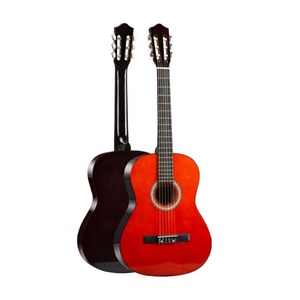
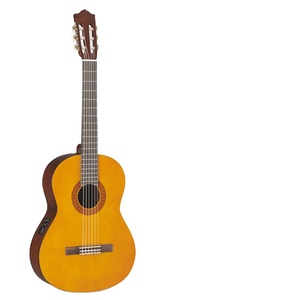
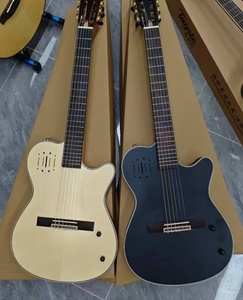
Wholesale OEM/ODM Classical Nylon Guitars Engineered for Peru

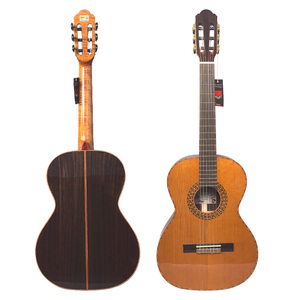
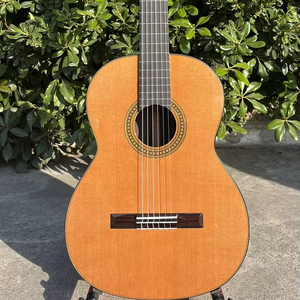
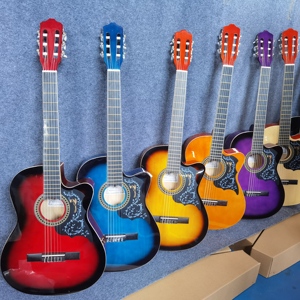
Explore our core catalog engineered for commercial resilience, from conservatoire-level full solid masterworks to high-turnover music school student models with customizable scale lengths and branded appointments.

45,000+
Monthly Classical Capacity
8 - 10%
Moisture Kiln Target
28 Days
Transit To Callao Port
100%
AQL Level II Inspection
Acoustic Engineering & Cultural Alignment

1. Localized Musical Applications in the Peruvian Market

The classical nylon-string guitar in Peru is not merely an introductory student tool; it is the acoustic backbone of the nation's rich and multi-layered cultural heritage. Unlike northern Andean territories where high-frequency metal strings predominate, coastal and central Peru demand deep, woody, tactile, and articulate nylon string voices capable of executing complex syncopations, percussive rasgueados, and crystalline fingerpicked counterpoint.

Música Criolla and the Afro-Peruvian Pulse

In coastal metropolitan centers like Lima, Callao, and Trujillo, nylon guitars take center stage in Música Criolla, Peruvian Vals (Vals Criollo), and Polka. Accompanied by the native cajón peruano and the quijada, criollo guitarists demand an instrument with an immediate attack, bright harmonic overtones, and instant dynamic recovery. When executing rapid ornamental thumb counter-melodies (bordoneos) and aggressive syncopated rhythmic sweeps (repiques), low-density laminate guitars with loose tops suffer from muddy bass congestion. Our Peruvian OEM models feature stiffened spruce tops combined with densified tonewood bridges to deliver articulate string separation across all registers, allowing the characteristic criollo syncopations to cut through live ensemble performances.

Marinera Costeña and Northern Folk Accompaniment

In northern coastal departments like La Libertad and Lambayeque, the Marinera Costeña demands acoustic guitars capable of high projection without acoustic harshness. Our 39-inch concert series guitars are voiced with Hauser-inspired bracing patterns that amplify midrange fundamental frequencies between 400 Hz and 1.2 kHz, ensuring that melodic counterpoints remain crisp when played alongside wind sections and percussive footwork (zapateo).

Andean Fingerstyle (Huayno & Yaraví) and High-Register Projection

Moving inward toward Ayacucho, Junín, and Cusco, guitar playing shifts to intricate double-stop fingerstyle melodies emblematic of the Guitarra Ayacuchana, pioneered by virtuosos like Raúl García Zárate. This unique tuning and modal style relies extensively on open-string sympathetic resonance, rich sustain in the third and second strings, and exceptional intonation across high fretboard positions (frets 7 through 14). Traditional mass-market classical instruments frequently suffer from intonation drift above the 7th fret due to improperly compensated saddles; our OEM production incorporates CNC-machined bone saddles with custom micro-radius compensation specifically tested for complex open tunings (such as Temple Baquiano and Transportado).

Conservatory Academies and Educational Expansion in Lima

At the academic tier, institutions such as the Universidad Nacional de Música (UNM) in Lima, regional conservatories in Huánuco and Arequipa, and private academies throughout San Borja, Miraflores, and Los Olivos dictate stringent physical specifications. Music educators reject instruments with irregular string action, high neck relief, or sharp fret wire tangs. Our Terence G20 and 38/39-inch academic lines integrate two-way dual-action internal truss rods—an engineering rarity in traditional classical guitars—enabling local Peruvian repairmen and music teachers to dial in a laser-straight 2.8mm bass action and 2.3mm treble action regardless of seasonal changes.
Criollo Rhythmic Attack

Specially calibrated top soundboards with cross-grain quartersawn bracing withstand percussive golpeador taps and aggressive polyrhythmic strumming without belly warp or acoustic distortion.

Ayacuchano Sustain

All-solid and solid-top models calibrated for crystalline open-tuning sustain, providing clean note bloom for traditional pentatonic Andean fingerstyle arrangements.

Academic Ergonomics

Accurate 52mm nut widths with classic Spanish heel or reinforced dovetail neck joints, meeting the strict pedagogical guidelines of Peruvian academic conservatories.

Market Intelligence & B2B Insights

2. Macro Trends & Supply Chain Dynamics in Peru

Strategic trade analysis for importers, commercial distributors, and multi-branch music instrument retailers navigating the shifting retail landscape between Lima and provincial hubs.

Geographical Retail Clusters: From Jr. Carabaya to National E-Commerce

The musical instrument trade in Peru maintains a highly concentrated physical core centered on the historic Jirón Carabaya and Jirón Cantuarias wholesale clusters in downtown Lima. Here, hundreds of specialized retailers supply musical merchandise to regional traders from Huancayo, Piura, and Puno. However, over the past 36 months, procurement dynamics have decentralized dramatically.

Regional department stores and major retail platforms—including Falabella Peru, Ripley, and Mercado Libre Perú—have experienced compound annual growth rates exceeding 18% in musical gear subcategories. High shipping costs and risk of courier damage have driven these marketplaces to demand robust factory packaging. Our factory provides 5-ply drop-test certified double corrugated outer cartons and premium molded EVA gig bags that survive the rugged overland transit along the Pan-American Highway and across high-altitude Andean mountain passes.

Combating Extreme Environmental Duality: Pacific Damp vs. Andean Aridity

Peru presents one of the most mechanically demanding environments in South America for string instrument construction due to its stark climatic duality:

  • Coastal Lima Marine Humidity: Average relative humidity (RH) routinely hovers between 80% and 95% with high saline air, causing poorly cured guitars to swell, pop frets, soften aliphatic glues, and develop sunken or warped tops.
  • Andean High Altitude (Cusco, Juliaca, Arequipa): Altitudes between 2,500 and 3,800 meters exhibit extreme barometric pressure drops and hyper-arid conditions where indoor RH can plummet below 25%, resulting in soundboard splits, fret sprouting, and bridge detachment.

Our manufacturing facility mitigates these hazards through an exclusive Dual-Phase RF Kiln-Drying Protocol, holding all structural tonewoods (mahogany, spruce, rosewood, sapele) at 8%±1% equilibrium moisture content (EMC) before precision acoustic assembly in climate-regulated clean rooms.

Target Peruvian Region Predominant Climate Challenge Recommended Soundboard Construction Neck Joint & Truss Rod Spec Optimal Finish Formulation
Lima, Callao, Chiclayo (Coastal Strip) Extreme Humidity (85% - 95% RH), Marine Salinity Select Spruce Laminate or High-Density Cedar with sealed undersides Dovetail Joint + Enclosed Double-Action Steel Rod Ultra-Thin Polyurethane (Moisture Vapor Barrier)
Cusco, Puno, Juliaca (Altiplano) Severe Aridity (<25% RH), Sub-zero Night Swings Solid Canadian Cedar or Multi-Ply Quartersawn Pine Spanish Heel with Carbon Fiber Neck Reinforcement Bars Elastic Catalyzed Lacquer (Resists Thermal Shock Cracking)
Arequipa, Huancayo (Serranía Intermedia) Rapid Diurnal Thermal Fluctuations (20°C Shift) Solid Engelmann Spruce Top + Sapele Laminate Back Standard Dovetail + Dual Truss Rod Access Satin Open-Pore Nitrocellulose or Thin Poly
Iquitos, Pucallpa, Tarapoto (Amazonas) Continuous Tropical Heat + High Humidity (85°F / 90% RH) Engineered Reinforced Tonewood Composite / Phenolic Fingerboard Phenolic/Composite Fretboard with Sealed Nickel-Silver Frets High-Gloss UV Hardened Sealant (Mold & Fungal Resistant)
Industrial Scale • Global Authority

3. Enterprise Advantages & Global OEM Capabilities

Rooted in world-class fretted instrument engineering standards, backed by large-scale enterprise holding resources, and fine-tuned for high-velocity international wholesale export.

Tier-1 Holding Governance

Drawing on the legacy and operational discipline of industry-leading entities such as JAM USA LLC and seasoned fretted manufacturing groups, we maintain complete operational transparency, ethical timber tracing, and dependable international delivery schedules.

Complete Catalog Cohesion

Beyond our 8 core classical nylon guitar platforms, our plant fabricates matching solid body electrics, steel-string dreadnought acoustics, and student electric basses, allowing Peruvian distributors to consolidate full 40-foot HQ container freight orders under a single brand umbrella.

Full Turnkey Private Labeling

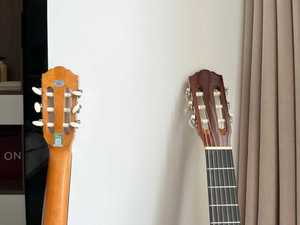
Custom headstock profiles, gold hot-stamped custom rosettes, serialized internal soundhole labels, custom instruction manuals in Spanish, and branded export shipping cartons designed to fast-track your proprietary Peruvian house brand directly to market.

CITES & LACCE Regulatory Compliance

Full phytosanitary documentation, non-CITES timber certification (using plantation rosewood alternatives, treated laurel, and sonokeling with verified chain-of-custody), guaranteeing expedited customs clearance at Callao without impound risks.

Stringent Factory Quality Assurance: The 5-Point Stage Check

Every nylon classical guitar exported to South America undergoes a standardized multi-point quality checkpoint before seaworthy carton packaging:

1. Acoustic Moisture Equilibrium Certification: Utilizing contactless pinless moisture meters (Wagner Orion series), tops, backs, and necks are scanned at three distinct zones to ensure that core humidity remains strictly within 8% to 10%.

2. CNC Fretting and Plek-Equivalent Leveling: Fingerboards are radiused or flattened to traditional Spanish classical specs (0mm flat radius) under computer numerical control, followed by automated crown dressing and hand-buffed ends to eliminate sharp fret edges when timber contracts in arid climates.

3. 72-Hour String Tension Stress Rig: Instruments are strung with high-tension nylon strings and stored in climate test chambers under 42kg total string tension to verify the structural integrity of the internal fan bracing, bridge gluing bond, and heel joint stability.

4. Deflection-Meter Bridge Shear Testing: Acoustic bridges endure localized shear stress tests exceeding 65 Nm torque to guarantee zero delamination under aggressive Latin strumming dynamics.

5. Optical Finish Thickness Gauge Verification: Polyurethane and nitro finishes are kept below 0.18mm thickness to prevent tone choking while maintaining an impenetrable moisture shield against Lima's intense marine air.

Procurement Intelligence • FAQs

Frequently Asked Questions for Peruvian B2B Buyers

Clear, definitive answers addressing customs clearance, import tariffs, minimum order quantities, logistics through Callao, and private labeling.

What is the standard shipping transit time and optimal port of entry for imports into Peru?

All ocean container shipments from our central manufacturing hubs depart directly to the Port of Callao (Puerto del Callao - PECAL), which serves as the primary maritime entry point for over 90% of musical merchandise entering Peru. Transit times via trans-Pacific direct shipping lines (such as Cosco, Maersk, or Evergreen) typically range between 26 and 32 ocean days from port to port.

For urgent replenishment orders or smaller distributor sample batches, air cargo can be routed directly to Jorge Chávez International Airport (LIM) in Callao/Lima with a 4 to 6 day transit time, although ocean FCL (Full Container Load) remains the most cost-effective method to protect acoustic woods from abrupt barometric shifts.

What are the tariff codes (Partida Arancelaria) and import taxes levied by SUNAT on guitars?

In Peru, classical nylon string guitars are classified under SUNAT HS Code (Subpartida Nacional): 9202.90.00.00 (Los demás instrumentos musicales de cuerda).

Under the China-Peru Free Trade Agreement (TLC Perú-China), qualified commercial shipments carrying an official Form F Certificate of Origin (Certificado de Origen) benefit from 0% Ad-Valorem import tariff. Standard domestic taxation still applies upon customs clearance at Callao: the Impuesto General a las Ventas (IGV - 16%) and the Impuesto de Promoción Municipal (IPM - 2%), totaling 18%, along with customs dispatch fees and initial import VAT perception (Percepción de IGV between 3.5% and 10% for first-time importers). Our export documentation department prepares complete Form F, commercial invoices, and packing lists to ensure zero tariff friction.

What are the Minimum Order Quantities (MOQ) for custom private branding in Peru?

We offer flexible tier-structured MOQs tailored to both emerging boutique brands and national retail chains:

  • Factory Standard Models (Neutral / Unbranded): Minimum 50 units per SKU, allowing distributors to mix multiple models (e.g., Yamahas C40 alternative + CG100 Silent + 36-Inch Full Solid) to reach trial LCL shipment quantities.
  • Full OEM Custom Branding (Headstock Logo + Custom Label + Carton): Minimum 150 to 300 units per model depending on the timber specification and finish complexity.
  • Exclusive Custom Rosette, Tooling, and Colors: Minimum 500 units per production run.
How does the factory prevent neck warpage and fret sprouting during Lima's humid winters?

Unlike traditional budget workshops that build guitars with air-dried wood exceeding 16% moisture, our factory applies an industrial Controlled Kiln Desiccation process followed by 90-day naturalization chambers to lock mahogany and okoume necks at 8% to 10% moisture content.

Additionally, all student and concert lines engineered for the Latin American market integrate an internal bi-directional steel truss rod or twin carbon fiber stabilizing rods within the neck shaft. This allows local retailers and players to counter any neck movement caused by Lima's dense coastal humidity or highland altitude changes via a simple hex key adjustment through the soundhole.

Can we consolidate acoustic, electric, and bass guitars in a single 20ft or 40ft HQ container?

Yes. Our industrial infrastructure supports multi-category fretted instrument consolidation. A standard 40-foot High Cube (40HQ) container holds approximately 1,800 to 2,100 classical guitars in standalone boxes, or between 1,000 and 1,200 instruments if packed inside padded gig bags or flight cases.

Peruvian wholesale buyers frequently take advantage of mixed container loading—combining 50% Classical Nylon Guitars, 30% Solid Body Electrics (such as our 300 and LT series platforms), and 20% Starter Electric Basses (400 and CL series). This maximizes container cubic space, eliminates multiple customs clearing fees at Callao, and creates an instantly merchandised showroom floor.

What replacement parts, warranty coverage, and defect allowances are provided to international wholesalers?

We provide a comprehensive commercial guarantee tailored for cross-border wholesale:

1. FOC (Free of Charge) Spare Parts Allowance: Every full container order includes 1.5% to 2% complementary replacement parts, including tuning machine sets, bone nut/saddle blanks, bridge pins, and truss rod wrenches.

2. 12-Month Structural Guarantee: Full warranty coverage against seam splitting, bridge lifting, neck warping, or defective bracing resulting from factory craft. Defective units verified via high-resolution photo/video audit are immediately credited toward the buyer's next production cycle.

Direct Factory B2B Channel

Build Your Signature Classical Guitar Line for Peru

Partner with an established manufacturer capable of delivering the volume, acoustic refinement, and climate resilience your retail distribution requires. Request our comprehensive OEM export price sheet, timber catalog, and sample lead times today.