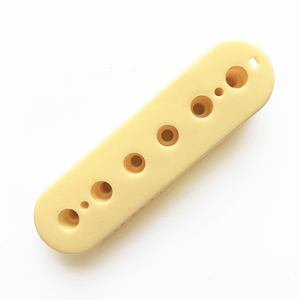
Acoustic & Bass Electronics
Jay Turser, operated under the global distribution authority of JAM USA LLC, delivers high-tolerance OEM/ODM fretted instrument manufacturing engineered explicitly for the discerning Japanese musical instrument retail and educational sectors.
From tone-shaping electromagnetic bobbins to unyielding kiln-dried necks, our components and turnkey instruments adhere to Japan's rigid JIS and distribution standards.
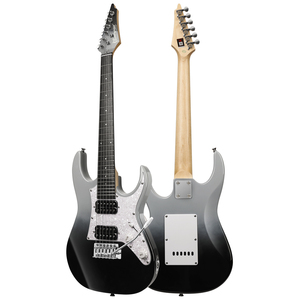
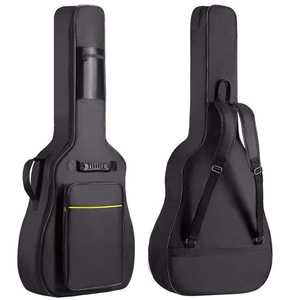
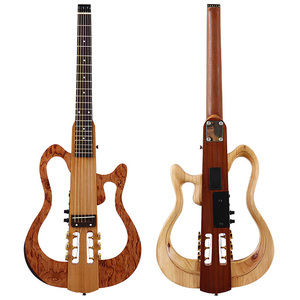
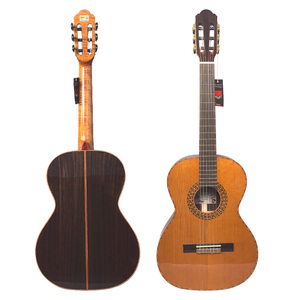
The Japanese bass guitar market possesses distinct operational, spatial, and acoustic requirements unlike any other region in the world. As an established OEM bass guitar factory exporting across East Asia, Jay Turser formulates construction parameters directly responsive to Japanese end-user environments:
1. Urban Soundproofed Rehearsal Studios (24-Hour Studio Astir / Sound Studio Noah Environments): Japanese bassists overwhelmingly practice and rehearse in rental commercial studios across Tokyo, Osaka, and Nagoya. Instruments endure constant thermal shocks—moving from freezing subway platforms during Kanto winters directly into heated, dry studio rooms. Jay Turser addresses this by employing vacuum-stabilized, radial-sawn Canadian Hard Maple necks treated with a micro-thin polyurethane or satin nitrocellulose sealer. This thermal tolerance prevents fret sprout (frets pushing out along the fingerboard edge), a major defect point rejected by Japanese inspection agencies.
2. Compact Ergonomics for High School & University Clubs (Keion-Gaku): The "Keion" (light music club) phenomenon remains an influential purchase driver for 4-string and 5-string electric basses across Japan. High school players demand lightweight body designs (under 4.0 kg) using balanced Poplar, Alder, or resonant Basswood to allow extended standing rehearsals. Furthermore, our slim D-profile neck carves (38mm nut width on J-configurations and 40mm on P-configurations) cater directly to Asian hand anthropometrics, offering seamless playability across lower and upper registers.
3. Studio DI & Home Recording (DAW & City-Pop Revival): Japan's current production trends favor articulating, punchy midrange frequencies that sit cleanly inside dense vocal mixes (common in J-Rock, Math Rock, and Neo-City Pop). Our proprietary wound humbucking and single-coil pickups utilize Alnico V and high-permeability polepieces to output a linear frequency curve without muddy sub-bass blooms, enabling pristine USB-interface tracking in compact apartment studios without acoustic bleed.
Japan faces severe humidity swings, ranging from 80%+ RH in rainy summer seasons (Tsuyu) down to 20% RH in winter indoor environments. Our timber undergoing 4-stage kiln stabilization maintains an equilibrium moisture content of 8-10%, completely mitigating body warpage, neck torsion, and finish blushing.
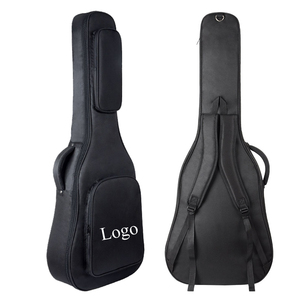
Because public transit dominates commuting across Tokyo, Kyoto, and Yokohama, lightweight performance without sacrificial structural rigidity is paramount. Our basses pair with high-density ballistic nylon water-repellent gig bags, while internal electronic cavities receive dual coats of conductive graphite shielding.
Japanese import distributors enforce zero-defect acceptance criteria. Every export container leaves our manufacturing plant following a comprehensive 12-point inspection covering intonation, string action height (≤1.8mm at the 12th fret on the G string), pickup potting, and zero surface blemishes under high-CRI QC illumination.
Strategic purchasing agents from Ochanomizu's musical instrument hubs to commercial retail chains like Shimamura Music and Ishibashi Music operate under several evolving trends:
A. The Resurgence of the Modified '70s JB and PB Architectures: While traditional vintage aesthetics remain in high demand, Japanese distributors are requesting modern enhancements: flat 9.5" to 12" radius fretboards, heel-access spoke-wheel truss rod nuts for instant neck adjustments without removing pickguards, and hi-mass bridge baseplates that increase string-to-body vibration transfer for sustained clarity.
B. Stringent Regulatory & Environmental Verification (CITES & REACH Compliance): The Japanese Ministry of Economy, Trade and Industry (METI) enforces rigorous oversight on timber declarations. Our manufacturing facility implements alternate tonewood innovations, integrating ethically sourced Rosewood, Sonokeling, Laurel, and thermally roasted Jatoba. Full legal chain-of-custody documentation accompanies every bill of lading, preventing customs seizure at ports such as Yokohama and Kobe.
C. Private Labeling & Japanese Store-Brand Proliferation: Facing global currency variations and import tariffs, regional Japanese chains are shifting away from intermediate brand agencies toward direct factory-level OEM/ODM agreements. Jay Turser provides full turn-key capability—from custom headstock carving, laser headstock logo screening, bespoke pickup winding specifications, to bilingual Japanese setup manuals and consumer warranty cards packed right at the assembly line.
| Series Platform | Configuration | Body / Neck Spec | Target Segment in Japan | Merchandising Strategic Role |
|---|---|---|---|---|
| Jay Turser 400 Series | Split Single-Coil (P-Style) | Solid Poplar / Canadian Hard Maple | Beginner / Keion High School Ensembles | High-Volume Starter Bass Bundles |
| Jay Turser CL Series | Dual J-Style Single-Coil | Selected Alder / Roasted Maple / Laurel | Intermediate / Semi-Pro Studio Players | Core Mid-Tier Display Wall Anchor |
| Jay Turser Custom Active 5-Str | Dual Humbucker with 2-Band Active Preamp | Ash Body / 5-Piece Maple-Walnut Laminated | Modern Fusion, Metal & Gospel Bassists | Premium High-Margin Private Label Spec |
| Jay Turser Short-Scale (30") | P-Bass Format Compact Body | Lightweight Basswood / C-Profile Satin Maple | Young Students & Multi-Instrumentalists | Space-Saving Suburban Retail Promotion |
By choosing Jay Turser as your manufacturing and export partner, Japanese commercial buyers establish a direct connection to world-class manufacturing infrastructure supported by American distribution leadership.
Jay Turser is an essential division of JAM USA LLC, providing corporate accountability, transparent contract enforcement, financial stability, and established intellectual property protection that offshore independent factories cannot match.
Neck pockets and pickup cavities are sculpted on computer-guided multi-axis CNC machines. The ultra-snug neck-pocket tolerances guarantee optimum string energy dissipation, minimal sustain loss, and consistent neck alignment across thousands of produced units.
From pre-fitted Japanese instruction inserts to specialized export pallet packing adhering to JIS handling requirements, our logistics workflow ensures seamless ocean freight from port directly into distribution centers throughout Japan.
Direct answers addressing MOQ, tonewood compliance, custom specifications, and inspection protocols.
Consult with Jay Turser's senior luthier engineering and export team. Receive immediate factory price lists, custom CAD drafting assistance, and timber verification reports.
Get a QuoteThis site uses cookies to improve your browsing experience. To learn how cookies are used, please review our Privacy Policy. By clicking “I Agree” or continuing to use this site, you consent to this use.