Featured Commercial Lines Configured for Southern Africa
Every model featured below has undergone rigorous climate-resistance screening, structural stability verification against Southern African moisture variances, and cost-margin optimization for regional landed-cost structures.
Navigating Musical Instrument Procurement in the Southern African Market
Sourcing stringed instruments for the Republic of South Africa presents a multi-layered logistical and environmental challenge. Importers must reconcile currency volatility (ZAR/USD), extended maritime transit times, and distinct regional microclimates ranging from maritime humidity to extreme inland aridity.
Foreign Exchange & Landed Costs
Importing fretted instruments into South Africa requires hedging against volatile Rand (ZAR) fluctuations. Direct-from-factory FOB pricing empowers domestic wholesalers to bypass secondary markup layers common among European or North American middle-tier distributors.
Optimized LCL/FCL container consolidation reduces shipping drag by up to 22% per unit.
SARS & ITAC Compliance
Instruments clearing through Transnet port facilities (Durban, Cape Town, Port Elizabeth) fall under South African Revenue Service (SARS) HS Code Chapter 92. Adherence to tariff classification 9202 (other string musical instruments) and 9207 (electric instruments) guarantees expedited customs processing without punitive ad valorem penalties.
Climatic Acclimatization
Instruments transitioning from the sub-tropical warmth of Durban to the bone-dry, 1,750-meter altitude of the Gauteng Highveld (Johannesburg, Pretoria) undergo violent structural contraction. Lumber dried below 8% Equilibrium Moisture Content (EMC) prevents fret sprout, neck warping, and belly bulging.
Top 10 Global Guitar Manufacturing Nodes Serving Southern Africa
Evaluated across production capacity, OEM versatility, lumber treatment capabilities, and specialized supply chain integration tailored for South African commercial conduits.
| Manufacturer Profile / Tier | Core Product Focus | Wood Stabilization & Curing | MOQ / Lead Time | Primary SA Channel Fit |
|---|---|---|---|---|
| Jay Turser / JAM USA Division | Electric, Acoustic, Bass & Starters | Dual-Chamber Kiln (8-10% EMC Target) | Flexible LCL / 30-45 Days | Multi-store chains & academic programs |
| Guangdong Master Luthiery Group | Solid Top Acoustics & Archtops | Dehumidified Aging (12-18 Months) | 100 Units / 45-60 Days | Boutique retailers & pro audio shops |
| Shandong Solid-Body Electric Works | Electric Guitars & Basses | Automated Microwave Curing | 200 Units / 30 Days | Entry-to-mid commercial retail |
| Zhejiang Classical Artisan Factory | Nylon String Classical Guitars | Traditional Kiln + Natural Air Dry | 50 Units / 40 Days | School music programs & conservatories |
| Fujian Composite & Travel Guild | Travel Acoustics & Carbon Hybrids | Synthetic Infused Stabilization | 150 Units / 35 Days | E-commerce & lifestyle instrument vendors |
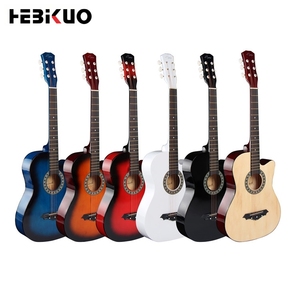
| Hebei Acoustic Assembly Hub | Laminated Beginners Guitars | Standard High-Temp Kiln | 300 Units / 25 Days | Supermarket & high-volume budget stores |
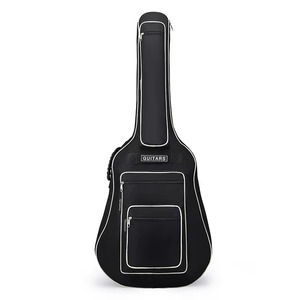
| Jiangsu Pro-Audio Accessories Co. | Padded Gig Bags, Hard Cases & Stands | Moisture-Sealed Oxford 600D/1680D | 100 Units / 20 Days | Universal cross-dock accessory distributors |
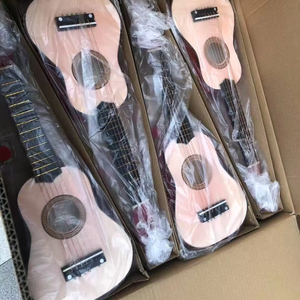
| Tianjin Folk String Instrument Plant | Small-Scale Acoustics & Ukuleles | Rapid Desiccant Chambering | 200 Units / 30 Days | Early childhood & primary school curricula |
| Sichuan Tonewood Export Corporation | Solid Spruce / Mahogany Bodies | High-Altitude Natural Air Curing | 50 Sets / 50 Days | Custom luthiers & repair networks |
| Guizhou High-Tech Instrument Base | Automated CNC Acoustic-Electrics | Continuous Humidity Tracking | 100 Units / 30 Days | Church worship & event production chains |
Localized Application Scenarios in Southern Africa
Understanding how fretted instruments perform under local socio-cultural, religious, and geographic environments enables procurement managers to select accurate SKUs for sustained turnover.
Worship Ensembles & Gospel Ministries
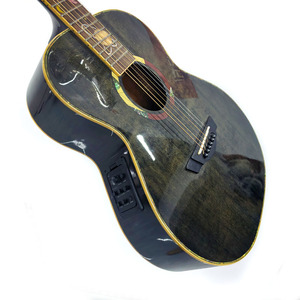
Across Gauteng, Limpopo, and KwaZulu-Natal, modern churches represent one of the largest continuous consumers of electric and acoustic-electric instruments. Ensembles demand robust acoustic-electric hybrids (such as the GALYDA 36-Inch with onboard EQ) capable of enduring high-gain PA systems, active mid-boost requirements, and aggressive percussive strumming styles without microphonic feedback.
Independent School Academies & Matric Curricula
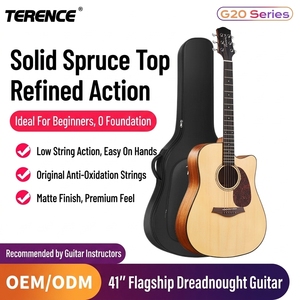
From private IEB institutions in Johannesburg and Cape Town to community-driven arts non-profits, academic institutions demand standardized nylon-string classical guitars like the Terence G20. Instruments must feature stable bridge glue joints, low string action (2.5mm to 3.0mm at the 12th fret), and crack-resistant multi-ply rims to survive heavy daily classroom rotation.
Coastal Gigging & Tourism Corridors
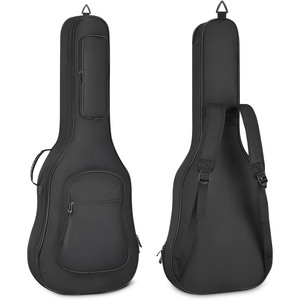
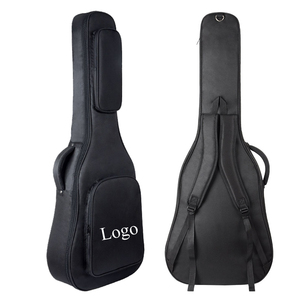
Performers along the Atlantic Seaboard, Garden Route, and Durban beachfront battle relentless marine salt air and 80%+ relative humidity. Heavy-duty 600D/1680D waterproof padded gig bags are mandatory bundle components to prevent bridge oxidation, potentiometer corrosion, and premature fret pitting during transit between open-air coastal venues.
South African Guitar Market Trends (2024–2030)
Analysis of shifting consumer behavior, retail margins, and demographic transformations shaping buying patterns across the Southern African development region.
Surge in Direct Factory Branding
Traditional multi-tier dealer markups are losing ground. Independent music retailers across South Africa are consolidating buying power to launch localized in-house brands using OEM/ODM factory channels, yielding gross margins of 45-55% compared to 18-24% on legacy global marques.
Explosion of Youth & Travel Sizing
Driven by domestic lifestyle travel and expanding urban living spaces in Sandton and Cape Town CBD, 36-inch and 38-inch body contours (parlor and grand auditorium cuts) have witnessed a 31% year-on-year sales acceleration, surpassing traditional dreadnoughts in beginner-to-intermediate volume.
Rigorous Eco-Material Substitution
Strict international CITES restrictions on traditional Dalbergia (Rosewood) species have catalyzed market acceptance of thermally treated high-density engineered composites, black-rich walnut, and certified tech-wood fingerboards, which exhibit significantly higher resistance to cracking under African seasonal droughts.
Backed by JAM USA LLC Manufacturing Rigor
Jay Turser operates as a premier division of JAM USA LLC, bringing institutional industrial management, world-class lutherie oversight, and multi-decade supply chain dependability to the international fretted-instrument ecosystem.
Our instruments are built upon the foundational philosophy that a musician's progress depends fundamentally on an instrument that holds tuning, sustains balanced intonation, and delivers ergonomic neck action from day one.
Enterprise Advantages for South African Distributors
- ✓ Holistic Product Architecture: Unified sourcing spanning electric platforms (300 & LT Series), acoustic formats (Jay J & JTA Series), and basses (400 & CL Series) simplifies catalog management.
- ✓ Listing-Ready Visual Assets: Direct access to white-box high-resolution studio photography, specification teardowns, and model collateral for instant e-commerce deployment (Takealot, WooCommerce, Shopify).
- ✓ Highveld-Proof Truss Rod System: Heavy-duty two-way double-action steel truss rods fitted standard across all guitars, enabling rapid seasonal neck relief adjustment.
- ✓ Pre-FOB QC Acoustic Chambering: Every batch undergoes stringent fret leveling, beveling, electronic pot inspection, and sonic resonance evaluation prior to container palletizing.
Frequently Asked Sourcing Questions: South Africa
Clear, actionable guidance covering customs regulations, logistics corridors, CITES certification, and commercial order operations.
What are the import duties and VAT regulations for guitars entering South Africa? +
Under the South African Revenue Service (SARS) customs tariff schedule, standard acoustic and electric guitars imported under tariff codes 9202.90 and 9207.10 generally carry a 0% customs duty rate from WTO members, but are subject to mandatory 15% Value Added Tax (VAT) calculated on the Added Tax Value (ATV = Customs Value + 10% upliftment + customs duties). Specialized protective bags and cases (HS Chapter 42) carry independent duty rates between 20% and 30%. Working with a factory providing properly broken-down commercial invoices prevents misclassification fines at Transnet port checkpoints.
How do you protect tone woods from cracking in the dry climate of Johannesburg? +
Johannesburg's winter relative humidity can plummet below 20%, which rapidly extracts moisture from unfinished fretboards and acoustic tops, causing seam separations and fret sprout. Our manufacturing protocol integrates computer-controlled kiln cycles that stabilize solid wood tops and quarter-sawn maple/mahogany necks down to 8–10% Equilibrium Moisture Content (EMC). Additionally, fret edges are micro-beveled and bound under low-humidity conditions to ensure that fret ends remain flush with the fingerboard edge, even during dry Highveld winters.
What is the standard shipping lead time to Durban and Cape Town? +
Ocean freight transit from core Asian export ports to Durban Pier 1/2 or Cape Town Container Terminal averages 28 to 35 days on direct sea lanes. Production manufacturing runs typically consume 30 to 45 days depending on the customization scope (OEM logo silk screening, inlay specifications, or electronics integration). Total landed lead times should be planned on a 65-to-80 day cycle from initial Purchase Order issuance to domestic deconsolidation in City Deep (Gauteng) or Paarden Eiland (Western Cape).
Are all tonewoods fully CITES compliant for South African biological clearances? +
Yes. All acoustic tops, bodies, necks, and fingerboards utilize non-restricted timbers, such as Grade-A Sitka Spruce, Okoume, Basswood, Poplar, and high-density Tech-Wood / Walnut synthetics that bypass CITES Appendix II documentation bottlenecks entirely. For models incorporating regulated species, complete Department of Forestry, Fisheries and the Environment (DFFE) clearance documentation and phytosanitary certificates are provided alongside ocean bills of lading.
Can small-to-medium South African music retailers consolidate orders across electric, acoustic, and bags? +
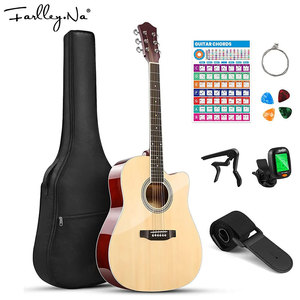
Yes. We offer mixed-SKU container loading and consolidated LCL (Less-than-Container Load) packaging. A single 20ft container can balance junior educational guitars, solid-body electrics, full-size dreadnoughts, and padded 600D water-resistant gig bags, allowing domestic distributors to diversify retail walls without tying excessive capital into high-MOQ single-model inventory runs.
Partner with a Tier-1 Guitar Factory Serving South Africa
Connect directly with our engineering and procurement team for competitive FOB quotations, dealer price catalogs, container freight estimates, and OEM customization samples.